Cable Clamping Solutions for Aerial Fiber Networks
Fiber optic cable clamps are the hardware components that anchor, support and secure optical cable along poles, towers and building facades in aerial networks.
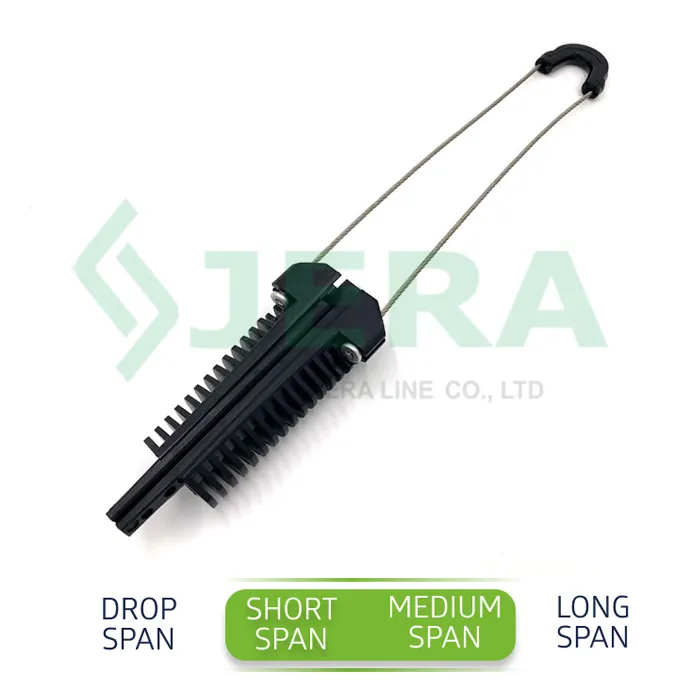
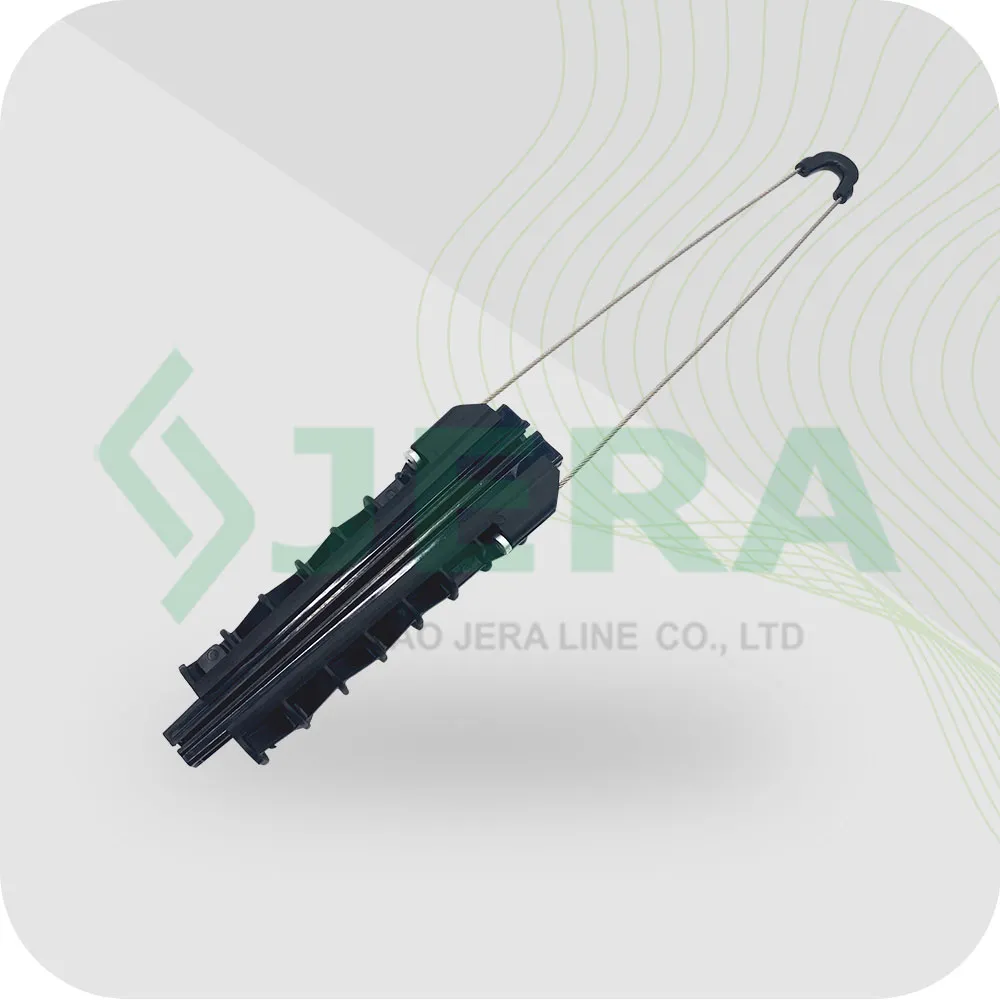
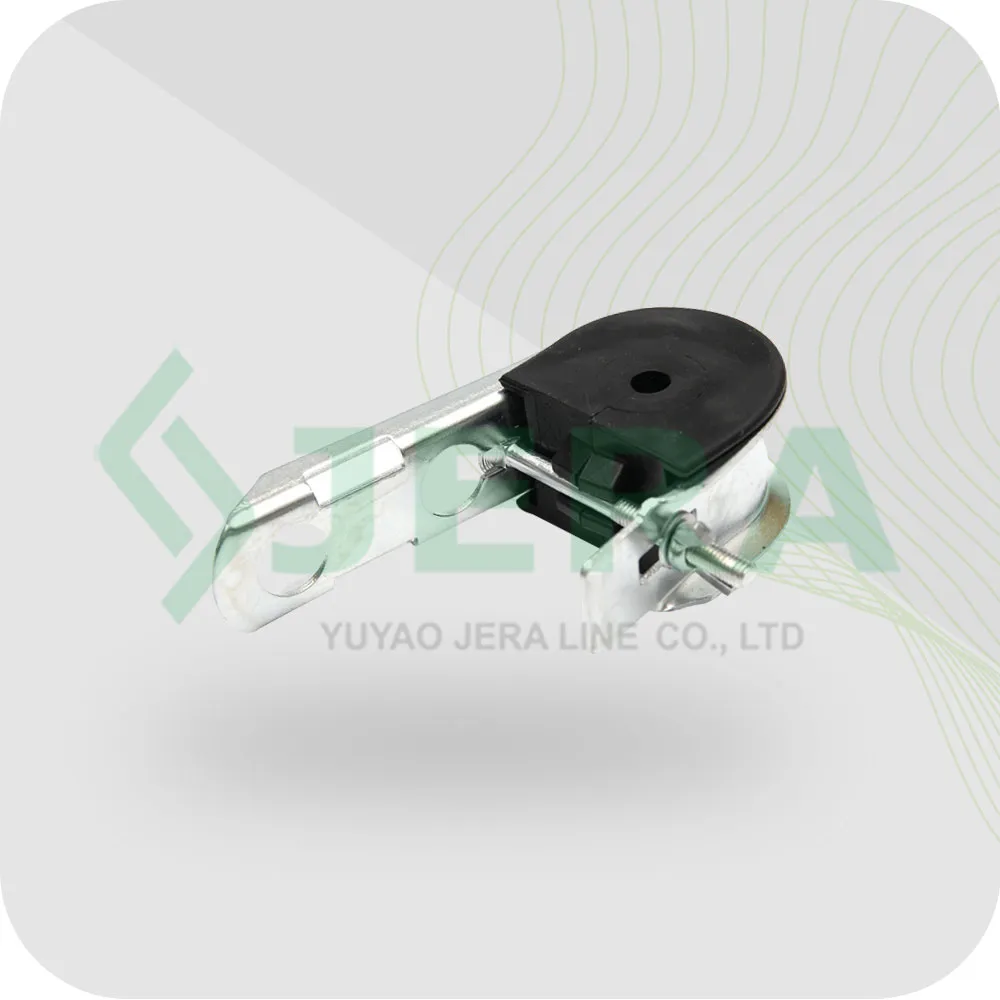
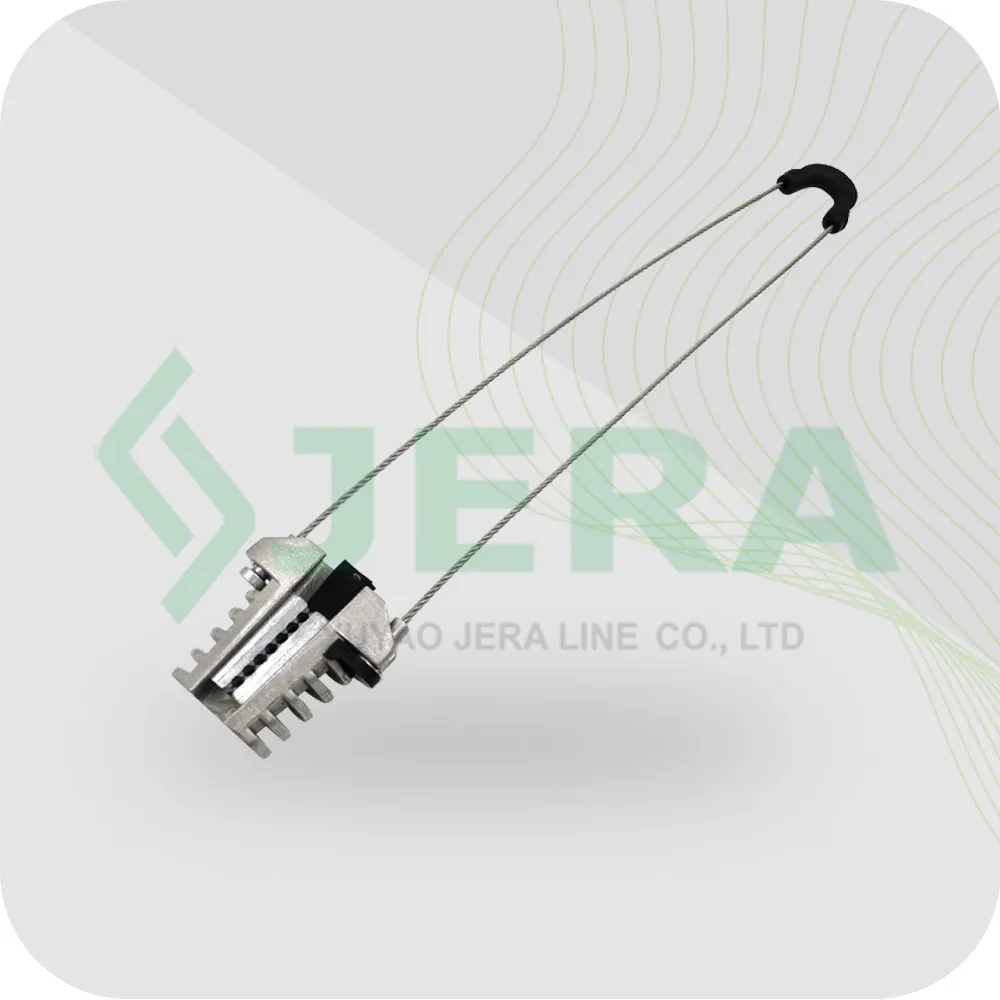
JERA manufactures anchor, suspension and drop clamps for ADSS, Figure-8 and FTTH drop cable, plus FTTA clamps, backed by in-house molding, metal processing and assembly.
Stainless steel bail · self-adjusting wedge · UV-resistant thermoplastic body
7Product categories
MultipleMaterial options
ISO 9001Quality management
OEM & ODMCustom and private label
Selection Guide
How to Choose the Right Fiber Optic Cable Clamps
Most sourcing mistakes start with the fixing point, not the price. Match the cable structure to the clamp function first, then confirm the diameter and the mechanical load for that position.
Span length and pole spacing decide the load class each anchor or suspension clamp must carry, while corner and dead-end points multiply the number of anchor sets a route needs. Confirm both before comparing prices between load ratings.
Messenger Diameter Decides Figure-8 Clamp Fit
On Figure-8 cable the clamp grips the messenger wire, so the wire diameter — not the fiber unit — selects the model. Read both values from the cable drawing and match them against the clamp's gripping range.
Flat and Round Drop Cables Are Sized Differently
Flat drop cable is specified by width × thickness, round cable by outer diameter. A clamp sized for one cross-section cannot secure the other without jacket damage, even when the cable is nominally "the same size".
FTTA Runs: Tower Type and Cable Count
Vertical runs on towers, the number of feeder or hybrid cables per route and the mounting structure available decide the clamp type and fixing method. State all three when asking for an FTTA recommendation.
Information Required for a Quotation
Cable typeADSS, Figure-8, flat or round drop cable, FTTA hybrid.
Outer diameterMeasured diameter or cross-section of the cable, in mm.
Fixing pointTerminal, intermediate suspension or building entry.
Mechanical loadRequired holding force for the span and wind load.
EnvironmentUV exposure, temperature range, coastal corrosion.
Send these five values with your inquiry through our contact page and we will come back with a shortlist, drawings and datasheets instead of a generic catalogue page.
Representative Models
Representative Fiber Optic Cable Clamp Models
A short reference list from our current datasheets, so you can compare typical cable ranges and load ratings before opening a product page.
Values are taken from current product datasheets and are model-specific — for example, the PA-1000 datasheet lists two cable ranges (8–12 mm and 25–35 mm). Please confirm the latest drawing before ordering, as ranges differ between models in the same family.
Send Your Cable SpecificationsCable type, dimensions and fixing point are enough to start — we reply with a model shortlist and datasheets.
Fiber Optic Cable Clamp Materials and Fixing Design
A clamp usually combines two or three materials, each doing a different job. The mix is set per model, because a metal body and a plastic wedge fail for different reasons.
UV-Resistant Thermoplastic
Bodies and wedges on selected models. Stabilised for outdoor UV exposure so grip and shape hold through years of weather cycles.
Galvanized Steel
Suspension straps, hooks and structural hardware. The zinc layer is the first line of corrosion defence on load-bearing metal parts.
Stainless Steel
Bails, springs and fasteners on models where the load path and the corrosion path meet — typically anchor and tension clamps.
Aluminium Alloy
Bodies of larger tension clamps such as the PA-1000, combining mechanical strength with a weight a lineman can handle on the pole.
Design Details That Decide Long-Term Performance
Cable Contact and Grip Structure
Wedge angle and groove profile set how pressure spreads across the jacket. A profile matched to the cable cross-section grips firmly without crushing.
Load-Bearing Components
On anchor models the bail and wedge carry tension; on suspension models the body carries vertical load; on drop clamps the fixing interface carries it all.
Corrosion and Outdoor Protection
Galvanizing, stainless grades and UV stabilisation each cover a different failure mode, so the material combination is chosen per installation environment.
Mounting Compatibility
Bail, hook and bracket interfaces must match the pole hardware already on the route — including our pole brackets and hooks.
Two failure modes matter most in outdoor hardware: UV embrittlement of plastic parts and galvanic corrosion where dissimilar metals meet. In coastal or high-humidity regions the metal combination matters as much as the plastic grade, which is why we ask for the installation environment before recommending a material set.
Material combinations are listed per model on the datasheet, and alternatives such as a stainless bail on a plastic body can be quoted through our OEM and ODM service.
Applications
Outdoor Fiber Optic Cable Clamp Applications
Outdoor lines usually fail at the fixing points first. These four deployment types account for most of the clamps we ship, from urban FTTH drops to tower-mounted FTTA runs.
FTTH Last-Mile Deployment
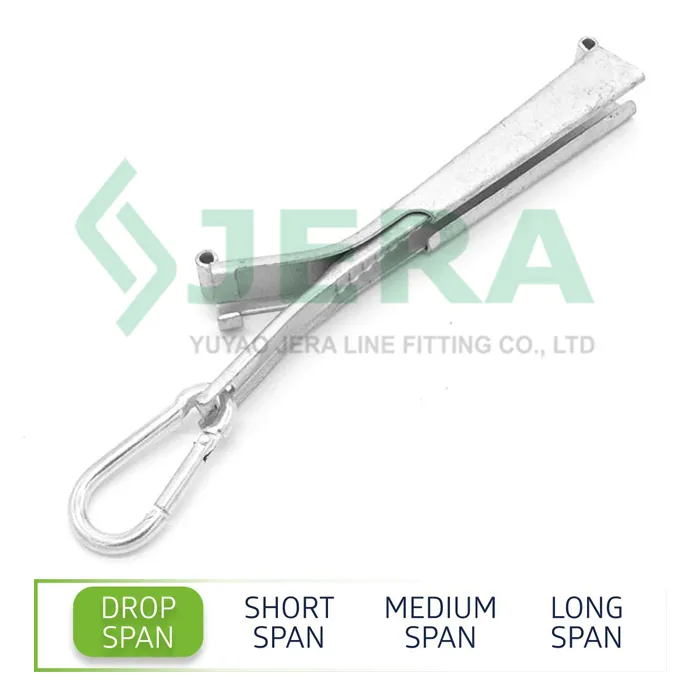
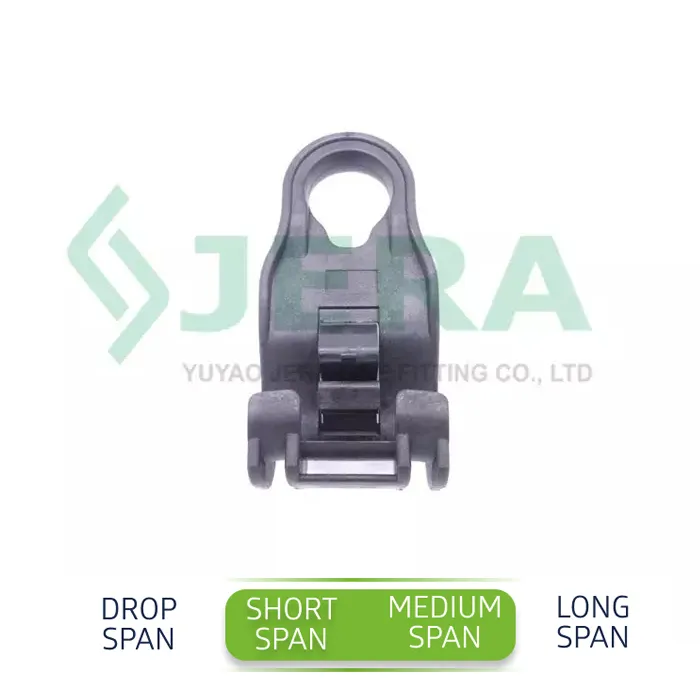
Drop clamps fix flat and round cable along building facades, entry points and the final pole before the subscriber. Facade routes need spacing hardware; pole drops need quick-install bodies.
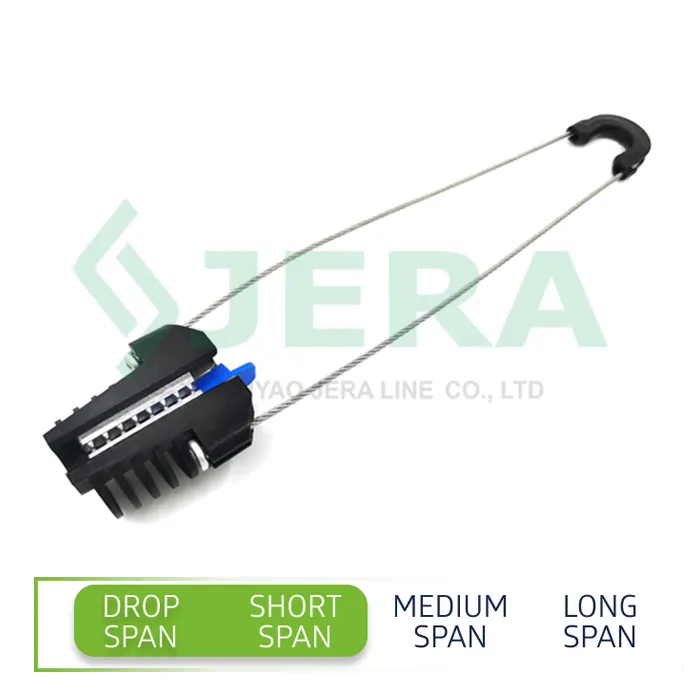
Self-supporting ADSS runs cross road, river and terrain spans between towers and poles. Anchor sets take route ends, corners and dead-ends; suspension units carry the spans between them.
Messenger-supported Figure-8 cable is common on rural and suburban distribution lines, where long spans make separate lashing impractical and the clamp grips the wire directly.
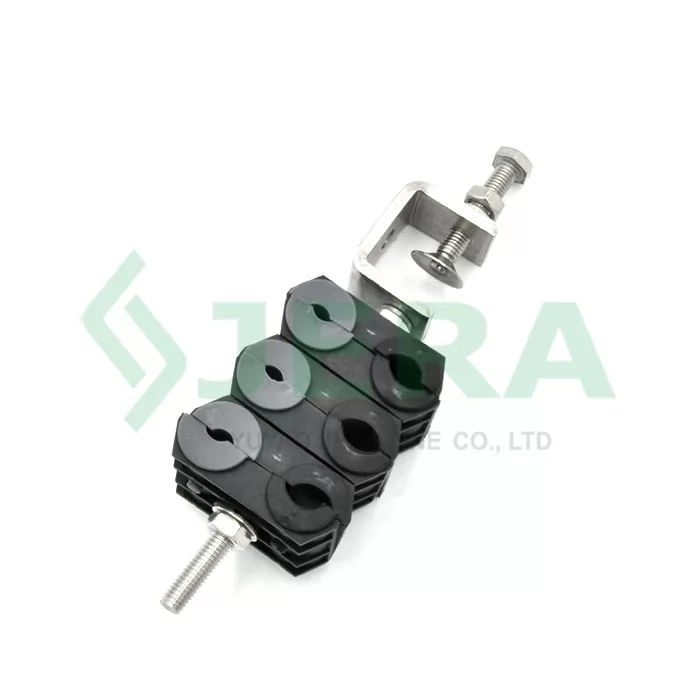
Base stations and antenna upgrades run feeder and hybrid cable vertically along tower legs and antenna frames, where clamps keep the cable bundle aligned and fixed at each structure level.
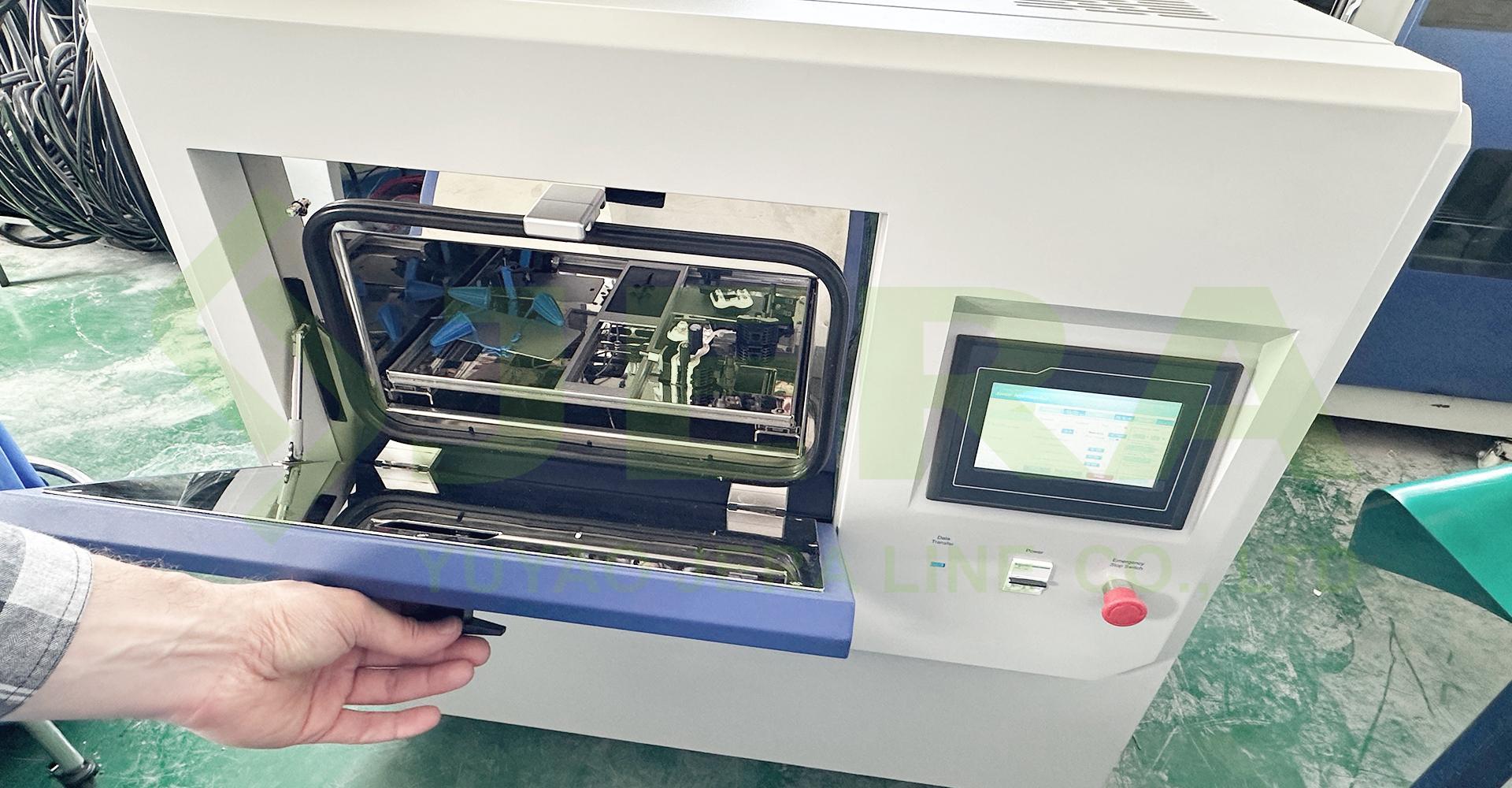
Visual inspection alone cannot confirm the mechanical performance of a cable clamp. JERA applies inspection procedures and laboratory testing to selected product characteristics, with test requirements set by each product specification and quality control plan.
Raw material inspection — resin and metal grades verified against the approved list before production.UV and temperature aging chamber — simulates years of outdoor exposure on plastic parts.
Raw material checkConfirms resin and metal grades match the approved material list.
Ultimate tensile strengthPer IEC 61284 — verifies mechanical load capacity at product approval and in daily production.
Mechanical impactPer IEC 61284 — confirms clamps withstand shocks during transport and installation.
UV and temperature agingPer IEC 61284 — evaluates weatherability of plastic parts under simulated outdoor exposure.
Temperature & humidity cyclingPer IEC 60794-4-22 — reliability across −40 °C to +70 °C and 0–100% humidity.
Corrosion agingSalt spray per IEC 61284 — corrosion resistance of metal clamp and bracket parts.
Finished product inspectionDimension, appearance and packing checked before shipment.
Test scope differs by model. Reports and certificates are available on request, and a third-party inspection can be arranged before shipment for tender packages.
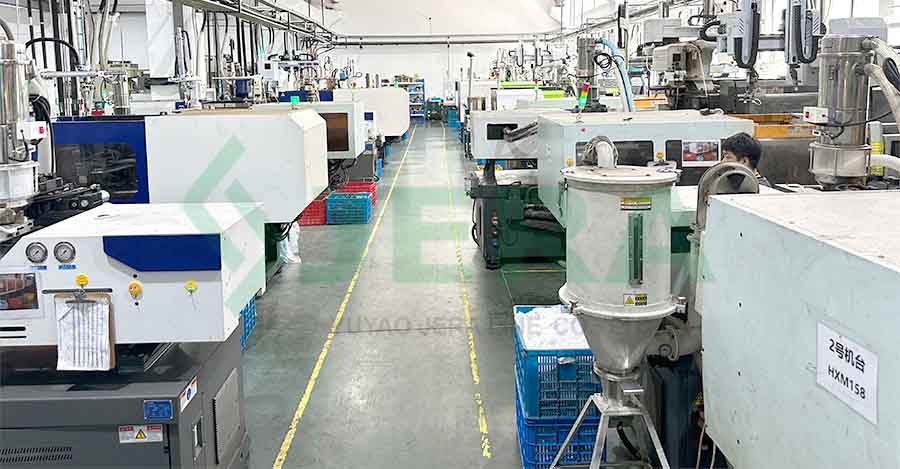
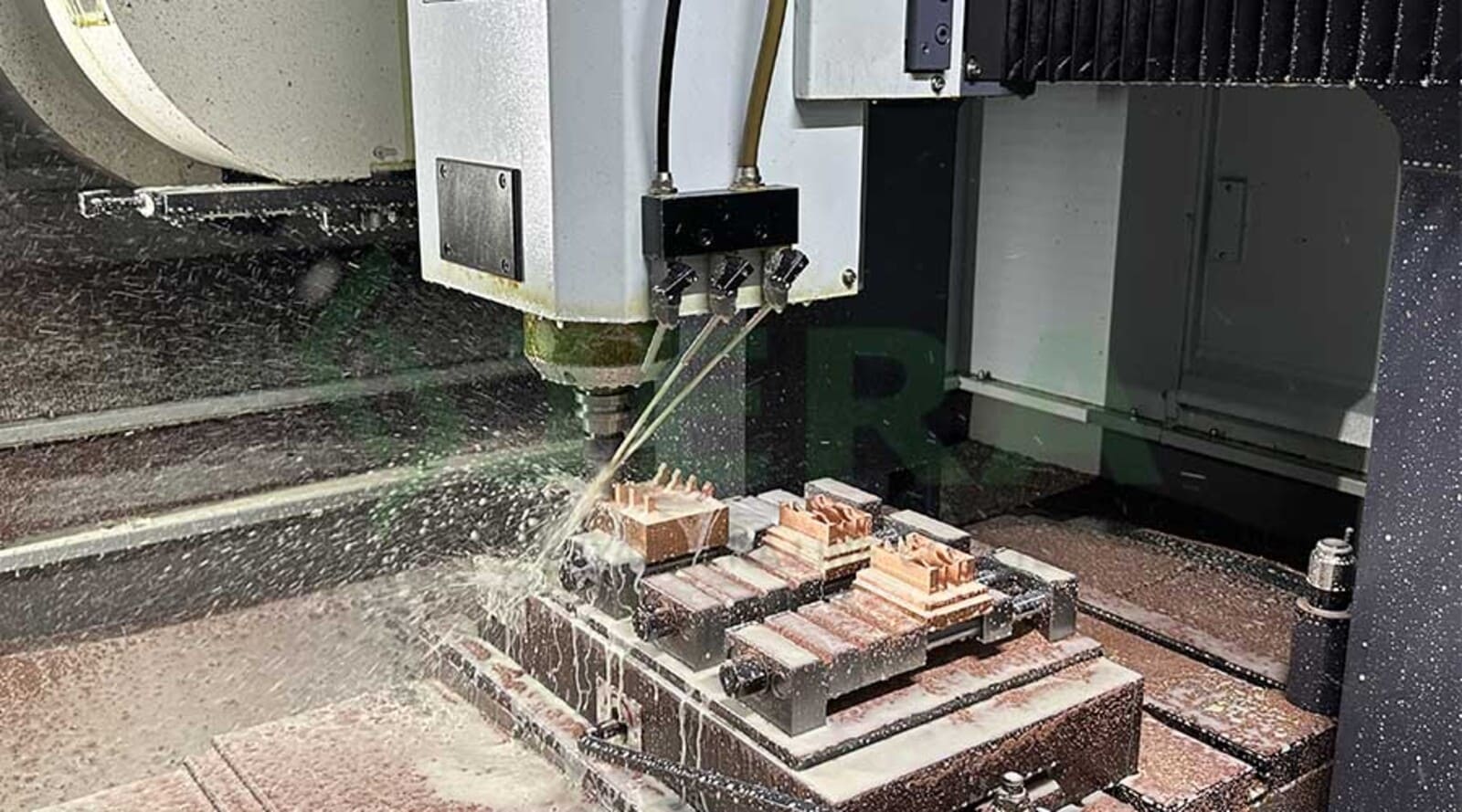
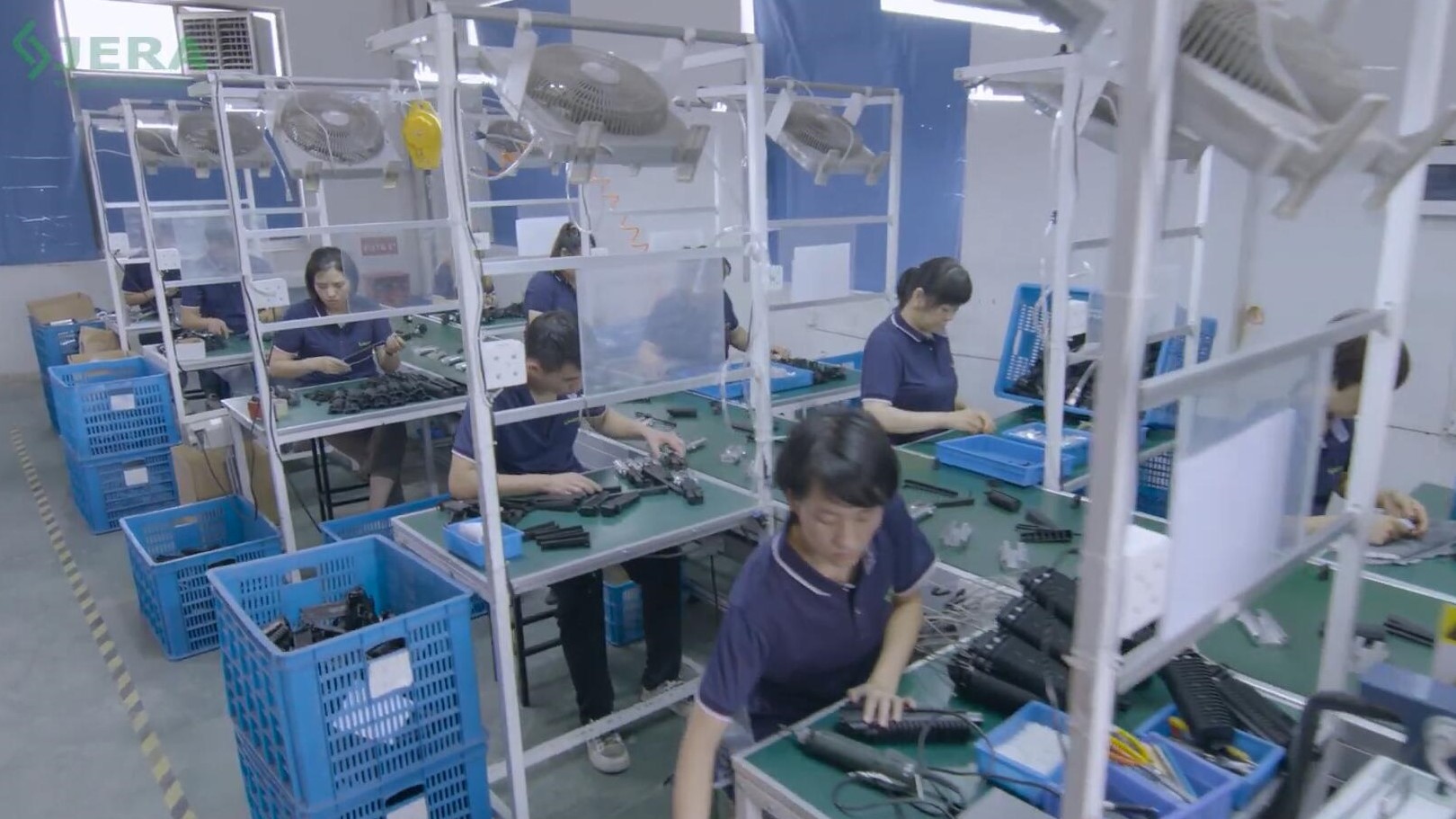
Clamp production combines plastic molding, metal forming, machining and assembly in one facility — the reason one supplier can cover the complete fixing package.
From Component Manufacturing to Final Assembly
01 · Molding
Injection Molding
UV-stabilised bodies, wedges and inserts.
02 · CNC
CNC Machining
Tight tolerances on metal components.
03 · Pressing
Press Forming
Stainless bails, springs and banding hardware.
04 · Assembly
Assembly and Marking
Final assembly, marking and export packing.
OEM & ODM Development Process
Specification ReviewSend a drawing, sample or technical requirement.
Mold DevelopmentThe mold workshop builds the tool in-house.
Sample ProductionDimensional and performance verification.
Customer ApprovalSample and specification confirmed in writing.
Mass ProductionBatch production with outgoing inspection.
What is the difference between ADSS anchor clamps and suspension clamps?
Anchor clamps hold the cable's tension at route ends, corners and dead-ends, while suspension clamps carry the cable vertically at intermediate poles without gripping it under full tension. Most ADSS routes use both, in very different quantities, and each family has its own load class and cable range.
How do I identify the correct clamp size for my fiber optic cable?
Measure the cross-section that the clamp actually grips: outer diameter for round cable, width × thickness for flat drop cable, and messenger wire diameter for Figure-8 cable. Match that value against the datasheet's cable range, then confirm the mechanical load for the fixing point.
Can clamps be customized for different pole or tower structures?
Yes. Bail length, hook type, bracket interface, marking and packaging can all be adapted to the mounting hardware used on the route. New configurations start from a drawing or sample, and the mold workshop builds the tooling in-house — see the OEM and ODM process above.
What information is required when ordering?
The five values listed in the Selection Guide: cable type, gripping dimensions, fixing point, required mechanical load and installation environment. Order quantity and destination port complete the inquiry.
How can I verify load capacity and outdoor durability before ordering?
Each datasheet states the model's MBL and cable range. Test reports under IEC 61284 and IEC 60794-4-22 are available on request, and for tender packages a third-party inspection can be arranged before shipment.
Request Fiber Optic Cable Clamps for Your Project
Send your cable specification and we will reply with a model shortlist, drawing and quotation for the match.
1 · CableType, outer diameter or cross-section in mm.
2 · InstallationFixing point, span and required load.
3 · OrderQuantity, destination and packaging needs.
- We produce a solution, for aerial fiber optic cable FTTH/FTTX deployment (cable + clamps + boxes), constantly developing new products.
10. What's your trade term and payment terms?
- We accept FOB, CIF trade terms, and for payments we accept T/T, L/C at sight.
11. Can you produce OEM orders?
- Yes, we can. Also we can customize packaging design, brand naming, etc. upon requirements.
12. Can you offer me product’s Customization and R & D?
- Yes, we have RnD department, Molding department, and we consider customization, and introducing the changes to current products. All depends on your project requirement. Also can develop new product per your request.
13. What's your MOQ of new customers?
- Absence of MOQ criteria for first order.
14. Can you provide free samples?
- Yes, we provide samples, which will same to the order.
15. Will the quality of ordered products be the same to the sample what I have confirmed?
- Sure, the quality of order products is always the same to quality of samples that you’ve confirmed.
Yes, we have. Jera line is operating according to ISO9001:2015 and we have partners and customers in many countries and regions. Every year, we go abroad to participate in exhibitions and meet like-minded friends.