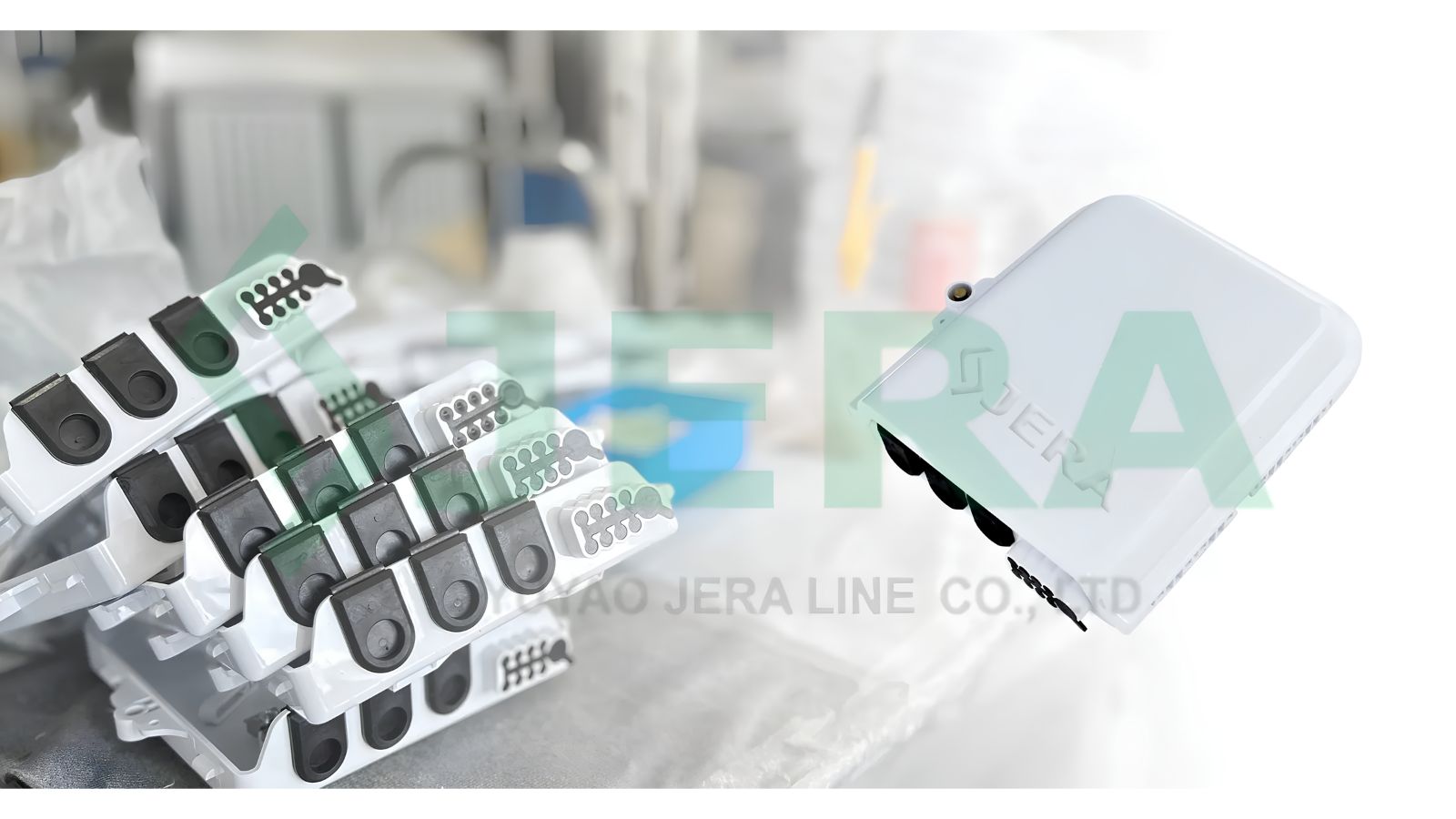
Global broadband expansion continues to accelerate, with FTTH networks serving as the foundational infrastructure for smart communities, rural digital transformation, and high‑speed residential internet access. For system integrators, telecom operators, and engineering contractors, the success of any FTTH rollout depends not only on network design and field construction but heavily hinges on reliable hardware suppliers. Many project teams face recurring procurement headaches: inconsistent product quality from trading companies, rigid standard products failing local deployment conditions, unpredictable delivery delays, inflated intermediate costs, and insufficient technical support after hardware arrives on‑site. When matching assorted hardware including anchor clamps, fiber optic box, cable clamps, stainless steel bands and supporting accessories for fiber optic cable, these hidden risks easily trigger construction bottlenecks, higher operational‑expense burdens, and unexpected network downtime over decades of service life.
While multiple vendors offer FTTH passive optical network components, partnering with a true vertical‑integrated manufacturer creates tangible advantages across project budgeting, roll‑out timeline, field adaptability, and long‑term network stability. This blog outlines five core reasons why forward‑thinking FTTH project stakeholders select JERA LINE as their trusted hardware partner, putting the factory‑level strengths of Jera Line front and center. It delivers practical reference for procurement managers and engineering teams undertaking new FTTH deployments or network upgrade initiatives worldwide.

1. Common Hidden Challenges Facing Today’s FTTH Deployment Projects
Before diving into JERA’s competitive strengths, it helps to unpack typical pain points project owners meet in real‑world FTTH operations. Many buyers source hardware through multi‑layer distributors rather than direct manufacturers. This business model brings several inherent drawbacks.
First, fragmented supply chains create quality uncertainty. Distributors often source components across dozens of small subcontract workshops. Without unified production supervision, batches of anchor clamps, fiber optic box, cable clamps, stainless steel bands and matching accessories for fiber optic cable may show inconsistent mechanical performance, material quality deviations, and incomplete certification documentation. For outdoor aerial FTTH lines where fiber optic cable is exposed year‑round to sunlight, salt spray, extreme cold or heat, minor material defects can evolve into cable slippage, fiber optic box cracking, seal failure, anchor clamps loosening and costly field repairs within just a few years.
Second, off‑the‑shelf catalogue items frequently cannot match regional requirements. Every territory presents unique conditions: varied utility pole dimensions, local telecom specification standards, mixed aerial‑underground hybrid layouts, and special environmental requirements for coastal, desert, or high‑altitude zones. Reseller‑supplied anchor clamps, cable clamps, stainless steel bands and fiber optic box usually offer very limited room for modification, forcing engineers to adopt makeshift on‑site modifications when laying fiber optic cable that raise failure risks and construction labour costs.
Third, lead‑time volatility disrupts project schedules. Global broadband stimulus programs often require fast‑track deployment phases. When suppliers depend on third‑party factories, order confirmation, raw‑material allocation, and production scheduling sit outside the buyer’s control. Unexpected production backlogs or logistics interruptions delay arrivals of fiber optic cable accessories including anchor clamps, fiber optic box, cable clamps and stainless steel bands, push back project milestones, generating penalties and lost revenue for operators.
Fourth, total cost of ownership gets underestimated. Procurement teams frequently focus purely on unit purchase price. Products with low upfront cost but poor durability drive high long‑term maintenance expenditure, frequent replacement of anchor clamps, fiber optic box, cable clamps or stainless steel bands, and service interruptions for end subscribers when fiber optic cable fixing fails. When suppliers lack in‑house technical capacity, field troubleshooting and product‑related issue resolution become slow and ineffective.
Against this industry‑wide backdrop, JERA LINE stands apart as an integrated FTTH hardware manufacturer covering R&D, full‑process production, independent laboratory validation, global logistics coordination, and complete lifecycle technical services. The following five points elaborate how JERA’s factory strengths directly resolve these real‑world FTTH project challenges.

1. Vertically‑Integrated In‑House Manufacturing Guarantees Stable, Traceable Hardware Quality
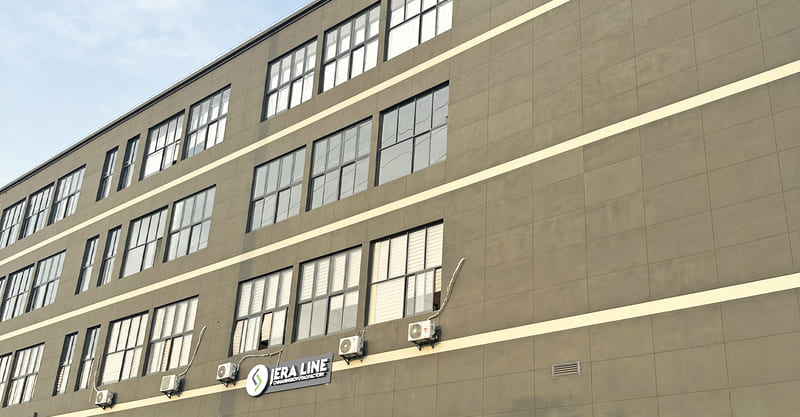
Many FTTH hardware suppliers outsource key production steps to external workshops. In contrast, JERA LINE maintains a full‑scale, self‑operated manufacturing campus in Yuyao, Ningbo, China, bringing all core production workflows under one roof. Internal operations include raw‑material screening, precision injection moulding, metal stamping, component assembly, finished‑product packaging, and pre‑shipment preparation for anchor clamps, fiber optic box, cable clamps and stainless steel bands. No critical production phase is outsourced to external subcontractors. This vertical integration delivers complete traceability for every batch of FTTH hardware ranging from aerial accessories for fiber optic cable, fibre distribution fiber optic box, wall outlets, drop‑cable cable clamps, anchor clamps to stainless steel bands and passive connection components.
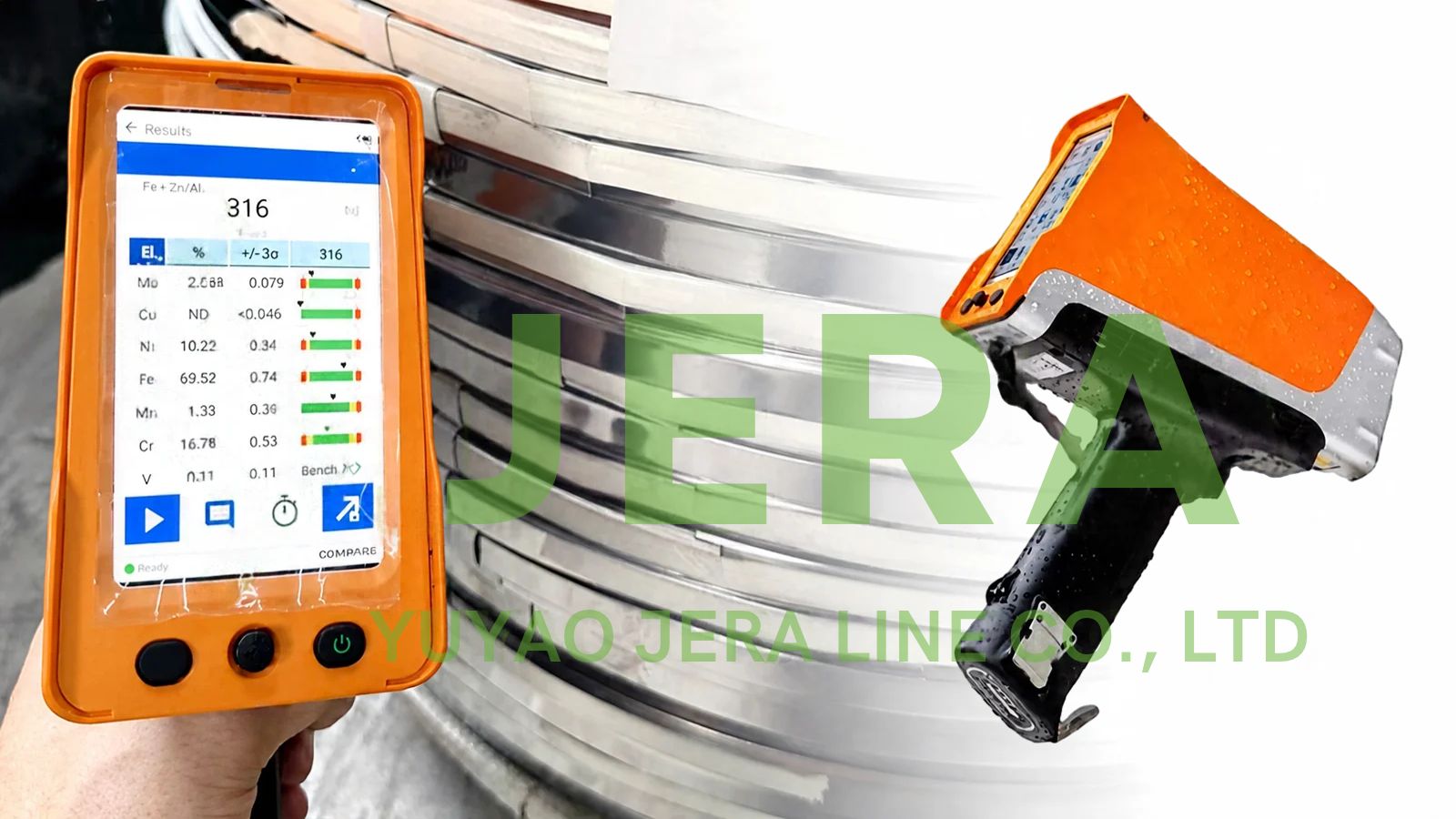
Strict ISO9001:2015 quality‑management‑system rules govern every workshop procedure. Material incoming inspection verifies thermoplastics, stainless‑steel alloys used for stainless steel bands, anchor clamps and cable clamps, and rubber sealing compounds for fiber optic box before production commences. All manufacturing parameters, mould maintenance records, and batch‑testing results are archived for traceability. This factory‑controlled production model eliminates quality fluctuation caused by scattered third‑party processing. Whether customers place small trial orders or mass volume procurement for large‑scale national FTTH rollouts, performance of fiber optic cable supporting hardware stays consistent across shipments.
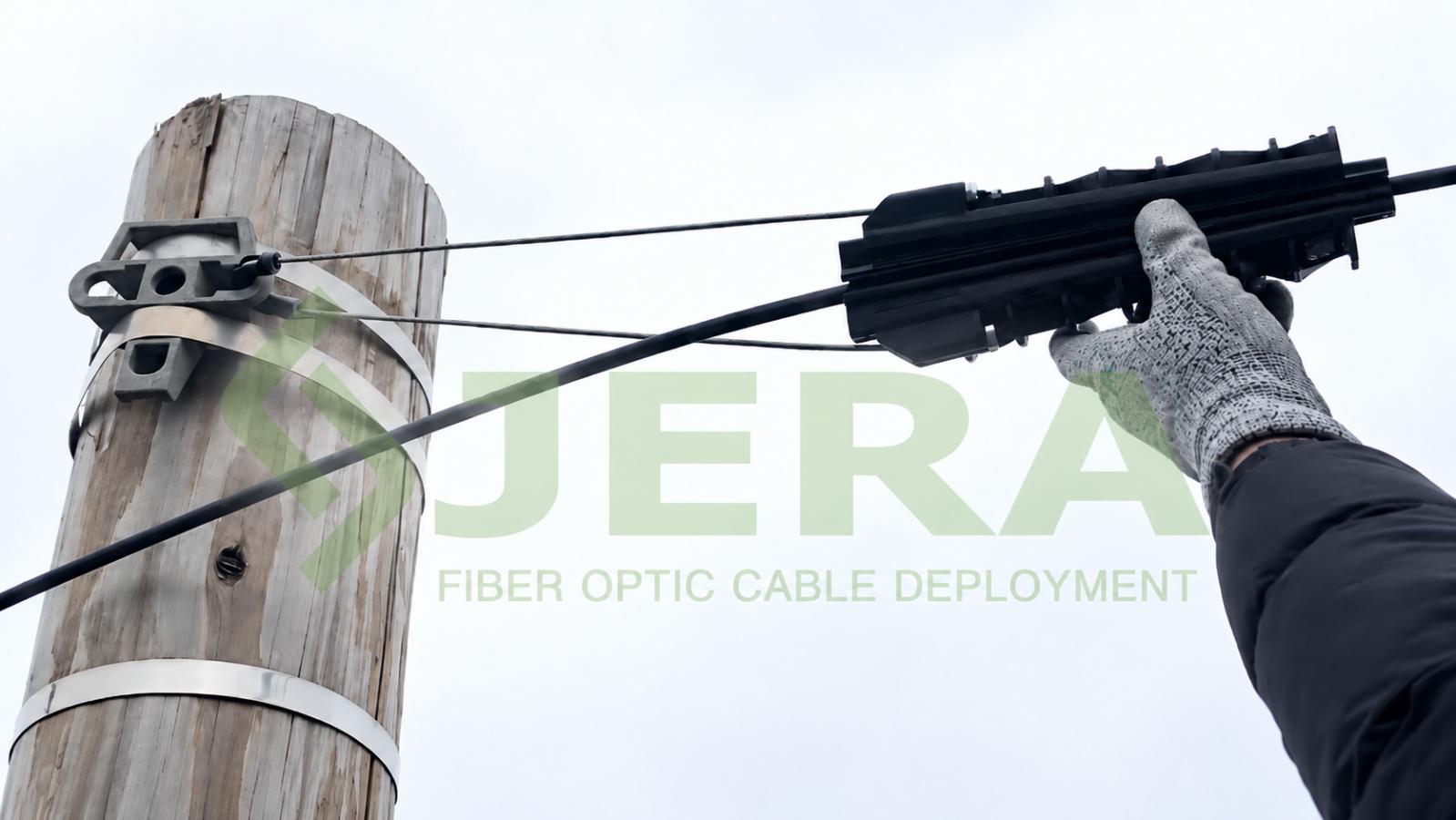
For FTTH projects, this factory advantage translates into tangible field benefits. Outdoor‑deployed JERA anchor clamps, cable clamps, stainless steel bands and fiber optic box resist UV degradation, temperature swings, and corrosive atmospheric conditions, providing reliable fixation and protection for fiber optic cable. Reliable component consistency reduces premature hardware failures, lowers field‑visit frequency for maintenance crews, and preserves stable subscriber broadband service for decades.
2. Self‑Owned Full‑Function Laboratory Validates Performance for Diverse FTTH Operating Environments
Quality promises mean little without systematic testing capacity. A key factory differentiator for JERA LINE is its independent, fully equipped in‑house testing laboratory, built exclusively for telecom‑hardware validation. Unlike vendors who only rely on third‑party sample testing, JERA executes comprehensive batch‑level verification for anchor clamps, fiber optic box, cable clamps, stainless steel bands and matching parts for fiber optic cable before goods leave the factory floor.
The lab hosts dedicated test rigs covering mechanical tensile performance of anchor clamps and cable clamps, long‑duration static load, UV accelerated ageing, salt‑spray corrosion simulation for stainless steel bands, high‑low‑temperature cyclic exposure, ingress‑protection rating verification for fiber optic box, fiber optic cable compatibility trials, and vibration fatigue testing. Test protocols align with widely‑accepted international standards including EN50483‑4, IEC61238‑1 and NFC33020. Every batch of FTTH hardware undergoes mandatory sampling and validation rather than only occasional spot‑checking. If performance indicators fail to meet specification thresholds, batches of anchor clamps, cable clamps, stainless steel bands or fiber optic box are rejected before packing and shipment.
This in‑house testing capability brings huge value for global FTTH projects. Deployments span widely variable climate zones: tropical high‑humidity coastal districts, arid desert regions with intensive sunlight, cold northern territories, and rainy mountain countryside, where fiber optic cable is secured by anchor clamps, cable clamps and stainless steel bands and protected inside fiber optic box. JERA’s laboratory replicates these harsh service conditions, verifying hardware real‑world durability long before products reach construction sites. For project managers, this pre‑validation minimises unexpected field‑failure risks and gives solid technical documentation to support project acceptance and operator audit requirements. Third‑party certification cooperation with well‑known testing institutions further reinforces product credibility for international tender projects.
3. Independent R&D & Flexible OEM / ODM Customisation Solve Project‑Specific FTTH Requirements
FTTH projects are never fully identical. Regional construction codes, local pole hardware styles, mixed fiber optic cable specifications, special installation workflows, operator‑branding demands, and hybrid aerial‑buried network layouts frequently call for adapted hardware solutions, including customised anchor clamps, fiber optic box, cable clamps and stainless steel bands. Many generic suppliers can only deliver standard catalogue parts with minimal flexibility.
JERA LINE maintains an in‑house R&D team composed of material specialists, mechanical designers, and telecom‑application engineers, fully embedded within the manufacturing facility. Because design teams work side‑by‑side with mould‑making and production departments, customisation requests for anchor clamps, fiber optic box, cable clamps or stainless steel bands move rapidly from concept assessment, prototype development, sample validation to formal mass‑production. JERA supports multiple tiers of customisation for FTTH stakeholders. Customers can request mechanical dimension adjustments for anchor clamps to fit different fiber optic cable diameters, modified component material grades, bespoke packaging, printed operator logos on fiber optic box, tailored marking labels for stainless steel bands and cable clamps, or completely new ODM product development for unique project scenarios.
For regional FTTH contractors, this factory‑level customisation capacity removes the burden of unsafe makeshift field modifications. Instead of adapting standard anchor clamps, cable clamps, stainless steel bands or fiber optic box on‑site to fit special poles or hybrid network routes for fiber optic cable, project teams can obtain purpose‑adapted components directly from production. Even mid‑volume orders can access customisation options, avoiding the extremely high minimum‑order barriers common at many manufacturers. When new FTTH construction standards emerge in target markets, JERA’s internal R&D can iterate anchor clamps, cable clamps, fiber optic box and stainless steel bands designs promptly to align with updated local specifications.
4. Factory‑Direct Supply Chain Optimises Total Project Cost & Shortens Critical Delivery Cycles
FTTH program budgets are often tightly constrained, while construction timelines remain highly demanding. Sourcing via multiple trading‑company intermediaries inevitably adds layers of markup for anchor clamps, fiber optic box, cable clamps, stainless steel bands and accessories for fiber optic cable, inflating total procurement expenditure. Moreover, multi‑party supply chains create uncertain lead‑times, because order execution depends on coordination across separate traders and disconnected production facilities.
As the original manufacturer, JERA LINE delivers factory‑direct supply, cutting all intermediate agent margins out of the procurement workflow. This model does not merely lower unit prices for fiber optic cable supporting hardware such as anchor clamps, cable clamps, stainless steel bands and fiber optic box; it optimises total project expenditure across hardware purchasing, inventory management, and emergency supplementary ordering. For large‑volume FTTH framework agreements, JERA supports scheduled batch delivery and strategic raw‑material inventory reservation, assisting operators to smooth capital spending and manage warehouse stock levels efficiently.
Production scheduling is fully controlled internally within JERA’s facility. Standard FTTH hardware items including anchor clamps, fiber optic box, cable clamps and stainless steel bands are supported by prepared raw‑material stocks enabling fast shipment. Even custom‑modified orders enjoy significantly compressed lead‑times compared with indirect sourcing channels. The factory collaborates with mature global logistics partners, organising sea, air, and multimodal transport to deliver fiber optic cable and its matching hardware to project sites across continents. For urgent FTTH‑roll‑out phases triggered by government broadband‑access initiatives or emergency network expansion, reliable lead‑time control prevents shortages of anchor clamps, cable clamps, stainless steel bands or fiber optic box from halting construction progress.
Crucially, cost optimisation does not come at the price of quality reduction. Savings originate from eliminating intermediaries and efficient large‑scale factory operations rather than downgrading raw‑material specifications for anchor clamps, fiber optic box, cable clamps and stainless steel bands. For procurement teams, this creates a balanced outcome: competitive commercial terms paired with laboratory‑validated, durable hardware for fiber optic cable deployment.
5. Full‑Lifecycle In‑House Technical & After‑Sales Support Tailored for FTTH Field Operations
FTTH project complexity extends well beyond hardware purchase. Engineering teams frequently need pre‑sales product‑selection consultation for fiber optic cable, anchor clamps, fiber optic box, cable clamps and stainless steel bands, installation‑method guidance, support for tender‑document preparation, and rapid response when unexpected field‑related issues emerge. Many hardware resellers lack professional in‑house telecom engineers; they can only forward questions to distant manufacturers, creating slow and fragmented communication loops.
JERA LINE’s international technical team is directly affiliated with the manufacturing base, possessing deep hands‑on knowledge of every FTTH product’s design intent, material properties, test background and installation best‑practices for fiber optic cable, anchor clamps, fiber optic box, cable clamps and stainless steel bands. Before order placement, engineers collaborate with customers to review project parameters, recommend suitable hardware portfolios for aerial or indoor FTTH segments, and assist with bill‑of‑material optimisation. During construction phases, remote technical guidance is available to support field crews installing fiber optic cable with anchor clamps, cable clamps and stainless steel bands, or deploying fiber optic box; for major large‑scale FTTH programs, on‑site engineer support can be arranged.
Should quality‑related incidents arise during the warranty period, customers communicate directly with JERA factory support rather than going through middlemen. Root‑cause analysis draws on production records and laboratory resources for anchor clamps, fiber optic box, cable clamps and stainless steel bands. Qualified quality‑issue cases trigger free component replacement and corrective technical recommendations for fiber optic cable deployment. This closed‑loop support model resolves problems far faster than multi‑layer reseller channels.
Beyond reactive troubleshooting, JERA also shares practical deployment know‑how accumulated from thousands of global FTTH projects. This includes best‑practice documentation, installation tips for anchor clamps, cable clamps, stainless steel bands and fiber optic box, and failure‑mode‑avoidance guidance that help contractors minimise human‑error‑caused faults during high‑pressure fiber optic cable laying and FTTH rollouts.
Real‑World Application Value for Global FTTH Stakeholders
The five factory‑driven advantages outlined above create differentiated value for different FTTH project stakeholders.
For engineering contractors, working with JERA LINE reduces overall project risk. Stable, lab‑validated anchor clamps, fiber optic box, cable clamps and stainless steel bands lower on‑site failure probability during fiber optic cable deployment; customisable components cut time‑consuming field modifications; predictable delivery schedules help keep construction on track; and direct technical backing supports field crews. Combined, these factors improve project profitability and on‑time completion rates.
For telecom network operators and ISPs, long‑term network performance moves to centre stage. Durable, consistently‑manufactured hardware for fiber optic cable including anchor clamps, cable clamps, stainless steel bands and fiber optic box minimises recurring maintenance visits and reduces subscriber service‑disruption events. Flexible customisation aligns hardware with local network‑architecture standards, while factory‑direct commercial arrangements support multi‑year framework procurement contracts.
For broadband‑infrastructure programs targeting rural or underserved communities, cost‑effective yet robust hardware becomes critical for sustainable long‑term operation. JERA’s manufacturing strengths make high‑performance anchor clamps, fiber optic box, cable clamps, stainless steel bands and supporting solutions for fiber optic cable accessible for large‑scale digital‑inclusion initiatives across varied geographic zones.
As global FTTH deployment continues expanding into more diverse geographies and challenging operating environments, the value of choosing a genuine manufacturer partner grows more pronounced. Procurement decisions cannot focus exclusively on short‑term unit pricing; project success hinges on production control, validation capacity, customisation agility, supply‑chain reliability and end‑to‑end technical support.
Conclusion
Modern FTTH projects face intertwined challenges of tight budgets, accelerated deployment timelines, diverse outdoor operating conditions, and demand for long‑term network reliability. Selecting hardware suppliers based only on catalogue pricing often stores up hidden risks for later construction and network‑operation phases, especially for core hardware such as fiber optic cable, anchor clamps, fiber optic box, cable clamps and stainless steel bands.
JERA LINE stands out as a comprehensive FTTH hardware solution provider built upon solid factory‑level strengths: fully vertical in‑house manufacturing for consistent traceable quality of anchor clamps, fiber optic box, cable clamps and stainless steel bands, independent laboratory testing validating real‑world environmental performance for fiber optic cable deployment, embedded R&D enabling flexible customisation for project‑unique requirements, factory‑direct supply chains balancing competitive costs and dependable lead‑times, and complete‑lifecycle in‑house technical and after‑sales services. These five core factory‑derived strengths directly address the most frequent pain‑points encountered by FTTH operators, integrators and contractors across international markets.
For teams delivering new‑build FTTH networks, broadband modernisation upgrades or rural digital‑access projects, partnering with JERA FIBER represents more than a hardware purchasing decision. It means gaining access to the full capabilities of a manufacturer deeply focused on solving practical real‑world FTTH deployment challenges for fiber optic cable, anchor clamps, fiber optic box, cable clamps and stainless steel bands. When project quality, schedule certainty and long‑term total‑cost‑of‑ownership performance matter, JERA LINE delivers a reliable manufacturing‑backed alternative for your FTTH fibre‑optic projects.