As global demand for high-speed internet and reliable telecommunications infrastructure continues to grow, fiber optic networks are expanding across residential, commercial, industrial, and rural environments. Telecom operators, internet service providers (ISPs), distributors, wholesalers, and network contractors need reliable products that meet specific technical requirements and local market expectations.
However, standard products do not always meet every customer's needs. Different markets may require different product dimensions, cable compatibility, installation methods, materials, packaging, or branding. For businesses developing their own product portfolios, customized manufacturing can offer greater flexibility and help them differentiate themselves from competitors.
This is where OEM and ODM solutions become valuable.
JERA FIBER, operating under JERA LINE, specializes in fiber optic accessories and products for FTTH and outdoor fiber optic cable deployment. With in-house production capabilities and experience serving international customers, JERA FIBER works with businesses seeking practical manufacturing solutions for fiber optic network components.
Through product customization discussions, manufacturing coordination, and packaging and branding options where applicable, JERA FIBER aims to help customers identify suitable products for their markets and projects.
In this article, we explain the differences between OEM and ODM, explore the customization possibilities for fiber optic products, and discuss how to choose a suitable OEM and ODM fiber optic manufacturer for your business
1. What Are OEM and ODM Solutions in the Fiber Optic Industry?
OEM and ODM are two common manufacturing models used by companies sourcing products from specialized manufacturers. Although the terms are sometimes used interchangeably, they generally describe different levels of product development and customization.
Understanding the differences can help buyers select the right cooperation model for their business.
What Is OEM Manufacturing?
OEM stands for Original Equipment Manufacturer.
In a typical OEM arrangement, the customer provides the product design, technical specifications, drawings, or other defined requirements, while the manufacturer produces the products according to the agreed specifications.
For fiber optic accessories, an OEM project may involve manufacturing cable clamps, distribution boxes, pole brackets, stainless steel fastening products, or other components based on customer-approved drawings and specifications.
OEM manufacturing may be suitable for businesses that already have an established product design but need a manufacturing partner with appropriate production capabilities.
Common OEM requirements include:
-
Manufacturing products according to customer drawings.
-
Adjusting dimensions or configurations within manufacturing capabilities.
-
Using agreed materials and surface treatments.
-
Applying customer logos or product labels where available.
-
Providing customized packaging.
-
Maintaining agreed specifications across production batches.
The specific scope depends on the product, tooling requirements, manufacturing feasibility, and commercial agreement.
What Is ODM Manufacturing?
ODM stands for Original Design Manufacturer.
In a typical ODM arrangement, the manufacturer contributes more directly to product design or development. The customer may start with an application requirement, a reference sample, or a general product concept rather than a complete technical drawing.
For example, a distributor may need a cable management accessory with a particular mounting arrangement. The manufacturer can evaluate the requirements and determine whether an existing design can be adapted or whether additional engineering work is needed.
ODM cooperation may involve:
-
Reviewing application requirements.
-
Evaluating existing product designs.
-
Proposing feasible structural adjustments.
-
Developing or modifying product drawings.
-
Assessing tooling and material options.
-
Producing samples for customer evaluation.
-
Coordinating production after technical approval.
Not every manufacturer offers the same level of ODM development. Buyers should confirm whether engineering support, new tooling, prototype production, and design ownership are included in the proposed arrangement.
OEM vs. ODM: Which Is Better for Your Business?
The best model depends on how much product design work has already been completed.
OEM may be more suitable when:
-
You already have complete drawings and specifications.
-
Your product design has been tested or approved.
-
You need a manufacturer to produce products to an established standard.
-
Your main priorities are production consistency, cost control, and repeat orders.
ODM may be more suitable when:
-
You have a product concept but need technical development.
-
An existing product requires structural or dimensional modifications.
-
You need a manufacturing partner to evaluate design feasibility.
-
You want to develop a product range for a particular application or market.
For some projects, a combination of OEM and ODM is appropriate. Customers may start by adapting an existing product design and then establish a repeatable OEM manufacturing process after the final specifications are approved.
JERA FIBER's Customized Fiber Optic Product Range
JERA FIBER focuses on fiber optic accessories and related products used in FTTH and outdoor fiber optic cable deployment.
Depending on the product and customization requirements, customers can discuss existing models, possible modifications, and manufacturing feasibility with the JERA LINE team.
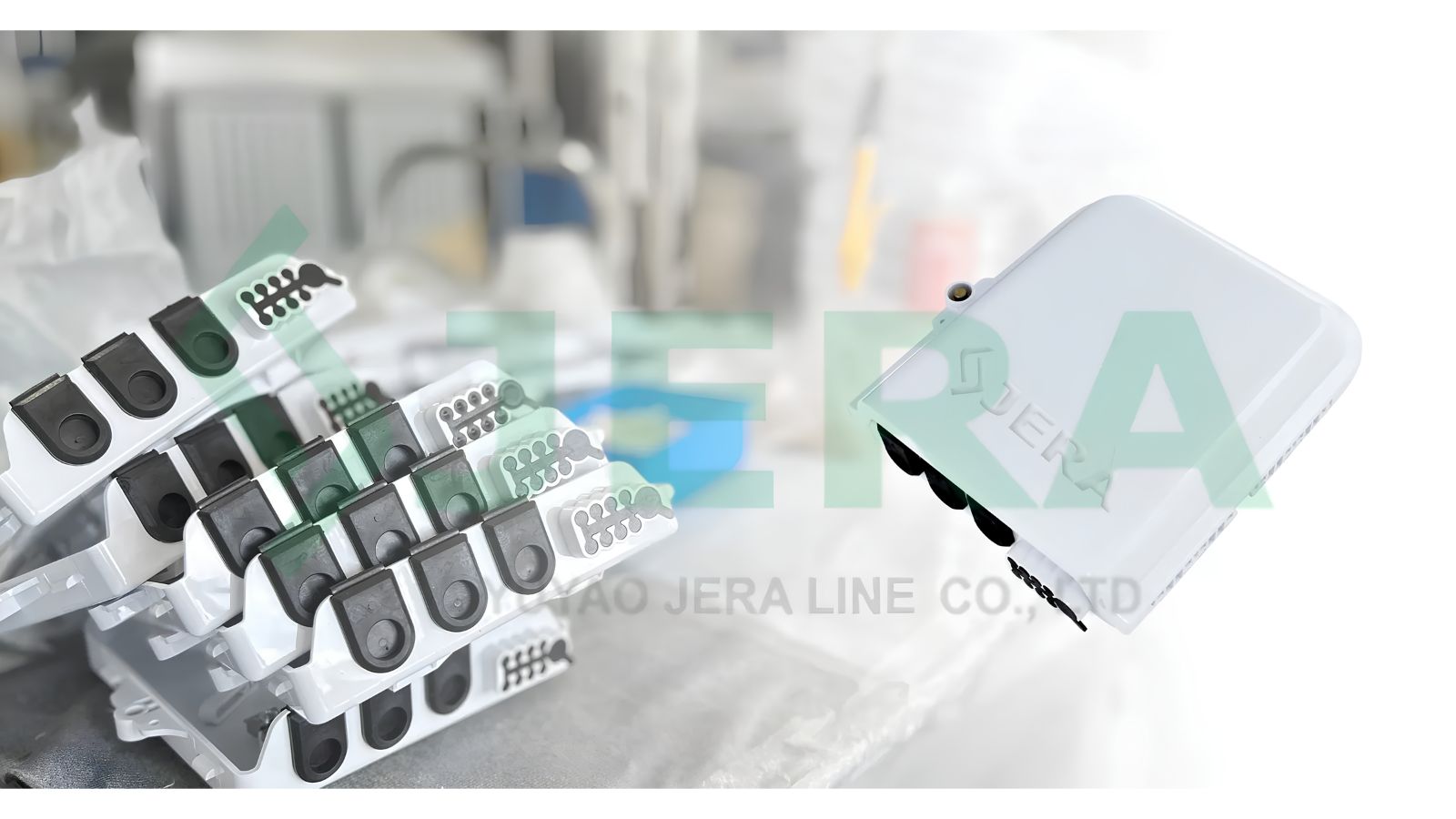
Customized Fiber Optic Distribution Boxes
Fiber optic distribution boxes are used to organize fiber termination, splicing, splitting, and cable management according to the product design.
They are commonly installed in buildings, residential communities, outdoor distribution points, and other parts of fiber optic access networks.
Potential customization requirements may include:
-
Fiber capacity and internal layout.
-
Adapter and splitter configurations.
-
Cable entry and exit arrangements.
-
Mounting methods.
-
Internal fiber routing and management.
-
Enclosure dimensions and structural details.
-
Product labeling and packaging.
For example, a distributor may need a distribution box compatible with a specific splitter configuration. A network contractor may require a different cable entry arrangement to suit the installation environment.
 The customer should provide the required capacity, component configuration, cable specifications, and installation conditions so the manufacturer can evaluate the most appropriate option.
Customized FTTH Drop Cable Clamps
FTTH drop cable clamps are used to secure suitable drop cables during installation.
Different cable designs may require different clamp structures, dimensions, and retention methods.

Customization discussions may cover cable diameter compatibility, mounting arrangements, product materials, and other application-specific requirements.
Before confirming a modified clamp, customers should verify its suitability for the intended cable and installation conditions. Any necessary mechanical tests or approvals should be agreed upon before mass production.
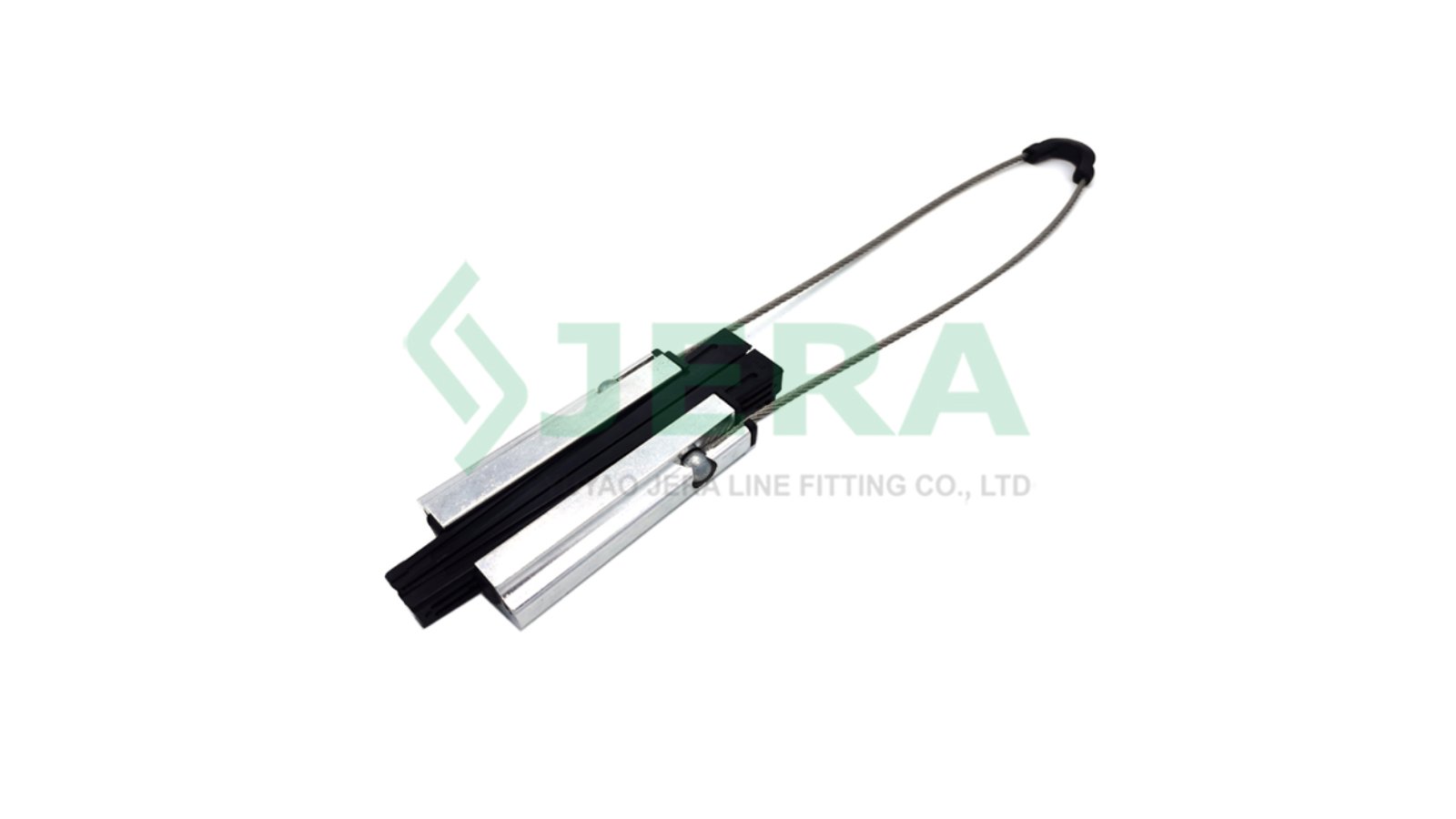
Customized ADSS Cable Accessories
All-dielectric self-supporting (ADSS) cables are commonly used in aerial fiber optic networks.
Depending on the cable design and network layout, suitable accessories may include anchoring clamps, suspension clamps, support brackets, and slack storage hardware.
For ADSS applications, product selection depends on cable diameter, span length, cable construction, installation tension, and the requirements of the cable manufacturer.
JERA FIBER offers selected ADSS cable accessories, including products designed for specified cable diameter ranges.
Where an existing product does not meet a customer's requirements, the customer can provide technical drawings, cable specifications, or reference photographs for a feasibility review.
Any customized design should be evaluated against the required mechanical performance and installation conditions before use in a telecommunications project.
Customized Stainless Steel Bands and Buckles
Stainless steel bands and buckles are used in various outdoor cable installation and pole-mounting applications.
Depending on the project, customers may need to specify band width, thickness, material grade, buckle configuration, or other dimensional requirements.
For example, a buyer operating in a corrosive environment may need to evaluate whether a particular stainless steel grade is appropriate for the intended application.
The manufacturer should confirm material availability, production feasibility, and any additional cost associated with a requested specification.
Other Fiber Optic Installation Accessories
Depending on the product portfolio and manufacturing capabilities, customization discussions may also cover pole brackets, cable slack storage accessories, mounting hardware, and related fiber optic network components.
Customers can provide a list of required products to determine which items can be supplied as standard models and which may require technical evaluation.
OEM Branding and Customized Packaging for Distributors
For wholesalers and distributors, product performance is only one part of building a competitive product portfolio. Branding, packaging, and consistent product identification can also influence how products are presented to customers.
OEM branding can help businesses create a more consistent purchasing experience across their product range.

Private Label Fiber Optic Products
Private labeling allows a business to sell products under its own brand, subject to the agreed manufacturing and branding arrangements.
Depending on the product and order requirements, possible options may include:
-
Customer logos on approved product locations.
-
Customized product labels.
-
Product model identification.
-
Branded packaging.
-
Customized carton markings.
-
Product information supplied according to agreed specifications.
The feasibility of each option depends on the product structure, available manufacturing processes, artwork requirements, and order quantity.
Customers should confirm logo files, label dimensions, packaging artwork, and approval procedures before production begins.
Packaging for International Distribution
Packaging requirements can vary according to transportation methods, product fragility, warehouse handling, and distributor preferences.
For international shipments, buyers may need to consider individual product packaging, carton strength, labeling, quantity per carton, and shipping marks.
Customized packaging should balance presentation, product protection, and transportation efficiency.
Before confirming an order, the customer and manufacturer should agree on the packaging specifications and verify that the final arrangement is suitable for the intended shipment.
Product Identification and Catalog Management
For distributors managing many similar accessories, consistent product codes and labels can simplify warehouse management and repeat ordering.
Clear model identification also helps reduce confusion between products with different dimensions, cable compatibility, or material specifications.
When developing a private-label product range, it is useful to establish a product identification system that remains consistent across quotations, approved samples, packaging, and production orders.
How JERA FIBER Supports Global B2B Customers
JERA LINE was established in 2012 and focuses on fiber optic accessories and related products for FTTH and outdoor fiber optic cable deployment.
The company emphasizes in-house production, with more than 95% of production processes handled internally, and serves customers in multiple international markets.
For businesses evaluating customized fiber optic products, JERA FIBER provides a starting point for discussing product specifications, manufacturing feasibility, and purchasing requirements.
Solutions for Distributors and Wholesalers
Distributors often need a stable source of products that meet their technical and commercial requirements.
JERA FIBER can discuss standard product selection, possible customization, and branding or packaging requirements where available.
Customers developing a private-label catalog should provide their expected product range, preferred specifications, and estimated order quantities so that the relevant options can be evaluated.
Solutions for Telecom Contractors
Telecom contractors may need accessories that match the cable types and installation methods specified in a particular project.
Providing cable specifications, site requirements, and technical drawings helps determine whether a standard product is suitable or whether further evaluation is necessary.
The final selection should follow the project specifications and relevant engineering requirements.
Solutions for Importers and International Buyers
Importers may prioritize clear quotations, consistent specifications, packaging details, and predictable order coordination.
For international purchasing, it is useful to confirm Incoterms, payment terms, production lead time, shipping responsibilities, and documentation requirements before placing an order.
JERA LINE works with international B2B customers to discuss these commercial details as part of the purchasing process.
Solutions for Businesses Developing Their Own Brands
Businesses entering the fiber optic accessories market may need help determining which standard products fit their intended portfolio.
Starting with established product models can sometimes reduce development complexity compared with designing an entirely new product.
Where customization is feasible, customers can evaluate adjustments to dimensions, materials, branding, and packaging before committing to larger quantities.
The best approach depends on the product's technical complexity, the required differentiation, and the available budget.
How to Choose the Right OEM & ODM Fiber Optic Manufacturer
Before entering an OEM or ODM partnership, buyers should assess whether the manufacturer can support their specific project requirements.
Consider the following factors.
Manufacturing Capability
Confirm that the manufacturer has relevant production capabilities for the product category. Ask which processes are handled in-house and which are outsourced.
The ability to manufacture a standard product does not necessarily mean the factory can produce every customized design.
Technical Evaluation
A suitable partner should be able to review drawings, dimensions, materials, and application requirements.
For complex products, clarify whether the manufacturer provides engineering support, new tooling, prototype development, and technical documentation.
Quality Management
Review the supplier's quality management practices and request applicable documentation.
Define product acceptance criteria and agree on inspection requirements before mass production.
Customization Scope
Clarify whether the requested customization involves simple labeling, packaging changes, adjustments to an existing model, or entirely new product development.
These options may differ significantly in cost, lead time, and minimum order quantity.
Commercial Transparency
Request a detailed quotation that identifies the product specifications, quantity, unit price, tooling or development charges, packaging, and agreed trade terms.
Confirm how sample costs, changes after approval, and repeat orders will be handled.
Intellectual Property and Design Ownership
For customized products, both parties should clarify ownership of drawings, tooling, product designs, and other intellectual property.
If a product is developed exclusively for one customer, the agreement should clearly state the permitted use of the design and any restrictions on manufacturing or selling similar products to other customers.
Written agreements can help prevent misunderstandings as the business relationship develops.
Conclusion: Develop Your Fiber Optic Product Range with JERA FIBER
As fiber optic networks continue to expand worldwide, demand is growing for products that meet specific technical, commercial, and market requirements.
OEM and ODM manufacturing can help distributors, wholesalers, telecom contractors, and importers obtain fiber optic accessories tailored to their applications and business strategies.
From fiber optic distribution boxes and FTTH drop cable clamps to selected ADSS accessories, stainless steel bands, buckles, and other installation hardware, customized manufacturing begins with a clear understanding of the customer's requirements.
JERA FIBER, under JERA LINE, offers manufacturing experience, in-house production capabilities, and a range of fiber optic accessories for customers to evaluate. Depending on the product and project requirements, customization discussions may cover product specifications, selected structural modifications, materials, branding, and packaging.
Successful OEM and ODM cooperation depends on clear technical communication, realistic feasibility assessments, approved specifications, and agreed quality requirements.
For additional details, please do not hesitate to contact us via
Email: info@jera-fiber.com
Youtube:https://www.youtube.com/@jeraline