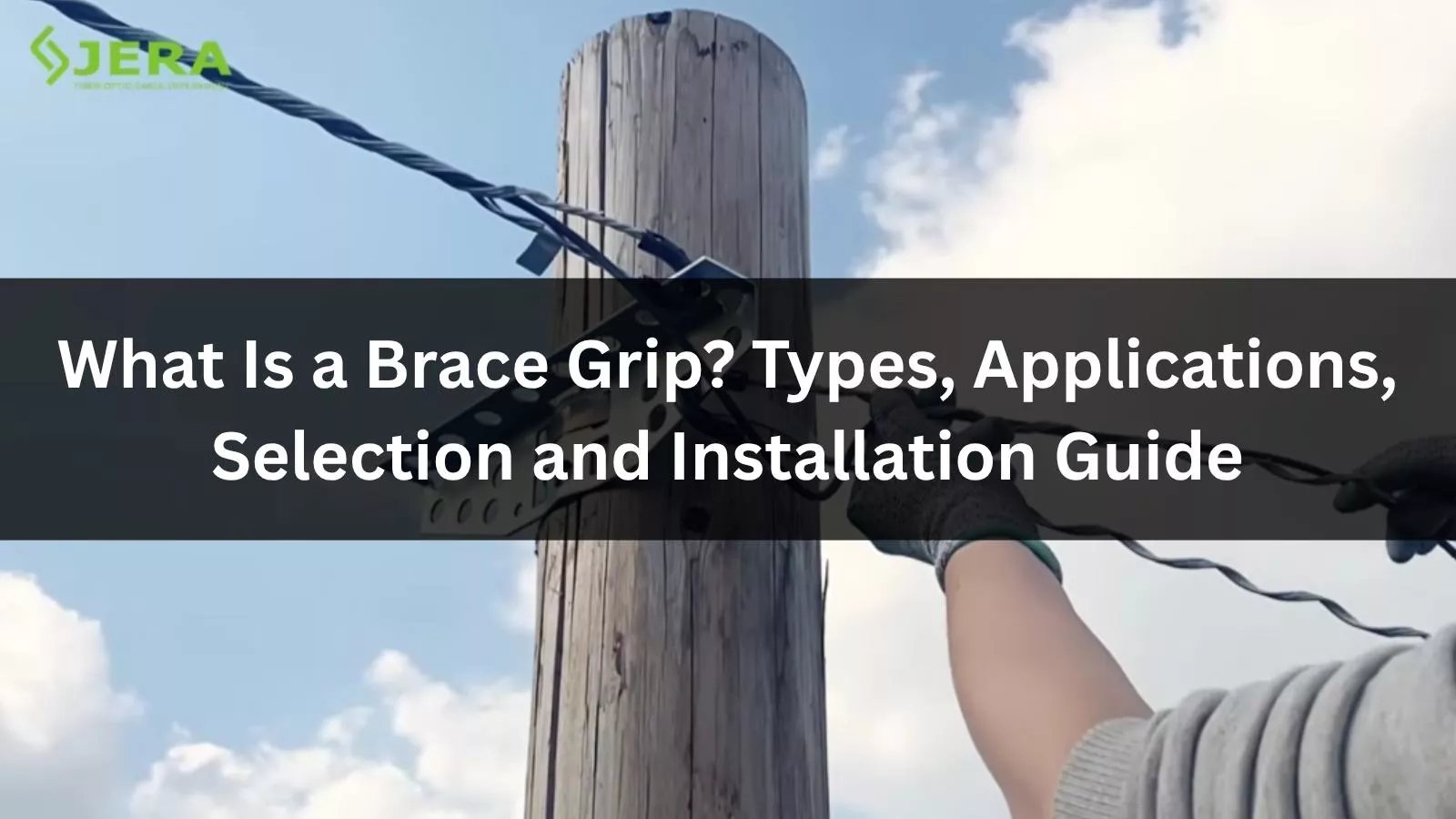
A brace grip is a preformed helical wire fitting designed to terminate, anchor, or tension steel strand used in structural bracing systems. It is commonly used with guy strand and brace wire in metal buildings, utility structures, communication infrastructure, and other applications where a secure mechanical connection is required.
Unlike conventional clamps that rely on bolts or compression points, a brace grip wraps around the strand and distributes mechanical load over a relatively long contact area. This design provides a strong grip while reducing localized stress on the strand.
In this guide, we explain how brace grips work, where they are used, how to choose the correct size, and what to consider during installation.
What Is a Brace Grip?
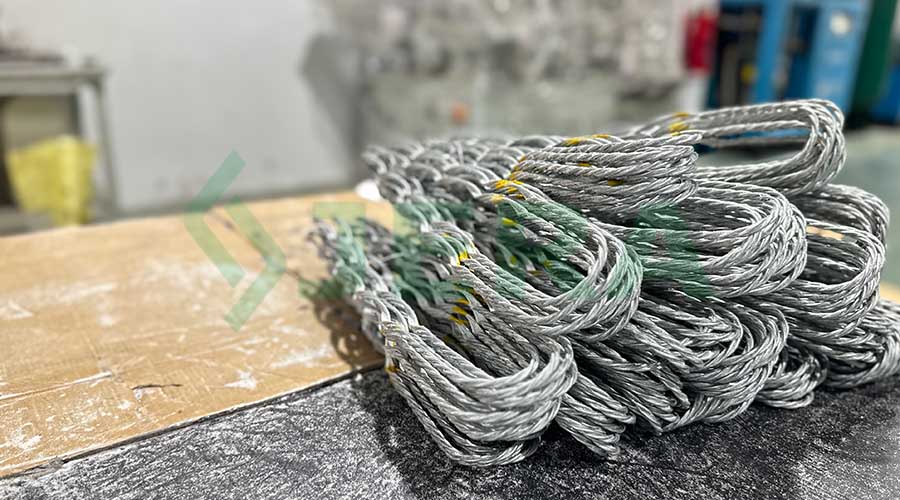
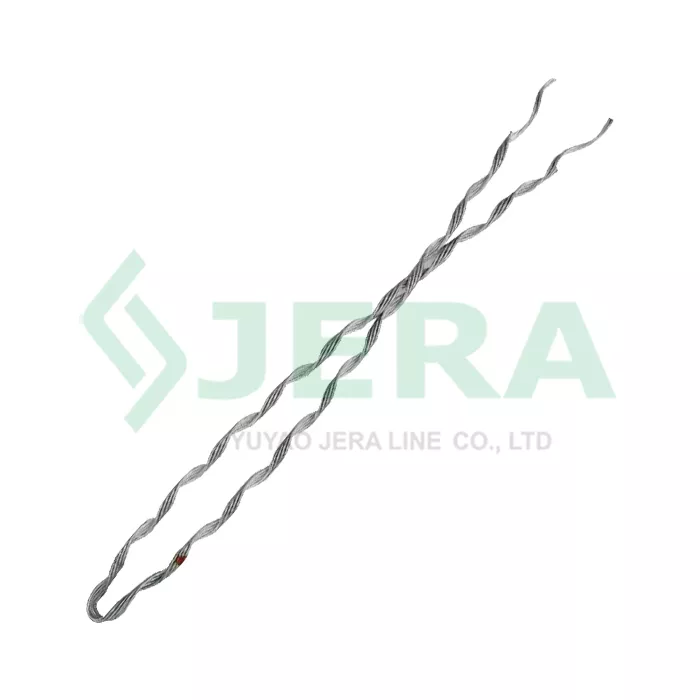
A brace grip is a type of preformed dead-end fitting manufactured from helically formed high-strength steel wires.
Its spiral shape is designed to match a specific strand diameter. During installation, the individual rods are wrapped around the strand, creating friction and mechanical holding force across the contact area.
Brace grips may also be referred to as:
-
Preformed brace grips
-
Strand grips
-
Guy grips
-
Preformed dead ends
-
Helical dead-end grips
-
Strand wire dead ends
The exact terminology varies depending on the industry and application.
How Does a Brace Grip Work?
A brace grip works through the interaction between its helical rods and the outer surface of the strand.
When the grip is wrapped around a correctly sized strand, several mechanisms help hold the strand securely.
Helical Contact
The preformed rods follow the strand in a spiral pattern, providing continuous contact rather than concentrating the load at one point.
Friction
The contact between the grip and strand generates friction that prevents the strand from slipping under tension.
Load Distribution
Because the grip extends along a relatively long section of strand, tensile forces are distributed over a larger area.
This helps reduce excessive localized pressure that could otherwise deform or damage the strand.
Mechanical Tension
As tensile load increases, the grip maintains contact with the strand and transfers the load to the attachment point through its loop or dead-end section.
Where Are Brace Grips Used?
Brace grips are primarily used wherever steel strand must be securely terminated or tensioned.
Common applications include:
Metal Building Bracing
Brace grips can be used with structural strand in metal building bracing systems.
They help secure diagonal bracing that contributes to the stability of the building structure.
Guy Wire Systems
Guy wires are widely used to stabilize poles, towers, masts, and other vertical structures.
A preformed brace or guy grip can terminate the strand at an anchor, bracket, or other attachment point.
Utility Infrastructure
Strand wire is commonly used in overhead utility construction.
Preformed grips provide a simple method of terminating strand without complicated bolted assemblies.
Telecommunication Networks
Communication poles and aerial cable infrastructure may use steel strand as a supporting or stabilizing component.
Preformed strand grips can be used to anchor these supporting wires.
Industrial Structures
Brace grips may also be used in structural frames, equipment supports, agricultural structures, and other installations requiring tensioned steel strand.
What Is a Brace Grip Made Of?
Brace grips are typically manufactured from high-strength steel wire.
For demanding structural or outdoor applications, Extra High Strength (EHS) steel may be used to provide sufficient tensile capacity.
The rods can also receive protective surface treatments depending on the intended operating environment.
When selecting a brace grip, important material considerations include:
-
Tensile strength
-
Corrosion resistance
-
Strand compatibility
-
Outdoor exposure
-
Expected mechanical load
For example, Jera's JS-55B brace grip uses Extra High Strength steel specified at 1680 N/mm² and is designed for a 9.53 mm strand.
Brace Grip vs. Guy Grip: What Is the Difference?
Brace grips and guy grips often use nearly identical preformed helical technology.
The main difference is usually the application.
A brace grip is commonly associated with structural bracing, including metal building applications.
A guy grip is generally associated with guy strand used to stabilize poles, towers, or similar structures.
In practice, manufacturers and contractors may use these terms differently. Therefore, buyers should not select a grip based only on its product name.
Instead, verify:
-
Strand diameter
-
Strand construction
-
Material
-
Minimum breaking load
-
Direction of lay
-
Application
-
Attachment hardware
These specifications determine whether the grip is suitable for the actual installation.
How to Choose the Correct Brace Grip
Correct sizing is one of the most important factors when selecting a brace grip.
1. Confirm the Strand Diameter
The brace grip must match the diameter of the strand.
For example, a grip manufactured for 3/8-inch strand should not automatically be used on another strand diameter.
A mismatch can reduce holding performance or make installation difficult.
Jera's JS-55B, for example, is specified for a conductor diameter of 9.53 mm (3/8 inch).
2. Check the Required Mechanical Load
Determine the maximum tensile load expected in the system and compare it with the rated mechanical strength of the grip.
The grip must provide sufficient capacity for the design requirements of the application.
As one reference, the JS-55B has a listed minimum breaking load of 68.5 kN.
However, the appropriate safety factor and allowable working load should always be determined according to the relevant engineering requirements.
3. Verify Strand Type
Check whether the grip is designed for:
Two strands with similar outside diameters may still require different grips if their construction or mechanical properties differ.
4. Check the Direction of Lay
Preformed grips may have a specified direction of rotation.
The lay direction must be compatible with the intended strand and installation method.
For example, the JS-55B is specified with left rotation.
5. Confirm the Attachment Point
Check how the loop of the grip connects to the rest of the structure.
Depending on the system, it may connect with:
-
Anchors
-
Shackles
-
Hooks
-
Eye bolts
-
Pole hardware
-
Structural brackets
The attachment hardware should also have adequate mechanical strength.
6. Consider Environmental Conditions
Outdoor installations may be exposed to:
-
Rain
-
Humidity
-
Salt
-
Temperature changes
-
Industrial pollution
-
Wind-induced vibration
Material and corrosion protection should therefore be selected according to the installation environment.
How to Install a Brace Grip
Brace grips are generally designed for straightforward installation without complex compression machinery.
Exact procedures can vary by model, but a typical installation follows several basic steps.
Step 1: Verify the Grip and Strand
Before installation, confirm that the brace grip corresponds to the correct strand diameter and application.
Do not install a grip if its identification or specification does not match the strand.
Step 2: Inspect the Strand
Check the strand for:
-
Severe corrosion
-
Broken wires
-
Flattening
-
Surface contamination
-
Mechanical damage
A damaged strand can affect the performance of the entire termination.
Step 3: Position the Grip
Place the loop or center section of the brace grip at the required attachment position.
Align both legs of the grip with the strand.
Step 4: Wrap the First Leg
Wrap one set of preformed rods around the strand according to its natural helical shape.
Avoid forcing or excessively bending the rods.
Step 5: Wrap the Second Leg
Apply the opposite leg in the same manner.
The rods should follow their preformed path and sit evenly around the strand.
Step 6: Inspect the Installation
After installation, verify that:
-
All rods are properly seated
-
The grip is centered
-
There are no crossed rods
-
The strand is not damaged
-
The loop is correctly positioned
-
The attachment hardware is secure
Installation should always follow the manufacturer's instructions and the engineering requirements of the project.
Common Brace Grip Selection Mistakes
Several mistakes can reduce the reliability of a preformed strand termination.
Using the Wrong Diameter
Even a relatively small diameter mismatch can affect grip performance.
Always use the specified strand range.
Selecting by Appearance Alone
Many preformed grips look similar.
Products with similar shapes can have different:
-
Wire diameters
-
Lengths
-
Materials
-
Mechanical strengths
-
Strand compatibility
Always check the technical specification.
Ignoring Mechanical Load
Diameter compatibility alone is not sufficient.
The grip must also meet the mechanical requirements of the structure.
Reusing a Damaged Grip
A grip that has been excessively deformed or damaged during installation should not automatically be reused.
Follow the manufacturer's instructions regarding installation and reuse.
Mixing Incompatible Hardware
The brace grip is only one component of the complete anchoring system.
Anchors, brackets, shackles, bolts, and other components must also be correctly rated.
What Specifications Should You Give a Brace Grip Manufacturer?
When requesting a quotation or selecting a custom brace grip, provide as much application information as possible.
The most useful information includes:
Providing these specifications allows the manufacturer to recommend a more appropriate grip instead of relying only on a nominal strand diameter.
Example: Brace Grip for 3/8-Inch Strand
A typical application may require a preformed brace grip for a 3/8-inch EHS strand.
Jera Line's JS-55B is one example designed around this configuration.
Its published specifications include:
|
Specification |
JS-55B |
|
Strand Diameter |
9.53 mm / 3/8 in |
|
Minimum Breaking Load |
68.5 kN |
|
Material |
EHS Steel, 1680 N/mm² |
|
Rotation |
Left |
|
Grip Length |
760 ± 5 mm |
|
Number of Rods |
4 |
|
Loop Diameter |
17 ± 5 mm |
|
Weight |
0.43 kg |
These specifications illustrate why brace grips should be selected according to the strand and mechanical requirements rather than simply by appearance.
How to Evaluate a Brace Grip Manufacturer
For distributors, contractors, and project buyers, product consistency can be as important as the nominal specifications.
When evaluating a supplier, consider whether the manufacturer can control:
Raw Material
The mechanical properties of the steel rods affect the strength and consistency of the finished grip.
Helical Forming
The pitch, diameter, and geometry of the preformed rods should remain consistent between production batches.
Mechanical Testing
Manufacturers should be able to verify important mechanical characteristics using appropriate testing procedures.
Dimensional Inspection
Important dimensions such as rod diameter, grip length, loop size, and strand compatibility should be controlled during production.
Product Traceability
Consistent identification and production records can simplify quality management for large infrastructure projects.
Jera Line manufactures helical guy grips and lists dedicated production and quality-control capabilities on its website, including a helical guy grip workshop and mechanical-performance validation facilities.
FAQ About Brace Grips
What is another name for a brace grip?
Depending on the application, similar products may be called preformed dead ends, guy grips, strand grips, helical grips, or strand wire dead ends.
Can a brace grip be used on any strand of the same diameter?
Not necessarily.
Strand material, construction, strength, lay direction, and application should also be checked.
What size brace grip do I need for 3/8-inch strand?
You need a grip specifically designed for approximately 9.53 mm or 3/8-inch strand and suitable for the required mechanical load.
For example, the Jera JS-55B is designed for 9.53 mm strand.
Are brace grips used outdoors?
Yes. Brace grips are commonly used in outdoor structural, utility, and guying applications.
The product material and corrosion protection should match the environmental conditions.
Is a brace grip the same as a dead-end grip?
A brace grip is generally a form of preformed dead-end grip used for strand termination. However, “dead-end grip” is a broader category that can also include products for ADSS cable, conductors, and other types of wire.
Conclusion
A brace grip provides a simple and effective way to terminate and tension steel strand using a preformed helical structure.
Choosing the correct product requires more than matching the general appearance of the grip. Strand diameter, material, construction, mechanical load, lay direction, environmental conditions, and attachment hardware should all be considered.
For metal building bracing, guy strand, utility infrastructure, and similar applications, a correctly selected brace grip can provide reliable load transfer while simplifying field installation.
For 3/8-inch strand applications, Jera Line's JS-55B Guy Grip Dead End is designed for 9.53 mm strand and provides a published minimum breaking load of 68.5 kN, making it one option for projects requiring a preformed EHS strand termination.




.png)