As fiber optic networks continue to expand from cities and data centers to residential communities, industrial parks, rural areas, and remote infrastructure, the demand for reliable outdoor fiber management solutions is growing rapidly[cite: 1]. Among the essential components of an outdoor FTTH and FTTx network, the outdoor fiber optic distribution box plays a critical role in protecting, organizing, terminating, and distributing optical fibers[cite: 1].
An outdoor fiber optic distribution box is more than just a protective enclosure[cite: 1]. It provides a controlled environment where feeder cables can be connected to distribution cables, fiber optic adapters can be installed, PLC splitters can be integrated, and optical fibers can be managed for future maintenance and network expansion[cite: 1].
However, not every fiber distribution box is suitable for every outdoor application[cite: 1]. The right choice depends on several factors, including housing material, fiber capacity, protection rating, installation method, cable entry design, fiber management, splitter compatibility, and environmental conditions[cite: 1].
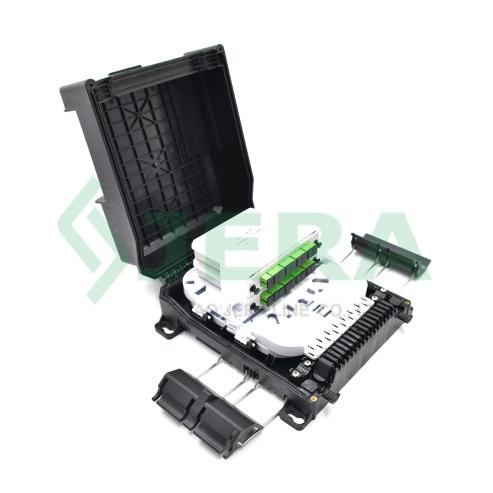
1. What Is an Outdoor Fiber Optic Distribution Box?
An outdoor fiber optic distribution box, also known as a fiber distribution box, fiber termination box, or outdoor FTTH distribution box, is designed to provide a secure connection and distribution point for optical fiber cables in access networks[cite: 1].
In a typical fiber network, the distribution box may be installed between the feeder cable and the subscriber-side distribution cables[cite: 1]. Inside the enclosure, technicians can perform fiber termination, splicing, patching, and splitting[cite: 1].
Depending on the network architecture, an outdoor fiber optic distribution box can accommodate[cite: 1]:
-
Fiber optic adapters[cite: 1]
-
Splice trays[cite: 1]
-
Fiber pigtails[cite: 1]
-
Patch cords[cite: 1]
-
PLC splitters[cite: 1]
-
Incoming feeder cables[cite: 1]
-
Outgoing distribution cables[cite: 1]
-
Fiber management accessories[cite: 1]
-
Cable fixation components[cite: 1]
For FTTH networks, these boxes are commonly installed on telecommunication poles, walls, building exteriors, utility structures, and other outdoor locations[cite: 1].
A well-designed fiber distribution box should protect sensitive optical components while also making installation and maintenance as simple as possible[cite: 1].
2. Why the Outdoor Environment Requires Special Protection
Indoor fiber termination boxes operate in relatively controlled environments[cite: 1]. Outdoor fiber optic distribution boxes face much more demanding conditions[cite: 1].
Depending on the installation location, the enclosure may be exposed to[cite: 1]:
-
Rain and moisture[cite: 1]
-
Dust and dirt[cite: 1]
-
UV radiation[cite: 1]
-
High and low temperatures[cite: 1]
-
Wind[cite: 1]
-
Snow and ice[cite: 1]
-
Mechanical impact[cite: 1]
-
Corrosive environments[cite: 1]
-
Insects and small animals[cite: 1]
-
Repeated opening and closing during maintenance[cite: 1]
Therefore, an outdoor fiber distribution box needs more than a functional internal layout[cite: 1]. Its housing, sealing system, cable entry points, mounting structure, and materials must all be considered[cite: 1].
This is particularly important for FTTH networks deployed over long periods, because replacing distribution boxes throughout an established network can be expensive and time-consuming[cite: 1].
A reliable enclosure should therefore provide a balance between mechanical protection, environmental resistance, fiber management, and installation convenience[cite: 1].
3. Choosing the Right Material for an Outdoor Fiber Distribution Box
One of the first questions buyers should ask is: What material is the fiber optic distribution box made from?[cite: 1]
The housing material directly affects the box's mechanical strength, weight, UV resistance, corrosion resistance, and expected service life[cite: 1].
3.1. ABS and Engineering Plastics
Plastic housings are widely used for modern outdoor fiber optic distribution boxes because they offer several advantages[cite: 1].
High-quality engineering plastics can provide[cite: 1]:
-
Good impact resistance[cite: 1]
-
Low weight[cite: 1]
-
Corrosion resistance[cite: 1]
-
Electrical insulation[cite: 1]
-
Easy molding into complex structures[cite: 1]
-
Good resistance to outdoor environmental conditions[cite: 1]
Plastic is particularly suitable for FTTH access networks where large numbers of compact distribution boxes need to be installed quickly[cite: 1].
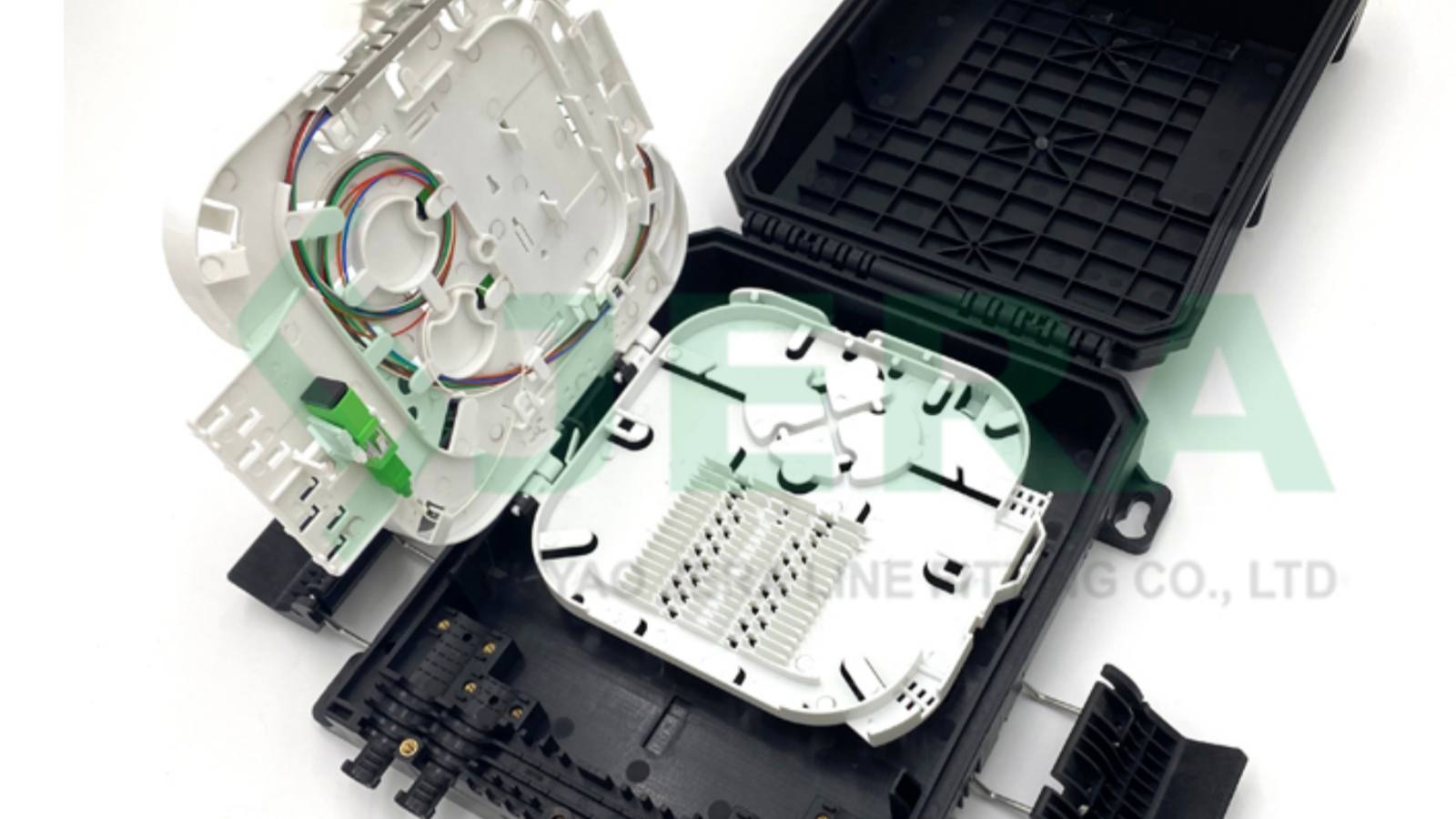
For example, JERA LINE's FODB series fiber optic distribution boxes are designed for practical fiber management in access network applications[cite: 1]. Their compact enclosure concepts are suitable for applications where installers need to combine fiber termination, distribution, and cable management in a relatively small space[cite: 1].
3.2. Metal Housings
Metal enclosures can provide excellent mechanical strength and are sometimes preferred for applications where high impact resistance or special environmental protection is required[cite: 1].
However, metal can increase product weight and may require additional corrosion protection depending on the environment[cite: 1].
For many FTTH access applications, a properly engineered polymer enclosure can provide a more practical combination of protection, weight, and installation efficiency[cite: 1].
4. Fiber Capacity: How Many Fibers Do You Need?
The second major consideration is capacity[cite: 1].
An outdoor fiber optic distribution box should have enough space for the current network design while leaving reasonable room for fiber management and future expansion[cite: 1].
Common capacities include small boxes for residential access networks and larger boxes designed for multi-subscriber distribution[cite: 1].
Before purchasing, buyers should determine[cite: 1]:
-
How many feeder fibers enter the box?[cite: 1]
-
How many distribution fibers leave the box?[cite: 1]
-
How many adapters are required?[cite: 1]
-
Will PLC splitters be installed?[cite: 1]
-
Is fiber splicing required?[cite: 1]
-
Will additional subscribers be connected later?[cite: 1]
-
How much internal fiber routing space is necessary?[cite: 1]
Simply choosing a box based on the number of adapters can sometimes lead to an undersized solution[cite: 1].
For example, a box with eight optical interfaces may need additional internal space if it also incorporates a PLC splitter and fiber splicing[cite: 1].
5. Understanding Splitter Capacity in FTTH Networks
Passive Optical Network architectures such as GPON and XGS-PON often require optical splitting between the OLT and subscribers[cite: 1].
A PLC splitter can divide one optical signal into multiple outputs, such as[cite: 1]:
-
1×2[cite: 1]
-
1×4[cite: 1]
-
1×8[cite: 1]
-
1×16[cite: 1]
-
1×32[cite: 1]
-
1×64[cite: 1]
For access network applications, the distribution box may therefore need to accommodate a PLC splitter in addition to fiber termination components[cite: 1].
JERA LINE provides fiber optic distribution solutions that can be configured for different network architectures[cite: 1]. For example, certain FODB configurations can be designed around 1×8 or 2×1×4 PLC splitter arrangements, depending on the product configuration and application requirements[cite: 1].
This makes the distribution box an important part of the optical splitting architecture rather than simply a passive cable enclosure[cite: 1].
When selecting a box, always check the actual internal splitter installation space, rather than assuming that a box with sufficient adapter capacity will automatically accommodate the desired splitter[cite: 1].
6. Protection Ratings: Why IP Rating Matters
For outdoor installations, one of the most important specifications is the IP protection rating[cite: 1].
The IP code, defined under IEC 60529, indicates the level of protection provided by an enclosure against solid particles and water[cite: 1].
The first digit relates primarily to protection against solids and dust, while the second digit relates to water protection[cite: 1].
For example[cite: 1]:
-
IP54 provides protection against limited dust ingress and water splashes[cite: 1].
-
IP65 provides a higher level of protection against dust and water jets[cite: 1].
-
IP66 provides dust protection and resistance to powerful water jets[cite: 1].
-
IP67 adds protection against temporary immersion under specified test conditions[cite: 1].
-
IP68 indicates protection against continuous or prolonged immersion under conditions specified by the manufacturer[cite: 1].
However, an important point for buyers is that a higher IP number does not automatically mean a product is better for every installation[cite: 1].
The correct rating depends on where and how the box will be installed[cite: 1].
For example, a box mounted under a protected building structure may face very different conditions from one installed directly on an outdoor utility pole in an area with heavy rainfall[cite: 1].
Therefore, buyers should match the protection rating with the actual network environment[cite: 1].
8. Fiber Management and Minimum Bend Radius
Optical fiber is sensitive to excessive bending[cite: 1].
If fibers are bent beyond their recommended bend radius, optical attenuation can increase and the long-term reliability of the connection may be affected[cite: 1].
For this reason, internal fiber management is one of the most important design elements of a distribution box[cite: 1].
A well-designed box should provide[cite: 1]:
-
Organized fiber routing[cite: 1]
-
Adequate bending space[cite: 1]
-
Secure fiber fixation[cite: 1]
-
Separation between incoming and outgoing fibers where appropriate[cite: 1]
-
Easy access for maintenance[cite: 1]
-
Protection against accidental fiber damage[cite: 1]
This becomes especially important when multiple fibers, adapters, splices, and PLC splitters are installed in the same enclosure[cite: 1].
A compact design is useful, but compact should not mean overcrowded[cite: 1].
9. Splicing, Termination, and Distribution in One Box
Depending on the network architecture, an outdoor fiber optic distribution box may perform several functions simultaneously[cite: 1].
Fiber Termination
Incoming optical cables can be terminated using fiber adapters and pigtails[cite: 1].
Fiber Splicing
The box can provide space for fusion splicing between feeder fibers and distribution fibers[cite: 1].
Optical Splitting
PLC splitters can divide the optical signal for multiple subscribers[cite: 1].
Fiber Distribution
The box provides organized output ports for connecting distribution or drop cables[cite: 1].
Combining these functions into a single enclosure can reduce the number of separate components required in an FTTH deployment[cite: 1].
This is one reason fiber distribution boxes are increasingly important in FTTH, FTTB, and other FTTx networks[cite: 1].
10. Installation Method: Wall-Mounted or Pole-Mounted?
Before purchasing an outdoor fiber optic distribution box, determine where it will be installed[cite: 1].
The two common methods are[cite: 1]:
Wall-Mounted Installation
Wall mounting is widely used for[cite: 1]:
-
Residential buildings[cite: 1]
-
Commercial buildings[cite: 1]
-
Telecom rooms[cite: 1]
-
Utility facilities[cite: 1]
-
Industrial sites[cite: 1]
A wall-mounted box should have suitable mounting points that allow secure fixation without compromising the enclosure[cite: 1].
Pole-Mounted Installation
Pole-mounted installation is common in aerial FTTH and access networks[cite: 1].
In these applications, the box may need to be installed together with[cite: 1]:
-
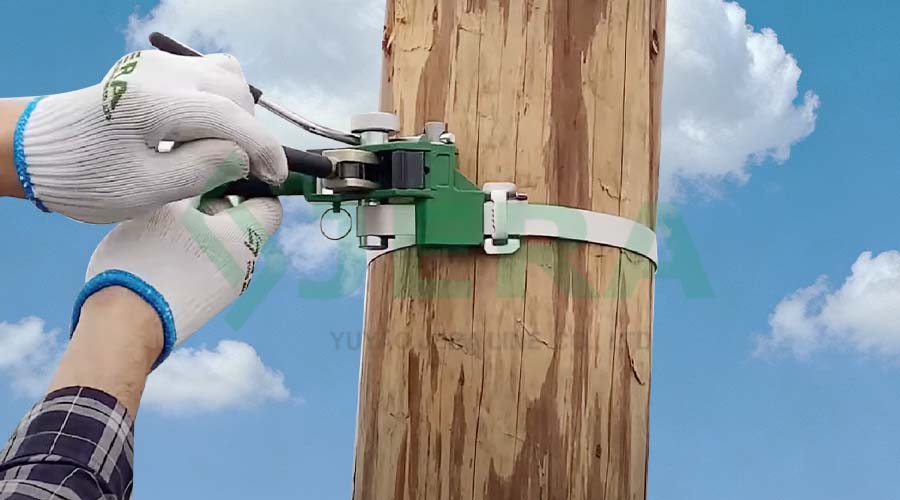
Stainless steel bands[cite: 1]
-
Stainless steel buckles[cite: 1]
-
Pole brackets[cite: 1]
-
Cable clamps[cite: 1]
-
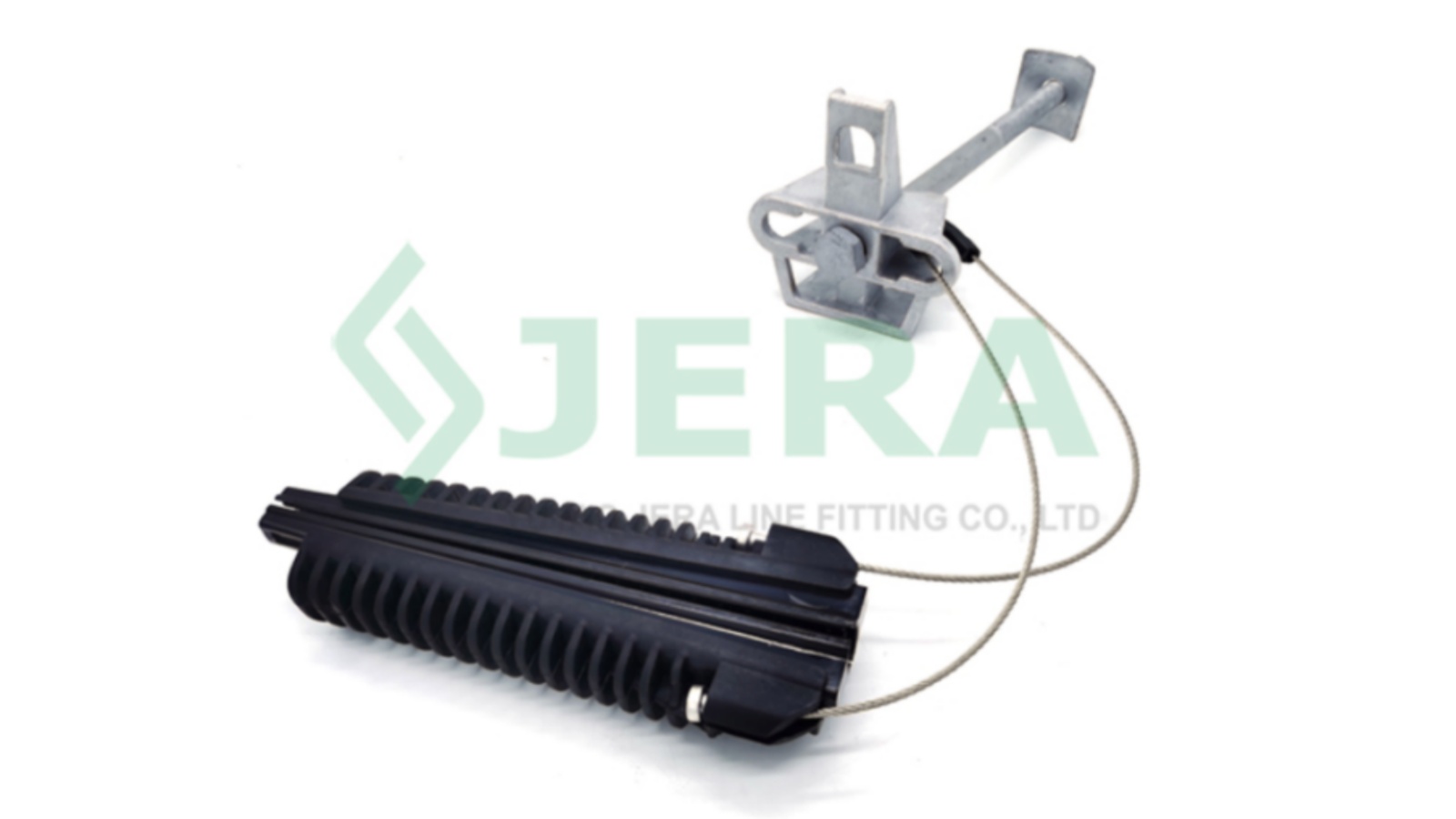
ADSS fittings[cite: 1]
-
Fiber optic drop cable accessories[cite: 1]
This is where a complete product ecosystem becomes valuable[cite: 1].
JERA LINE supplies not only fiber distribution boxes but also stainless steel banding systems, pole line hardware, ADSS clamps, FTTH accessories, and other network components, allowing installers and distributors to source multiple components for the same deployment[cite: 1].
11. Why Stainless Steel Banding Is Important for Pole Installation
When an outdoor fiber distribution box is mounted on a telecom or utility pole, the mounting system must remain stable under outdoor conditions[cite: 1].
A stainless steel banding system can provide a practical solution for securing equipment to poles[cite: 1].
JERA LINE offers stainless steel straps and buckles designed for pole-line installation applications[cite: 1].
The combination of[cite: 1]:
Fiber distribution box + stainless steel strap + buckle + pole hardware[cite: 1]
can create a practical installation solution for aerial FTTH infrastructure[cite: 1].
Stainless steel is particularly useful because it provides good resistance to corrosion and can withstand demanding outdoor environments[cite: 1].
For network contractors, using compatible mounting accessories can also simplify procurement and installation[cite: 1].
12. Quality Control Matters
The reliability of an outdoor fiber optic distribution box depends not only on its design but also on manufacturing consistency[cite: 1].
Important quality-control factors include[cite: 1]:
-
Raw material inspection[cite: 1]
-
Injection molding consistency[cite: 1]
-
Dimensional accuracy[cite: 1]
-
Assembly quality[cite: 1]
-
Sealing inspection[cite: 1]
-
Mechanical testing[cite: 1]
-
Environmental testing[cite: 1]
-
Fiber management verification[cite: 1]
-
Packaging quality[cite: 1]
JERA LINE operates with an ISO 9001:2015 quality management system and focuses on manufacturing fiber optic and cable infrastructure products for global network applications[cite: 1].
For professional buyers, selecting a manufacturer with established production and quality-control processes can reduce the risks associated with inconsistent batches[cite: 1].
JERA LINE: Fiber Distribution and FTTH Network Solutions
Choosing an outdoor fiber optic distribution box is only one part of building a reliable fiber network[cite: 1].
The distribution box must work together with the feeder cable, fiber optic cable, clamps, mounting hardware, splitters, connectors, and other components[cite: 1].
This is where a complete manufacturer and solution provider can provide additional value[cite: 1].
JERA LINE focuses on FTTH and fiber optic network infrastructure, supplying products for fiber termination, distribution, aerial deployment, pole-line installation, and last-mile connectivity[cite: 1].
Its product portfolio includes[cite: 1]:
-
Outdoor fiber optic distribution boxes[cite: 1]
-
Fiber termination boxes[cite: 1]
-
FTTH terminal boxes[cite: 1]
-
Fiber splice closures[cite: 1]
-
PLC splitters[cite: 1]
-
ADSS suspension clamps[cite: 1]
-
ADSS dead-end clamps[cite: 1]
-
Fiber optic drop cable accessories[cite: 1]
-
Stainless steel bands and buckles[cite: 1]
-
Pole line hardware[cite: 1]
-
Other FTTH accessories[cite: 1]
For example, JERA LINE's FODB series can be used for fiber termination and distribution applications where compact fiber management and organized connections are required[cite: 1].
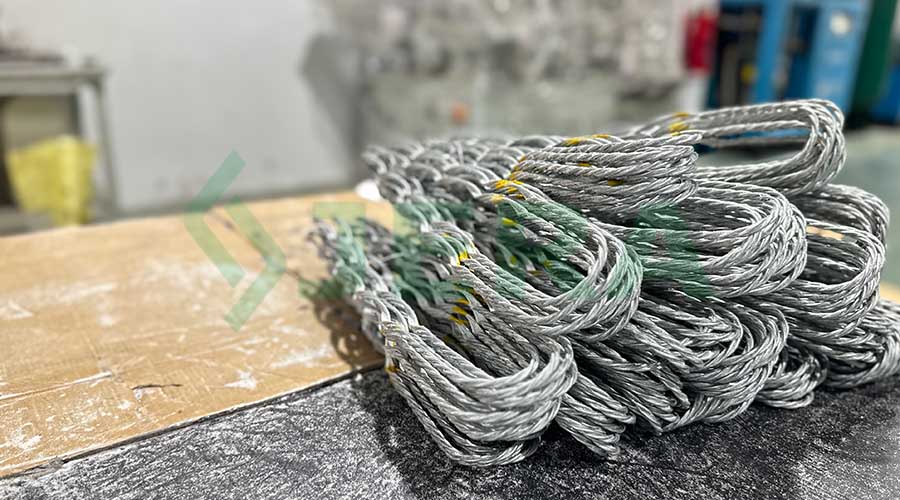
The company also develops aerial fiber installation solutions such as PA-series ADSS anchor clamps and suspension fittings, supporting overhead fiber deployments from the pole to the access network[cite: 1].
This product combination allows customers to build a more complete FTTH deployment package instead of purchasing every component from unrelated suppliers[cite: 1].
Conclusion
An outdoor fiber optic distribution box is a critical component of modern FTTH and FTTx infrastructure[cite: 1]. It protects optical fibers, organizes connections, supports fiber splicing and termination, and in many applications provides a convenient location for PLC optical splitting[cite: 1].
When selecting a fiber distribution box, buyers should look beyond basic dimensions and price[cite: 1]. Material, fiber capacity, splitter compatibility, IP protection rating, cable entry, fiber management, installation method, environmental resistance, maintenance accessibility, and manufacturer quality control all have a direct impact on long-term network performance[cite: 1].
For network operators, contractors, distributors, and telecom equipment buyers, the ideal solution is one that balances reliable protection with practical installation and future expansion[cite: 1].
JERA LINE provides a broad range of fiber optic distribution boxes, FTTH terminal solutions, splice closures, PLC splitters, ADSS clamps, stainless steel banding systems, and other fiber optic accessories, helping customers build complete and reliable fiber access networks[cite: 1].
Whether you are deploying a small FTTH project or a large-scale outdoor fiber network, selecting the right distribution box is an important investment in the reliability and maintainability of the entire system[cite: 1].
Looking for a reliable outdoor fiber optic distribution box manufacturer? Explore JERA LINE's fiber optic distribution and FTTH solutions to find a configuration suitable for your network application[cite: 1].




.png)