As fiber optic networks continue to expand around the world, choosing the right Caja Terminal Acceso Óptico, or optical fiber terminal box, has become increasingly important for telecom operators, internet service providers, system integrators, contractors, and fiber optic distributors. In FTTH, GPON, and broader FTTx networks, the terminal box is more than a simple enclosure. It is an important access point for fiber termination, splicing, splitting, distribution, protection, and future maintenance.
Outdoor fiber networks are exposed to rain, humidity, dust, ultraviolet radiation, temperature changes, wind, vibration, and accidental mechanical stress. A poorly designed terminal box can allow moisture to enter the enclosure, create fiber management problems, increase installation time, and eventually contribute to network failures. By contrast, a properly selected outdoor fiber distribution box can protect optical components and make network deployment and maintenance much easier.

In this guide, we will explain what a Caja Terminal Acceso Óptico is, why it matters in FTTH and GPON networks, which features should be considered when choosing one, and why an IP68 outdoor fiber distribution box such as the solutions offered by JERA LINE can be an effective choice for demanding FTTx applications.
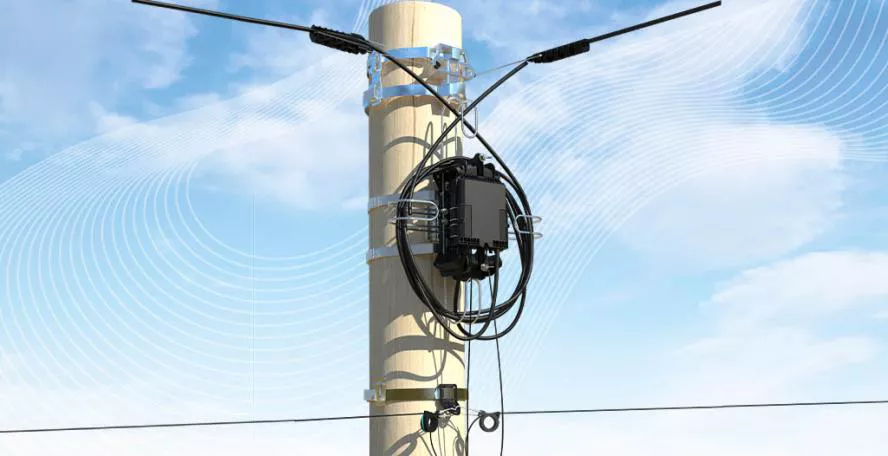
What Is a Caja Terminal Acceso Óptico?
The Spanish term Caja Terminal Acceso Óptico generally refers to an optical access terminal box, fiber optic termination box, fiber distribution box, or fiber access terminal. Depending on the network architecture and region, it may also be called an FTTH terminal box, fiber distribution box (FDB), fiber termination box, optical distribution box, or fiber access terminal (FAT).
Its primary function is to provide a protected and organized location where optical fibers can be:
-
Terminated
-
Spliced
-
Split
-
Distributed
-
Connected to drop cables
-
Connected through adapters or pigtails
-
Stored with appropriate fiber slack
-
Protected against environmental conditions
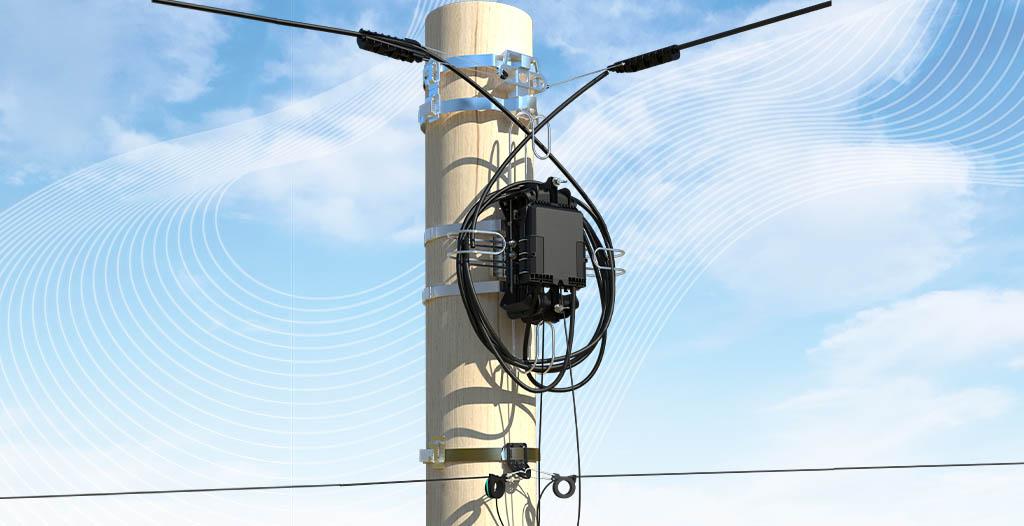
In an FTTH network, for example, a feeder or distribution fiber may enter the box and then be connected to several subscriber drop cables. A PLC splitter may also be installed inside the enclosure to divide one optical signal into multiple outputs.
JERA LINE's outdoor fiber distribution box range is specifically designed for FTTx applications and includes different configurations for fiber termination, splicing, and splitting. The company's product range includes models such as FODB-8, FODB-8.5, FODB-8.6, FODB-16H, and other outdoor distribution and termination solutions.
Why the Optical Terminal Box Is Important in FTTH Networks
FTTH networks are designed to deliver optical fiber all the way to residential or business users. Although the optical cable itself is extremely important, the connection points between feeder, distribution, and drop cables also have a major influence on network reliability.
A good terminal box performs several important functions.
-
1. Fiber Protection
Bare fibers and fusion splices are sensitive to mechanical damage, moisture, contamination, and excessive bending. The enclosure provides a protected environment for these components.
-
2. Fiber Organization
Fiber networks can become difficult to maintain when cables are crowded or poorly routed. A properly designed terminal box provides dedicated routing paths, splice management, adapter positions, and storage space.
-
3. Optical Distribution
In a PON architecture, a PLC splitter can divide one incoming optical signal into multiple output fibers. A suitable terminal box can accommodate the splitter and organize its input and output fibers.
-
4. Maintenance
A well-designed enclosure allows technicians to access splice trays, adapters, pigtails, and cables without unnecessarily disturbing other connections.
-
5. Network Expansion
FTTH networks are often deployed progressively. Not every port is necessarily activated on the first day. A terminal box with spare capacity allows additional subscribers to be connected later.
For these reasons, the terminal box should be considered part of the overall network design rather than simply an inexpensive plastic enclosure.
What Makes the Best Caja Terminal Acceso Óptico?
There is no single terminal box that is perfect for every network. The best product depends on installation conditions, fiber count, splitter configuration, connector type, mounting method, and expected subscriber capacity.
However, several characteristics should always be evaluated.
1. High-Level Waterproof and Environmental Protection
For outdoor FTTH and FTTx deployments, environmental protection should be one of the first selection criteria.
An outdoor enclosure may be installed directly on a utility pole, building wall, roadside structure, or other exposed location. Rainwater, dust, condensation, humidity, and temperature fluctuations can affect optical components over time.
An IP68-rated outdoor fiber distribution box provides a high level of protection against dust and water ingress when correctly designed and installed. JERA LINE's IP68 outdoor fiber distribution boxes use a rubber-sealing design intended for outdoor FTTH communication networks and are designed to protect internal fiber management components from demanding environmental conditions.
However, buyers should not select an enclosure based only on the IP number printed on the product. Cable entry sealing, gasket quality, housing construction, locking design, mounting method, and installation procedures all contribute to long-term protection.
For particularly exposed installations, IP68 can provide additional confidence compared with lower protection levels.
2. Durable Housing Material
The enclosure itself needs to withstand outdoor conditions for many years.
A good outdoor fiber terminal box should have a housing capable of resisting:
-
UV exposure
-
Rain and humidity
-
Temperature cycling
-
Mechanical impact
-
Corrosion
-
Long-term aging
Engineering plastics such as UV-resistant PC, ABS, or other suitable materials are widely used in outdoor fiber distribution equipment because they can provide a useful balance between mechanical performance, weight, corrosion resistance, and cost.
The choice of material should also consider the specific environment. A box installed in a coastal region, for example, may face more demanding corrosion and humidity conditions than one installed indoors.
3. Suitable Fiber Capacity
Another important consideration is capacity.
A box that is too small can become difficult to install and maintain. Fibers may be forced into tight bends, splice trays may become overcrowded, and technicians may have difficulty accessing individual ports.
On the other hand, an unnecessarily large box can increase project cost and occupy more installation space.
The right capacity should therefore be determined by the actual network design.
For example:
-
Small FTTH distribution points may require 4–8 ports.
-
Residential neighborhood access points may require 8–16 ports.
-
MDU or FTTB projects may require 16–24 ports or more.
-
Larger aggregation applications may require higher-density distribution equipment.
The important point is to consider not only today's requirements but also expected future expansion.
A box that is already completely full when the network is activated leaves little room for additional subscribers or future maintenance.
4. PLC Splitter Compatibility
GPON and other PON technologies rely on passive optical splitters to distribute signals to multiple subscribers.
A terminal box used in a GPON network may therefore need to accommodate a PLC splitter such as:
The correct splitter ratio should be determined by the optical budget and network architecture rather than simply by the number of available ports.
For example, using a higher split ratio can allow one feeder fiber to serve more subscribers, but it also introduces additional optical insertion loss. The splitter ratio must therefore be compatible with the OLT power budget, fiber distance, connector losses, splice losses, and other passive components.
JERA LINE offers outdoor distribution box configurations designed to support fiber termination and splitter-based FTTx applications, including its GPON outdoor splitter terminal box FODB-8.6.
5. Good Fiber Management
Fiber management is one of the most overlooked factors when selecting an optical terminal box.
A box can have excellent waterproof performance, but if the internal fiber routing is poorly designed, technicians may still experience installation and maintenance problems.
A well-designed enclosure should provide space for:
-
Fusion splicing
-
Fiber pigtails
-
Optical adapters
-
PLC splitters
-
Patch cords
-
Fiber slack
-
Cable routing
-
Cable fixation
The fiber should also be routed according to the appropriate minimum bend radius.
This is particularly important in compact FTTH boxes because forcing fibers into sharp bends can increase optical loss and potentially damage the fiber.
Good internal organization also makes troubleshooting easier. When a technician needs to replace a connector or investigate an optical problem, clearly organized fibers reduce the risk of accidentally disconnecting another subscriber.
6. Flexible Installation Options
FTTx networks are deployed in many different environments.
A terminal box may be installed:
-
On a utility pole
-
On an exterior building wall
-
Inside a communication cabinet
-
In a residential area
-
In a commercial building
-
In a rural broadband network
-
Near a roadside access point
-
In industrial facilities
Therefore, mounting flexibility is an important consideration.
Pole-mounted applications may require strong cable fixation and reliable mounting accessories. Wall-mounted installations may prioritize compact dimensions and convenient access.
The installation method should also ensure that the weight and mechanical tension of the cable are properly supported. The fiber terminal box should not be used as an inappropriate substitute for a proper cable anchoring system.
7. Easy Installation and Maintenance
Installation time has a direct impact on project cost.
A complicated fiber distribution box can increase labor requirements and create more opportunities for installation errors. A well-designed product should allow technicians to perform common operations efficiently.
Important design considerations include:
-
Easy enclosure opening and closing
-
Convenient cable entry
-
Simple splice management
-
Accessible adapter ports
-
Clear fiber routing
-
Secure cable fixation
-
Easy splitter installation
-
Sufficient working space
JERA LINE emphasizes modularity and ease of fiber cable management in its outdoor distribution box solutions. Its product range is designed to accommodate different termination, splicing, and splitting requirements for FTTx networks.
Why IP68 Is Valuable for Outdoor FTTx Networks
Outdoor networks can experience environmental conditions that indoor equipment never encounters.
Consider a pole-mounted FTTH network in an area with heavy rainfall. The distribution box may be exposed to water repeatedly throughout the year. If the enclosure or cable entry is poorly sealed, moisture can eventually reach the optical components.
Similarly, in areas with significant temperature fluctuations, repeated expansion and contraction can put stress on sealing structures.
An IP68 design can therefore be particularly attractive for:
-
Pole-mounted FTTH networks
-
Rural broadband networks
-
Coastal deployments
-
High-humidity environments
-
Areas with heavy rainfall
-
Exposed outdoor distribution points
-
Underground or highly exposed access points, where the specific product and installation method are suitable
IP68 is not automatically required for every project, but it can provide an additional level of protection where environmental exposure is significant. Industry products designed for outdoor FTTx increasingly emphasize compact, sealed enclosures that maintain protection while still allowing technicians to access and repair connections.
Why JERA LINE Outdoor Fiber Distribution Boxes Are Worth Considering
JERA LINE has developed a broad range of passive fiber optic products for FTTH and FTTx networks, including outdoor fiber distribution boxes, termination boxes, fiber cables, clamps, splice closures, PLC splitters, pigtails, adapters, and other accessories.
Its outdoor IP68 rubber-sealed distribution box range is particularly relevant for network projects that require strong environmental protection.
The product family includes configurations for different fiber capacities and applications, including:
For network operators and distributors, having multiple related configurations from one manufacturer can also simplify product selection and procurement.
Instead of combining products from several suppliers, project teams can select compatible components from a common product range.
Conclusion
The best Caja Terminal Acceso Óptico for FTTH, GPON, and FTTx applications in 2025 is not necessarily the largest or most expensive product. The best choice is the one that matches the actual network architecture, environmental conditions, fiber capacity, splitter configuration, installation method, and future expansion requirements.
For exposed outdoor networks, environmental protection should be a top priority. An IP68 rubber-sealed fiber distribution box can be an excellent option when the installation requires strong protection against dust and water. At the same time, buyers should evaluate fiber management, splitter compatibility, cable entry, mounting, capacity, maintenance access, and overall product quality.
JERA LINE's outdoor IP68 fiber distribution box range provides solutions for FTTH, GPON, and wider FTTx applications, with configurations designed for fiber termination, splicing, splitting, and distribution. The company also offers a broader portfolio of passive optical network components, allowing network builders to develop more integrated FTTH solutions.
For more information about JERA LINE's outdoor fiber optic distribution boxes and other FTTx solutions, contact the JERA LINE team to discuss your application and product requirements.




.png)