ADSS fiber optic cable, fully dielectric self‑supporting cable, eliminates the requirement for separate messenger strands on overhead routes. It is widely deployed across suburban residential zones, rural broadband rollouts, industrial parks, and mixed utility‑telecommunication pole lines. Without correctly sized anchor clamps, even premium‑grade fiber optic cable can suffer jacket crushing, fiber micro‑bending, cable slippage, or unexpected sagging caused by wind load, ice accumulation, and extreme temperature cycling. Along anchor sections of the network, contractors also frequently work with drop cable for last‑mile subscriber connections, guy grip assemblies for heavy‑duty dead‑end tension transfer, and supporting hardware such as pole brackets, stainless steel banding, and cable box units for fiber splicing and termination points. Every single piece of hardware must work in harmony to protect fiber optic cable across decades of outdoor exposure.
Many project buyers look for dependable, field‑validated ADSS anchor clamp solutions for medium‑span aerial fiber optic cable deployments. JERA FIBER, operating under JERA LINE established in 2012, manufactures a full‑range ADSS anchor clamp portfolio engineered for direct replacement in overhead FTTH network designs. Combining in‑house manufacturing, comprehensive accessory ecosystem, strict quality assurance, flexible OEM customization, and deep international project experience, JERA ADSS anchor clamps deliver a practical, cost‑effective hardware solution for telecom distributors, network installers, and bulk equipment purchasers all over the world.
Within this article, we break down the core evaluation criteria when selecting ADSS anchor clamps for your fiber optic cable projects. We explain how JERA factory‑produced anchor clamps perform in real‑world aerial conditions, how they integrate with drop cable hardware, guy grip accessories, and cable box termination enclosures, and why direct‑factory cooperation delivers tangible advantages for your FTTx procurement and field deployment work.
1. In‑House Factory Production Delivers Stable Quality & Full Process Control for ADSS Anchor Clamps
One primary risk telecom buyers face when ordering ADSS anchor clamps comes from trading‑company middlemen who source hardware across multiple external subcontractors. While third‑party sourcing may deliver low unit pricing on paper, it often introduces inconsistency in material formulation, dimensional tolerance, mechanical breaking load, and UV‑resistance between separate production batches. For aerial fiber optic cable installations, batch‑to‑batch variation in anchor clamps creates serious downstream risk: poorly manufactured units can slip under tension, degrade rapidly under coastal salt‑spray conditions, or damage the outer sheath of drop cable during field installation.
JERA FIBER maintains complete in‑house manufacturing for its ADSS anchor clamp series. Over 95 % of all production workflows, including polymer compounding, component injection molding, stainless‑steel stamping, assembly work, batch mechanical testing, and finished‑product inspection, are completed inside our own production facilities. This full‑factory control directly benefits every customer purchasing ADSS anchor clamps, guy grip hardware, drop cable fittings, or supporting parts for cable box assemblies.
Tight control over mechanical dimensions and cable compatibility
Every model of JERA ADSS anchor clamp is engineered for well‑defined fiber optic cable outer‑diameter ranges. Whether you are deploying main‑line ADSS fiber optic cable or short‑span FTTH drop cable, precise wedge geometry ensures uniform pressure distribution on cable jackets. Improperly dimensioned anchor clamps concentrate sharp local pressure, causing irreversible micro‑bending losses inside fiber optic cable. For large‑volume telecom projects, JERA technical teams will validate approved drawings, reference sample units, and formal specification documents before mass production commences. This process eliminates mismatches between anchor clamp hardware, fiber optic cable, guy grip auxiliary fittings, and wall‑mounted cable box enclosures used within the same FTTH network.
Streamlined direct technical communication with production specialists
When you partner directly with the JERA LINE factory, your technical inquiries go straight to product and engineering teams, rather than filtering through multi‑layer reseller chains. Suppose your network contractor needs an ADSS anchor clamp optimized for a specific fiber optic cable diameter for rural long‑span routes; or your distributor business requires mixed container orders combining anchor clamps, guy grip dead‑end units, drop cable tension fittings, and multiple variants of outdoor cable box. Direct factory dialogue removes communication gaps. You can discuss tool‑free installation requirements, special anti‑corrosion material upgrades, custom packaging schemes, and project‑specific mechanical test documentation without unnecessary delays.
B2B buyers of aerial fiber hardware need far more than a price sheet. Your manufacturing partner must fully understand how anchor clamps interact with fiber optic cable, drop cable accessories, guy grip assemblies, and cable box termination points across end‑to‑end FTTH network architecture. That deep domain knowledge comes from hands‑on factory product development, not third‑party resale operations.
2. Complete Ecosystem of Matching Aerial Hardware Beyond ADSS Anchor Clamps
Successful ADSS aerial FTTH deployment cannot rely on anchor clamps alone. Fiber optic cable overhead networks span trunk sections, distribution poles, corner deflection points, and final subscriber drop‑off locations. Each zone needs coordinated hardware. When you select a supplier with a broad product portfolio, you simplify procurement logistics and guarantee cross‑component compatibility between ADSS anchor clamps, fiber optic cable, drop cable assemblies, guy grip tension hardware, and cable box termination cabinets.
JERA FIBER designs and manufactures a full ecosystem for ADSS aerial fiber optic cable deployment, all produced under our in‑house quality management framework.
ADSS Anchor Clamp Portfolio
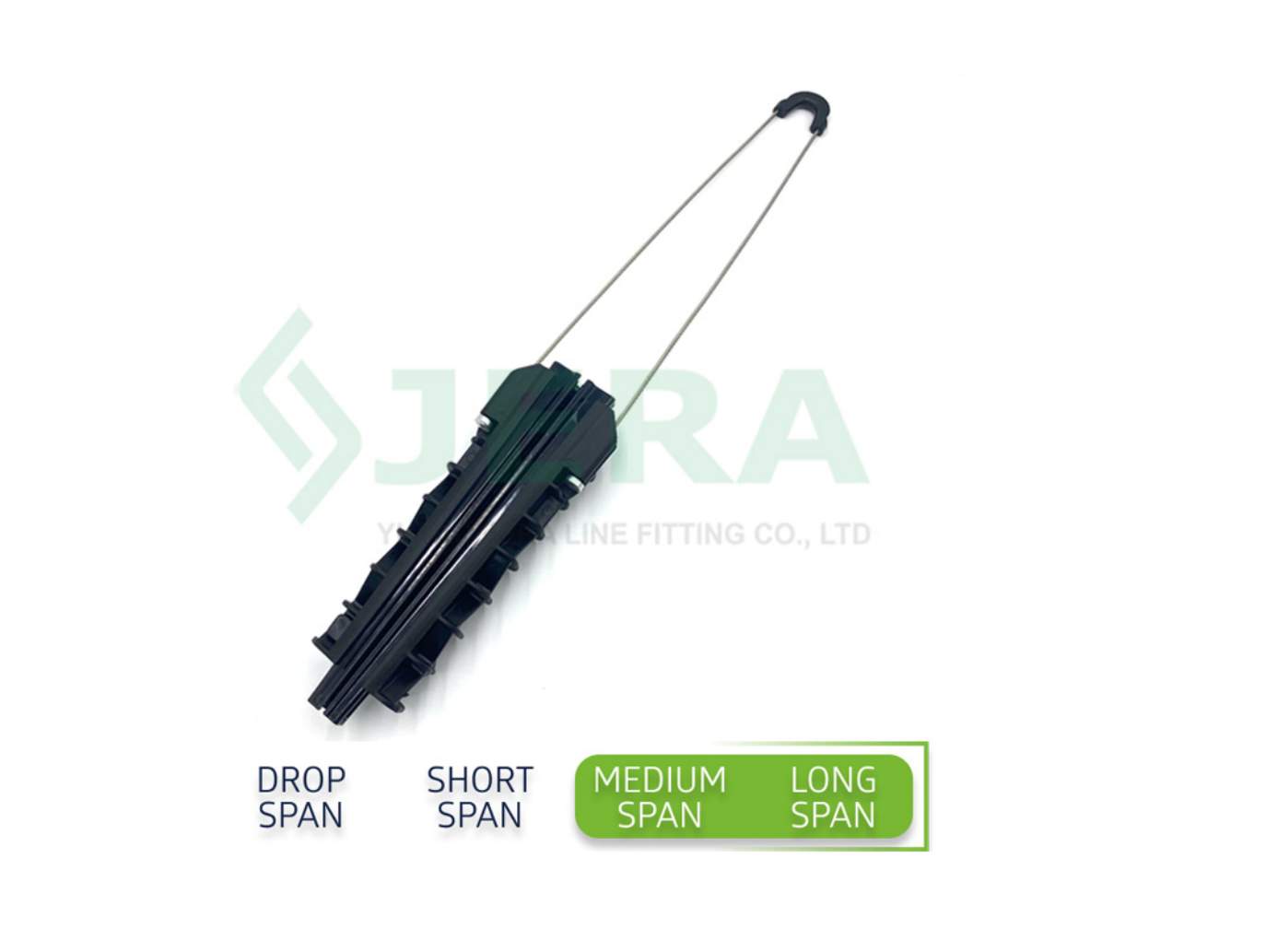
JERA offers multiple wedge‑style ADSS anchor clamp variants covering different fiber optic cable diameters and minimum breaking‑load ratings. These anchor clamps serve dead‑end pole locations, angle poles where fiber optic cable changes routing direction, and building facade termination points. Most JERA ADSS anchor clamp models support fully tool‑free field installation: field technicians can complete mounting without specialized crimping or compression tools, cutting down labor hours for large‑scale FTTH rollouts.
The self‑adjusting wedge mechanism inside each JERA ADSS anchor clamp evenly distributes tensile stress across fiber optic cable jackets. This design avoids localized crushing forces that would degrade signal performance. The hardware pairs seamlessly with pole‑mount brackets and stainless‑steel banding hardware, securing fiber optic cable prior to entry into a wall‑mounted cable box for splicing and optical splitting work. For lighter‑load last‑mile connections, many installers pair main‑line ADSS anchor clamps with dedicated drop cable tension clamps to anchor flat or round FTTH drop cable running from distribution poles to individual subscriber premises.
Guy Grip Dead‑End Hardware
For higher‑tension long‑span fiber optic cable routes, JERA supplies guy grip preformed helical dead‑end assemblies. A guy grip transfers heavy tensile loads along extended overhead spans by wrapping multi‑layer preformed wires around the outer surface of fiber optic cable. Unlike wedge‑type anchor clamps, a guy grip spreads mechanical force over a much longer cable contact length. In mixed‑hardware network designs, network engineers often combine guy grip hardware for trunk‑line dead‑ending with ADSS anchor clamps for shorter distribution segments, before fiber optic cable transitions to drop cable for final subscriber runs and feeds into a ground‑based or pole‑mounted cable box. It is critical to match the guy grip cable‑diameter rating precisely with your actual fiber optic cable to prevent jacket slippage or damage under wind and ice loading conditions.
Drop Cable Anchoring & Suspension Accessories
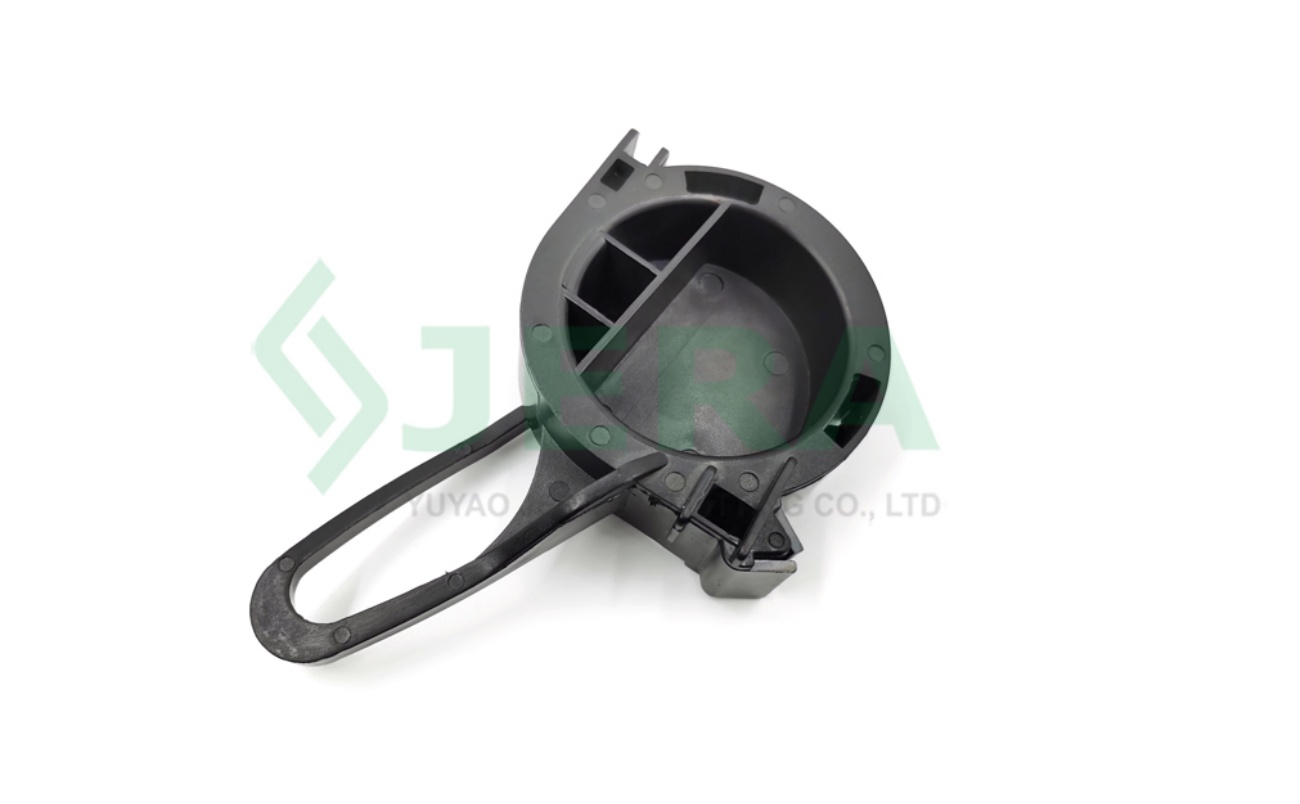
FTTH last‑mile connections heavily use drop cable to deliver connectivity from distribution points to homes and commercial premises. JERA manufactures a comprehensive lineup of drop cable anchor clamps and suspension clamps, compatible with flat drop cable and round small‑diameter fiber optic cable. These compact units are ideal for short spans between utility poles and building exterior walls, where drop cable enters directly into an outdoor cable box or wall‑mount subscriber terminal unit. All drop cable hardware shares identical material standards as our ADSS anchor clamps: UV‑stabilized reinforced polymer bodies and high‑grade stainless‑steel bail components for multi‑decade outdoor service life.
Cable Box & Passive Network Components
Every aerial fiber route eventually reaches termination and splicing hardware. JERA produces a full series of outdoor and indoor cable box (fiber distribution boxes) options, suited for pole‑mount, wall‑mount, and building‑entry applications. A properly specified cable box offers secure space for fiber splicing, PLC splitter installation, cable strain relief management, and sealed cable entry ports. When you source ADSS anchor clamps, guy grip units, drop cable fittings, and your cable box hardware all from one factory partner, you can validate end‑to‑end compatibility: verifying cable bend radii, cable entry dimensions, and mechanical strain‑relief requirements before hardware ships to your project site. This holistic approach lowers integration risks for your fiber optic cable network.
Supplementary Over‑pole Installation Hardware
Completing the aerial solution portfolio, JERA also produces pole brackets, stainless‑steel straps and buckles, slack‑cable storage fixtures, and related line hardware. All these accessories work together with ADSS anchor clamps, guy grip assemblies, drop cable fixtures, and cable box enclosures to deliver a unified overhead fiber deployment kit for contractors and distributors.
3. Rigorous Factory‑Level Quality Control for Outdoor Long‑Term Service
When ADSS anchor clamps, guy grip hardware, drop cable fittings are installed on overhead poles, repair or replacement comes with very high costs: it requires field crews, bucket‑truck mobilization, service downtime for end‑users, and additional logistics expenditure. The most cost‑efficient strategy is validating hardware quality before fiber optic cable deployment commences, rather than fixing failures after installation. JERA LINE runs operations according to ISO 9001:2015 quality‑management standards, embedding multi‑stage quality checks throughout ADSS anchor clamp manufacturing workflows.
Carefully‑specified raw‑material selection
Material performance directly defines service life for ADSS anchor clamps deployed outdoors. Reinforced UV‑resistant polymer components for anchor clamp wedge bodies must resist photo‑degradation under intense sunlight. Stainless‑steel bail parts used within anchor clamps and guy grip assemblies must withstand salt‑spray corrosion in coastal regions. Polymer components for cable box housings need to endure wide temperature fluctuations, from freezing winter conditions up to high summer surface temperatures. JERA’s material‑engineering team selects compound formulations matched to different operating environments. Buyers receive formal material grade documentation upon request, avoiding common pitfalls where visually similar anchor clamp hardware uses low‑grade recycled polymer that cracks after only a few years of field service.
Dimensional consistency and batch repeatability
Even high‑quality raw materials deliver poor performance without precise, repeatable manufacturing. Each production batch of JERA ADSS anchor clamps undergoes dimensional spot‑checking to confirm cable‑grip cavity sizes, wedge travel range, and bail assembly dimensions. If an anchor clamp’s inner profile deviates from specification, it cannot correctly hold the target fiber optic cable, drop cable dimension, creating slip risk. For large project orders, customers can request pre‑shipment sample verification, cross‑checking dimensions against fiber optic cable, guy grip mating hardware, and cable box cable‑entry requirements ahead of bulk delivery.
Targeted performance testing for real‑world field conditions
Different hardware categories require distinct validation tests. ADSS anchor clamps and guy grip assemblies undergo mechanical tensile load testing to verify minimum breaking‑load performance. Polymer components for anchor clamps, drop cable clamps and cable box housings go through UV‑aging cycling and temperature environmental testing. JERA does not apply a universal test suite for every product; testing is tailored to each hardware’s function. For example, mechanical pull tests are prioritized for load‑bearing ADSS anchor clamps and guy grip dead‑end parts, while ingress‑protection sealing tests are emphasized for outdoor cable box units. Project‑specific test reports and product specification sheets are available for review for qualified bulk purchasers.
It remains important for global buyers to distinguish between corporate‑level ISO quality certification and individual‑product test approvals. JERA FIBER supports customers to review certificate validity and scope to satisfy local telecom‑project standards for fiber optic cable infrastructure.
4.Factory‑Direct Procurement Delivers Optimized Total Cost of Ownership
Distributors, wholesale importers, telecom contractors, and large‑scale project buyers frequently fixate purely on per‑unit price for ADSS anchor clamps. However, the lowest unit price does not always produce the lowest total project expenditure. Hidden costs stem from premature hardware failure, poor compatibility with fiber optic cable, drop cable, guy grip parts, or cable box units, extra field modification work, high product‑return rates, and expensive on‑site replacement labor. Buying factory‑direct ADSS anchor clamps from JERA FIBER helps you evaluate complete total procurement value.
Cut out intermediate supply‑chain layers
Working directly with JERA LINE factory removes multiple reseller layers from your ADSS anchor clamp supply chain. You hold direct conversations around technical specifications, production timelines, bulk order volumes, packaging requirements, and commercial terms. This transparency extends across your full hardware list: whether you are ordering ADSS anchor clamps in large batches, mixed containers combining guy grip assemblies, drop cable tension clamps, multiple models of cable box, and complementary aerial fittings. You can align repeat‑order cycles to match your ongoing fiber optic cable network roll‑out schedules.
Flexible purchasing models to match varied business requirements
Customer purchasing patterns differ significantly. Some telecom distributors need recurring stock replenishment of standard ADSS anchor clamps, guy grip hardware, drop cable accessories and cable box variants. Network contractors may need fixed‑quantity one‑off shipments for a defined fiber optic cable deployment project. New market entrants often prefer sample‑order evaluation before committing to large‑volume bulk procurement.
JERA FIBER accommodates these diverse needs. Sample evaluation service allows customers to physically test ADSS anchor clamps with their own fiber optic cable, validate guy grip assembly fit, verify drop cable clamping function, and check physical interfaces with target cable box hardware before approving mass production. This practical pre‑validation step prevents costly specification errors on big‑budget FTTH projects.
Prioritize total procurement value over minimal unit price
A cheaper ADSS anchor clamp design that does not properly match your fiber optic cable diameter will generate heavy extra costs on‑site. Similarly, a cable box without properly‑sized cable entry ports for your drop cable and main ADSS fiber optic cable forces installers to perform unsafe field modification. When you collaborate early with JERA technical sales team, you review hardware compatibility before placing purchase orders. You balance unit pricing, mechanical performance, lead‑time, export documentation, and after‑order support, avoiding avoidable procurement mistakes for your aerial fiber optic cable networks.
5. OEM & Customization Support for Regional FTTH Market Requirements
Telecom network standards, installation practices, and hardware preferences vary widely across global markets. Off‑the‑shelf standard ADSS anchor clamps work well for many fiber optic cable projects. In other situations you require targeted modifications: adjusted clamping range for local‑spec fiber optic cable, modified guy grip dimensions, special material formulations for extreme climates, custom branding, tailored cable box internal layout, or bespoke packaging formats for your drop cable accessory product lines.
JERA FIBER provides OEM and limited customization services, subject to technical feasibility and volume conditions. Common customization requests include:
-
Adjusted clamping‑range geometry for non‑standard ADSS fiber optic cable or drop cable dimensions for local FTTH networks
-
Special anti‑corrosion material upgrades for coastal or high‑salinity deployment environments for ADSS anchor clamps and guy grip components
-
Custom logo marking and branding printed on anchor clamp bodies, guy grip packaging, drop‑cable accessory bags, and cable box housings
-
Modified internal layout for cable box units to match regional splitter and splicing practices
-
Custom export packaging configurations optimized for sea‑freight container loading for mixed hardware shipments.
By supporting tailored product adaptations, JERA helps distributors and project contractors deliver ADSS anchor clamp solutions that fit local network norms, without forcing customers to compromise on fiber optic cable performance requirements.
6. Rich Experience Serving International FTTH Aerial Fiber Projects
Manufacturing capability is only one piece of successful global hardware supply. Cross‑border B2B procurement also demands clear multilingual technical communication, complete product documentation, standardized export packaging, precise order tracking, and familiarity with different regional telecom norms for fiber optic cable overhead hardware.
Founded in year 2012, JERA LINE has accumulated over a decade of experience developing and producing ADSS anchor clamps, guy grip assemblies, drop cable fittings, cable box enclosures and complete sets of FTTH aerial accessories for customers spread across many countries worldwide. Our customer base covers telecom equipment distributors, network installation contractors, wholesale importers, and large‑scale project procurement teams.
Our international project experience means our teams understand typical real‑world challenges: matching ADSS anchor clamp specifications to local fiber optic cable standards, documenting guy grip mechanical ratings for tender submissions, verifying drop‑cable clamp compatibility for last‑mile networks, preparing full technical datasheets for cable box units, and coordinating consolidated mixed‑product container shipments combining multiple hardware categories. We recognize that clear technical documentation is just as important as the physical quality of your ADSS anchor clamps and fiber optic cable accessories.
7. Broad Application Compatibility Across Diverse ADSS Deployment Scenarios
ADSS fiber optic cable builds take place in highly varied environments: dense urban residential neighbourhoods, multi‑unit apartment complexes, commercial business districts, industrial zones, remote rural broadband roll‑outs, and coastal salt‑exposed locations. Every scenario presents unique challenges for ADSS anchor clamps, guy grip hardware, drop cable termination, and cable box placement.
In dense urban settings, short‑span overhead fiber optic cable routes are common. JERA ADSS anchor clamps perform dead‑end termination on utility poles, where fiber optic cable transitions to drop cable running to apartment buildings and feeds into wall‑mount cable box hardware. Installation speed is critical for city contractors, and tool‑free JERA anchor clamp designs help speed up field work.
Rural broadband projects frequently feature longer overhead spans. Here, design engineers may combine guy grip heavy‑duty dead‑end hardware on long‑span trunk sections, paired with ADSS anchor clamps on intermediate distribution poles. After termination, fiber routes branch out via drop cable to scattered subscriber homes, with cable box units installed on poles or building outer walls. Wind and ice loading impose high mechanical demands on both ADSS anchor clamps and guy grip assemblies in these open‑area environments.
Coastal and high‑humidity regions create elevated corrosion risk. JERA ADSS anchor clamps, guy grip bail components, drop‑cable clamp hardware and metal parts inside cable box assemblies can be built with upgraded corrosion‑resistant material selections, counteracting salt‑spray degradation to protect fiber optic cable long‑term service life.
Industrial park deployments often mix ADSS fiber optic cable for communication together with nearby power‑utility infrastructure. Fully dielectric JERA ADSS anchor clamps maintain electrical isolation for fiber optic cable, complying with safety requirements, before drop cable runs carry signals to site buildings and connect into indoor‑outdoor cable box termination points.
Why Select JERA ADSS Anchor Clamps for Your Next Aerial Fiber Optic Cable Project?
Choosing the correct ADSS anchor clamp manufacturing partner directly shapes procurement efficiency, field‑installation success rate, and multi‑decade reliability of your complete FTTH network. JERA FIBER brings together long‑standing manufacturing expertise, full in‑house production workflows, a complete aerial‑hardware ecosystem, strict quality management, OEM customization capability, and well‑honed international B2B customer support.
-
Core advantages of partnering with JERA FIBER for ADSS anchor clamp procurement:
-
Proven manufacturing heritage: JERA LINE established in 2012, fully focused on fiber optic cable aerial accessories including ADSS anchor clamps, guy grip assemblies, drop‑cable hardware, and cable box distribution solutions.
-
In‑house controlled production: Over 95 % production steps completed internally, delivering consistent batch quality for ADSS anchor clamps and matching fiber optic cable accessories.
-
Comprehensive product portfolio: Source ADSS anchor clamps, guy grip dead‑end hardware, drop cable tension and suspension clamps, cable box distribution enclosures, and supplementary aerial mounting hardware all from a single factory partner. This streamlines procurement and validates cross‑component compatibility for your fiber optic cable network.
-
Structured quality management: ISO 9001:2015‑compliant quality‑management framework. Project‑relevant mechanical test documentation and material specifications for ADSS anchor clamps, guy grip assemblies, drop‑cable fittings and cable box hardware can be provided upon customer request.
-
Flexible OEM and customization support: Subject to feasibility assessment, JERA can adapt ADSS anchor clamp clamping range, guy grip specifications, drop‑cable accessory features, branding marking, and cable box internal layouts to satisfy regional fiber optic cable project requirements.
-
Global B2B project experience: Years of cooperation with international telecom distributors, contractors and importers, focused on clear technical communication and reliable order coordination for large‑scale fiber optic cable deployments.
-
Direct factory‑level dialogue: Discuss ADSS anchor clamp technical suitability, fiber optic cable matching, guy grip selection criteria, drop‑cable fitting options, cable box configuration, sample testing, volume pricing and delivery timelines directly with manufacturing‑side specialists.
These combined strengths make JERA FIBER a strong manufacturing partner for any organization building ADSS aerial fiber optic cable infrastructure, whether you are sourcing ADSS anchor clamps for new network builds, replacement hardware for network maintenance, or complete accessory kits combining guy grip assemblies, drop‑cable clamps, and cable box units.
The ideal hardware selection always depends on your specific fiber optic cable technical parameters, span‑length design, local environmental conditions, and applicable regional telecom standards. JERA FIBER invites global buyers to share detailed project requirements, so our technical teams can evaluate and recommend the most appropriate ADSS anchor clamps, guy grip hardware, drop‑cable accessories and cable box configurations prior to you confirming formal purchase orders.
Conclusion: Build Resilient ADSS Aerial Networks With Trusted ADSS Anchor Clamp Manufacturing Partner
Global demand for high‑speed broadband connectivity keeps expanding, driving massive ongoing investment in overhead FTTH fiber optic cable infrastructure. While ADSS fiber optic cable forms the signal‑carrying core of aerial networks, supporting hardware including ADSS anchor clamps, guy grip dead‑end assemblies, drop cable anchoring fixtures, and cable box termination enclosures are equally critical to achieving stable, low‑maintenance long‑term network performance. Poor‑quality or mismatched anchor hardware can undermine even premium‑grade fiber optic cable, introducing avoidable field‑failure risks and inflated operating‑expense burdens for operators and contractors.
Working with an experienced, factory‑based ADSS anchor clamp manufacturer helps you mitigate risks around component compatibility, batch‑to‑batch consistency, procurement lead‑times, and long‑term supply stability for your fiber optic cable projects. Under JERA LINE, JERA FIBER delivers integrated aerial hardware solutions built on in‑house production, rigorous quality control, and hands‑on international project experience. From ADSS anchor clamps and guy grip tension hardware to drop cable accessories and versatile cable box distribution enclosures, we work side‑by‑side with customers to identify optimized hardware selections for every kind of ADSS aerial FTTH scenario.
Whether you are a telecom distributor searching for dependable ADSS anchor‑clamp stock supply, a network contractor executing large‑scale fiber optic cable aerial roll‑outs, or an importer building your own complete portfolio of FTTx accessories, your starting point remains clearly defining your fiber optic cable technical specifications, span parameters, environmental conditions, and full‑scope procurement requirements. Reach out to JERA FIBER to explore how our ADSS anchor clamp solutions can support your upcoming FTTH aerial deployments.