Stainless steel band is a strip bended around the aerial pole for the attachment purpose of any aerial fitting. The outdoor aerial infrastructure requires a robust attachment element which is stainless steel banding. The application areas are municipals, road signs, power cabling deployment, telecommunications, video surveillance.
Stainless steel band have excellent strength, precision and surface finish and are widely used in pillar industries such as aerospace, petrochemicals, automobiles, textiles, electronics, home appliances, computers and precision machining.
1. What Are the Processing Methods for Stainless Steel Strip? (Cold vs. Hot Rolled)
According to the processing method, stainless steel strips are divided into cold-rolled and hot-rolled. Understanding the difference is key to quality selection.
Comparison
|
Feature |
Cold-Rolled Strip |
Hot-Rolled Strip |
|
Strength |
Better strength and yield |
Good ductility and toughness |
|
Thickness |
Ultra-thin precision |
Thicker (1.80mm - 6.00mm) |
|
Finish |
Smooth, flat, high dimensional accuracy |
Rougher surface, easier to process |
How is Cold Rolled Steel Strip Made?
Cold-rolled strips are derived from hot-rolled strips through a specific refinement process:
1. Pickling
Remove oxide scale
2. Cold Rolling
Roll at normal temp
3. Annealing
Obtain properties
4. Smoothing
Ensure flatness
5. Cutting & Inspection
Final sizing
2. Types of Stainless Steel Belts
-
1. Austenitic: High chromium/nickel/molybdenum. Known for high strength, ductility, and corrosion resistance. (e.g., 304, 316).
-
2. Ferritic: >12% chromium, <20% carbon. Lower cost, good ductility.
-
3. Martensitic: High chromium, no nickel. High strength and wear resistance. Can be high or low carbon.
-
4. Duplex (Austenitic-Ferritic): Equal proportions of ferrite and austenite. Stronger and more corrosion-resistant than other types.
-
5. Precipitation Hardened: Contains Al, Ti, Cu, P. Age hardening creates hard intermetallic compounds for superior strength.
*Additional classifications include coil strips, spring strips, and polished strips based on processing.
3. Top 5 Applications of Stainless Steel Banding
Top 5 Applications in Telecom & Utility Projects
In telecommunication and utility projects—where equipment and cables often face harsh outdoor conditions—stainless steel banding stands out as a reliable fastening solution.
01. Securing Telecommunication Cables to Poles
Critical for Signal Stability
Reliably fastens fiber optic and copper cables to utility poles. Its high tensile strength resists wind, ice loads, and vibrations, preventing cable sagging or displacement.
02. Mounting Equipment Enclosures
Long-term Corrosion Resistance
Attaches distribution boxes and transformer housings to poles or concrete structures. Essential for coastal or humid areas where rust is a major threat.
03. Cable Tray and Conduit Fastening
High Load Capability
Secures cable trays and electrical conduits. Unlike plastic alternatives, it withstands high temperatures and heavy cable loads without snapping.
04. Grounding System Installation
Safety First
Fastens grounding cables and rods to structures. Ensures consistent electrical grounding over decades, protecting equipment from surges.
05. Securing Overhead Line Hardware
Weather Resilience
Fixes overhead line components (insulators, clamps). UV radiation does not degrade stainless steel, safeguarding the reliability of power transmission lines.
Broader Industrial Applications
Beyond telecom, stainless steel bands have excellent strength and surface finish and are widely used in:
-
Municipals: Road signs, video surveillance.
-
Industries: Aerospace, petrochemicals, automobiles, textiles, electronics.
-
Machining: Computers and precision machining.
4. How to Choose the Right Stainless Steel Banding?
Selecting the correct banding involves considering these key factors:
1. Standards Different regions use different standards (China GB, US ASTM, Japan JIS). Jera Line adopts European EN standards.
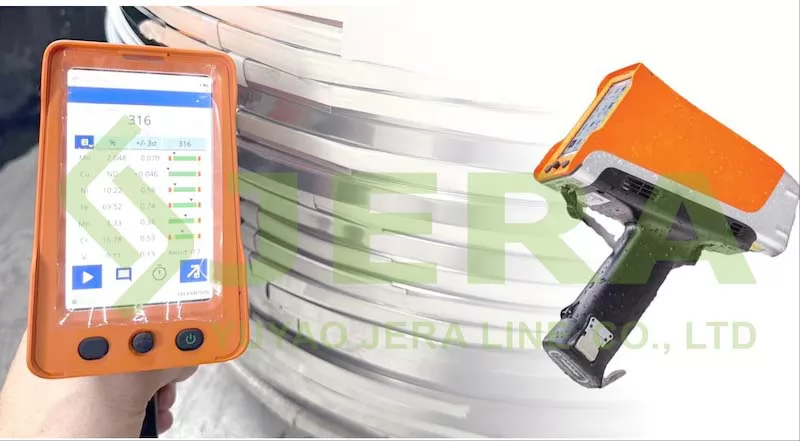
2. Application Environment Coastal areas require high corrosion resistance (Grade 316), while inland might use Grade 201/304.
3. Material Grade Choose between Austenitic, Ferritic, etc., based on the required mechanical properties.
4. Mechanical Properties Consider the specific tensile strength, hardness, and ductility needed for the load.
5. Size (Dimensions) Select thickness and width based on the weight of the object being secured.
6. Edge Profile Critical for safety. Options include burrs, square edges, or round edges (safest for installers).
7. Surface Treatment Matte, 2B, BA, Mirror, Brushed, or Sandblasting affect both appearance and corrosion resistance.
8. Packaging Type Consider transport and storage. Portable plastic shells or reinforced cartons are best for field work.
5. Product Overview & Specifications
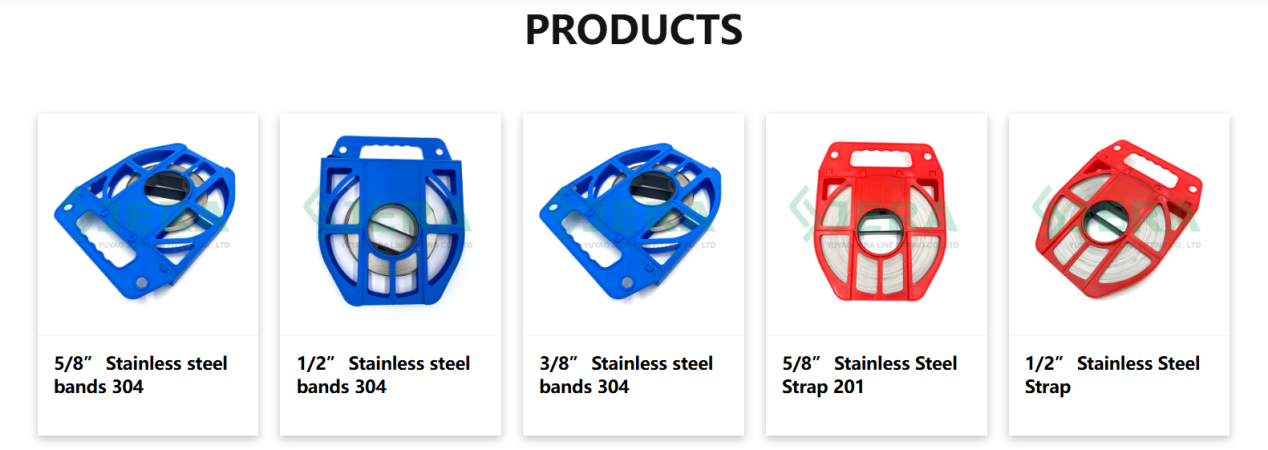
Stainless steel banding is a tie used to fix or secure industrial fittings to poles, widely applied in passive optical network construction and electrical fastening scenarios.
Produced by Jera Line, these bands are engineered for superior performance.
Technical Specification
|
Attribute |
Details |
|
Material Grade (SUS) |
201, 202, 304, 316, 409 |
|
Roll Length |
30m or 50m |
Key Features
-
Excellent Corrosion Resistance: Contains chromium and nickel. Chromium forms a stable oxide passivation layer when exposed to oxygen, preventing rust.
-
High Strength and Durability: High tensile strength enables firm fastening of heavy cables without breaking.
-
Good Heat Resistance: Maintains structural integrity even in extreme temperatures.
-
Weather and UV Resistance: Inherently resistant to UV radiation, unlike plastic banding which becomes brittle in sunlight.
-
Diverse Sizes: Available in various lengths and widths for different loads.
-
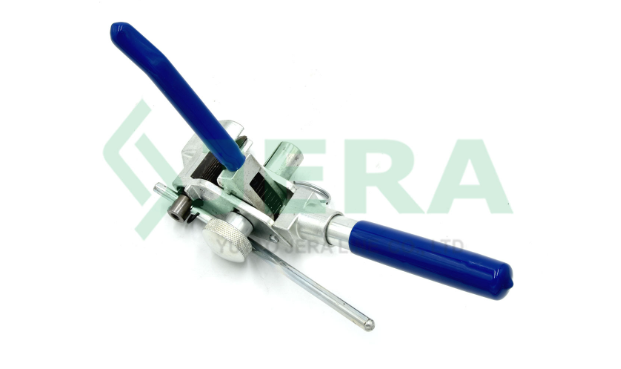
Easy to Use: Compatible with handheld tensioners for quick and efficient tightening.
6. Why Choose Jera Line?
Jera Line provides high-quality stainless steel banding with specific advantages designed for ease of use and compliance.
Standard Advantages
-
Compliance: Meets standard EN 10088 and international standards for grades 201, 304, and 316.
-
Precision: No shortages in length, width, or thickness (guaranteed full quantity).
-
Usability: Portable dispenser allows rolling back slack; specially carved bend edges for safety.
-
Customization: Custom marking service available.
Competitive Strengths (The Jera Difference)
1. Superior Elongation Performance
Compared to other suppliers, Jera straps feature a higher elongation rate. They maintain flexibility without breaking even when stretched under heavy loads or in temperature-fluctuating environments. This reduces the risk of sudden failure common with rigid alternatives.
2. Optimized Dual-Layer Packaging
Jera uses a dual-layer design for maximum protection and efficiency:
-
Inner Plastic Box: Color-coded (e.g., Blue for 304, Green for 316) for instant identification and moisture/dust protection.
-
Outer Cardboard Carton: Reinforced for transport durability.
Our team is here to help you select the best products for your fiber optic network!
Related reading recommendations




.png)