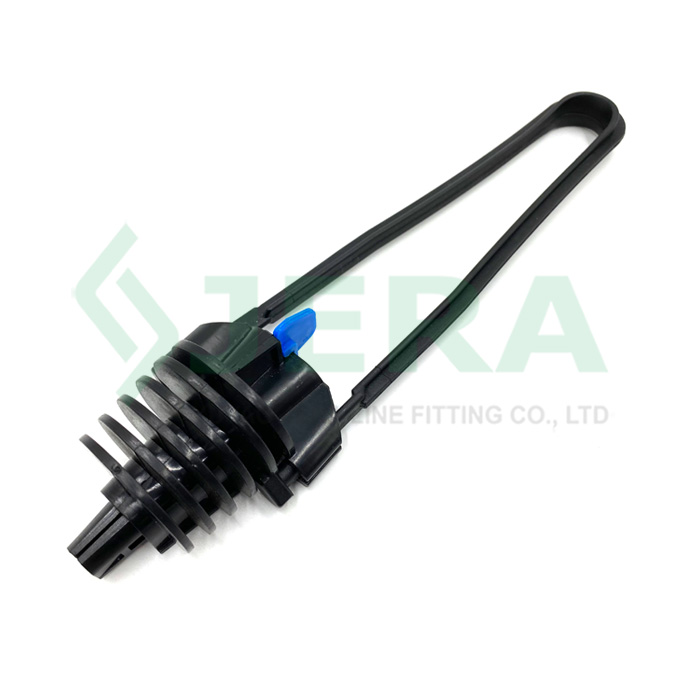
What’s the fiber drop clamp?
Fiber drop clamps are critical components in FTTH (Fiber-to-the-Home) and telecommunications networks. Designed to support and secure fiber drop wires, these clamps use a combination of shims, shells, and wedges to provide stable compression-based fixation for one or two pairs of cables. Available in wire wrap and compression types, they are installed on poles, buildings, or strands to prevent cable damage from friction, wind vibration, or environmental stressors. Their durable construction—often featuring UV-resistant polymers, stainless steel, or aluminum alloys—ensures long-term reliability in outdoor settings. While seemingly simple to install, common errors can compromise network performance, leading to signal attenuation, cable damage, and costly maintenance.

Top 7 Mistakes in Fiber Drop Clamp Installation
1. Ignoring Cable and Clamp Compatibility
Mismatching clamp sizes with cable diameters (typically 3–9mm for standard models) is a prevalent error. Using a clamp designed for smaller cables fails to provide adequate grip, while oversized clamps cause excessive pressure that damages the cable sheath or internal fibers. This incompatibility often leads to premature cable failure or unstable signal transmission.
2. Inadequate Fiber End Preparation
Skipping proper cleaning and cleaving of fiber ends before clamping undermines connection quality. Even microscopic dust, grease, or debris on the fiber increases insertion loss and return loss, degrading signal integrity. Using non-specialized cleaning materials like regular wipes or clothing worsens contamination by leaving residues or scratching the fiber surface.
3. Improper Tension Application
Over-tightening or under-tightening the clamp disrupts performance. Excessive force crushes the cable’s strength members (e.g., aramid yarns) or bends fibers beyond their minimum radius, causing micro-bend loss. Insufficient tension allows the cable to shift, leading to friction against the clamp or surrounding structures.
4. Incorrect Mounting Spacing
Failing to follow spacing guidelines (typically 1.5–2.0 meters between clamps) creates excessive cable slack or tension. Inadequate spacing results in sagging, which increases wind-induced vibration and wear, while overcrowded clamps concentrate stress at connection points.
5. Neglecting Environmental Factors
Installing standard clamps in harsh environments—such as coastal areas, high-wind zones, or regions with wildlife activity—leads to rapid degradation. Clamps lacking corrosion resistance or UV protection deteriorate quickly, and unprotected cables are vulnerable to damage from animals like cicadas or physical abrasion.
6. Skipping Cable Routing Best Practices
Routing cables around sharp edges, tight corners, or metal surfaces without protection causes sheath damage and fiber breakage. Ignoring the clamp’s recommended mounting orientation (e.g., pole vs. tower use) also compromises stability, as different designs are engineered for specific load distributions.
7. Poor Labeling and Documentation
Failing to label clamps with cable identifiers, installation dates, or endpoint information complicates future maintenance and troubleshooting. This oversight leads to delays when repairs or expansions are needed, increasing operational costs.
How to Correctly Install the Fiber Drop Clamp
1. Pre-Installation Preparation
Verify compatibility between the clamp model and cable diameter by checking manufacturer specifications. Inspect the clamp for defects (e.g., cracked wedges or corroded hardware) and gather specialized tools: fiber cleaning kits, precision cleavers, and torque wrenches to ensure proper tension.
2. Fiber and Cable Preparation
Clean fiber ends using lint-free wipes and optical-grade alcohol, then inspect with a video microscope to confirm cleanliness. Cleave the fiber at a precise angle to minimize signal loss, and strip the cable sheath only enough to expose the strength members without damaging internal fibers.
3. Proper Mounting and Tensioning
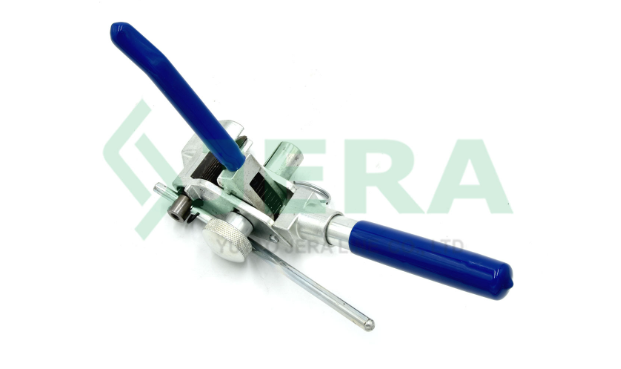
Install the clamp according to its design—use 304 stainless steel straps for pole mounting or U-bolts for tower applications. Apply tension gradually, adhering to the manufacturer’s load limits (typically up to 5.5 KN for heavy-duty models) to avoid over-compression. Ensure the cable follows a smooth, straight path without sharp bends.
4. Post-Installation Checks
Confirm the clamp holds the cable securely without visible deformation. Test signal transmission to detect insertion loss, and label the clamp with permanent, weather-resistant tags. Document installation details (location, clamp type, cable specifications) for future reference.
Who are the main manufacturer of fiber drop clamp?
-
CommScope:Ideal for high-tension aerial spans and operator-mandated compliance.
-
AFL Hyperscale: Offers stainless steel/wedge designs with neoprene inserts to prevent micro-bend loss; rated for cable diameters 3–9mm and spans up to 100m.
-
3M: Features tool-less or torque-controlled installation for consistent tension; their quick-connect models cut on-site labor time by 30%–50%.
-
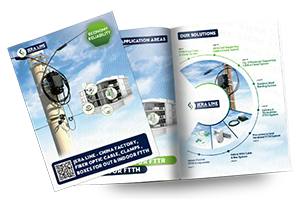
Jera Line: Jera Line entered the FTTX fiber optic cable hardware market in 2015, specializing in the design and manufacturing of clamps and brackets tailored for fiber deployment scenarios. To deliver reliable solutions for medium-span cable lines, we have invested significant time and resources in rigorous new product R&D and performance testing, enabling us to launch a diverse portfolio of precision-engineered clamps and brackets.
What similar model could Jera Line offer?
Jera Line, a specialist in power cable accessories, provides compatible solutions for fiber drop clamp applications:
-
Suspension Clamps: Designed for 0.4–35KV systems, these clamps feature hot-dip galvanized steel construction and neoprene inserts, suitable for ADSS cables in spans up to 100m.
-
Tension and Anchoring Clamps: Offer mechanical resistance matching standard fiber drop clamp requirements, with stainless steel hardware for corrosion resistance in harsh environments.
-
Cable Brackets and Hooks: Complement clamp installations by providing stable mounting points, engineered to work with Jera’s tension clamps for unified network infrastructure
Conclusion
Proper fiber drop clamp installation is critical for maintaining reliable telecommunications networks. Avoiding the seven common mistakes—from compatibility issues to poor environmental adaptation—ensures optimal signal performance, reduces maintenance costs, and extends cable lifespan. By following manufacturer guidelines for preparation, tensioning, and mounting, installers can maximize the durability and efficiency of their fiber networks.
For those seeking tailored solutions, Jera Line’s range of suspension, tension, and mounting accessories offers compatible, high-quality alternatives to specialized fiber drop clamps. Investing in proper installation practices and quality components ultimately delivers long-term value for both network operators and end-users.




.png)