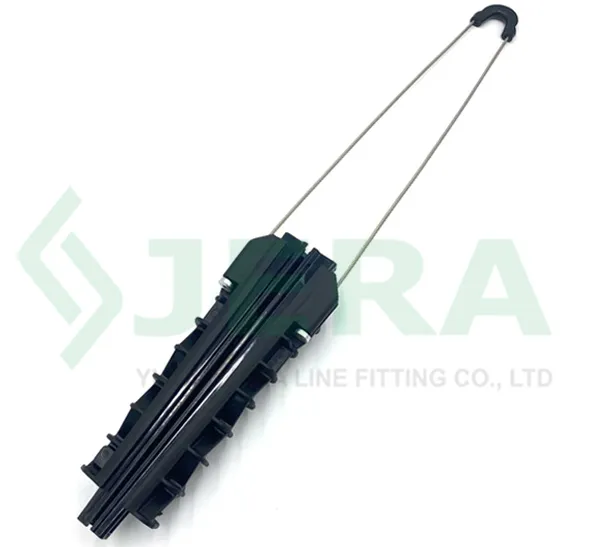
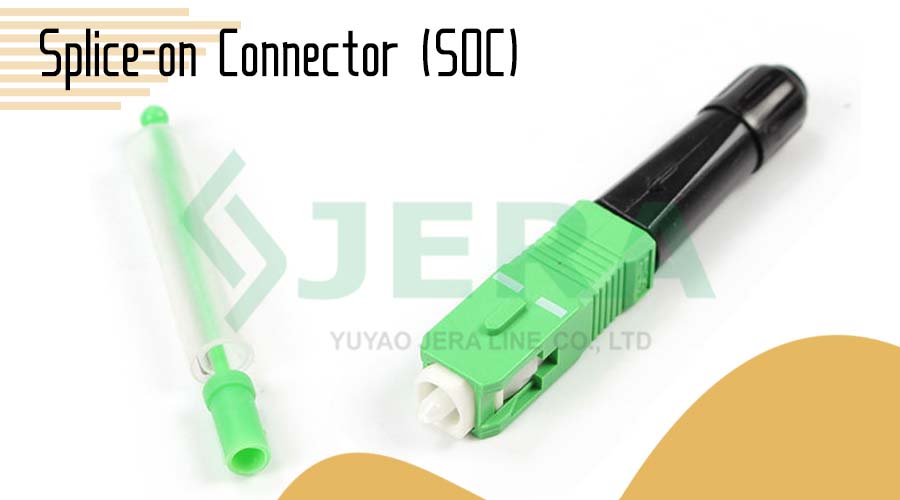
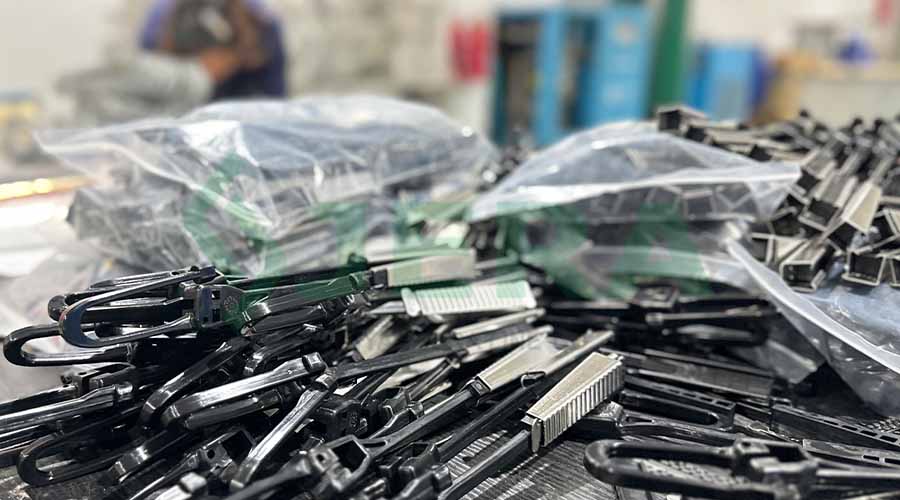
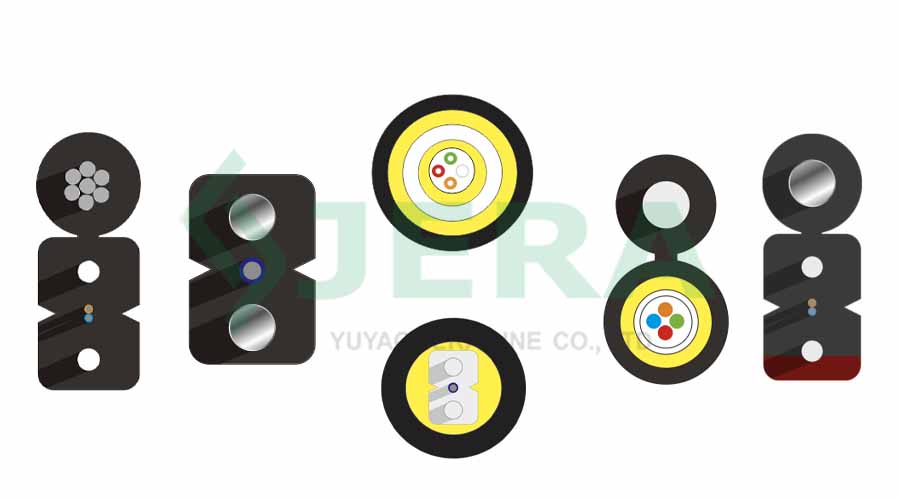
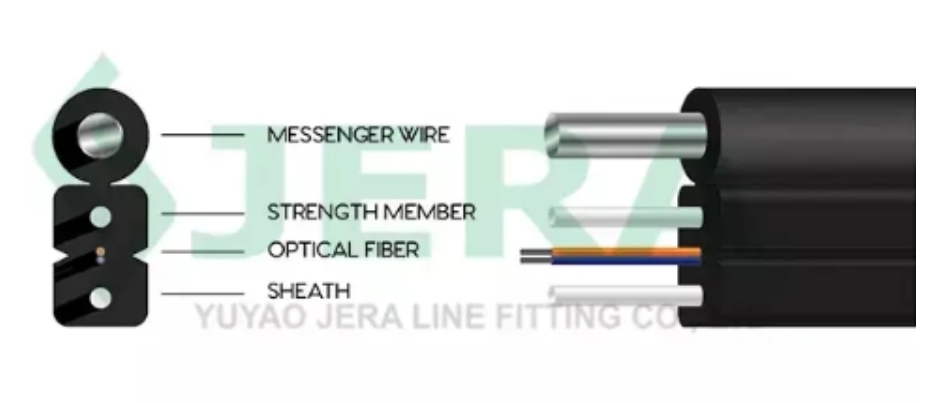
JERA’s Self-Supporting FTTH Drop Cable is a specialized optical fiber cable engineered for the "final link" in FTTH networks—connecting street-side distribution cabinets, utility poles, or building entrances directly to residential or commercial end-user premises. Unlike traditional non-self-supporting drop cables that require additional support structures (such as messenger wires or brackets), its core advantage lies in the integrated self-supporting design:
Structural Composition: The cable features a reinforced central strength member (typically made of high-tensile fiberglass or steel) paired with a durable outer sheath (e.g., low-smoke zero-halogen (LSZH) or polyethylene (PE) material). This structure eliminates the need for separate support lines, as the cable itself can bear its own weight and resist external tension during installation and operation.
Functional Design: It houses 1–4 optical fibers (single-mode or multi-mode, depending on application needs) with tight buffering to protect the fibers from mechanical stress. The compact diameter (usually 3–6mm) and lightweight design also make it ideal for installations in narrow spaces (e.g., along building exteriors, inside wall cavities).
Core Advantage of Self-Supporting Design: By integrating support and signal transmission functions, the cable simplifies installation workflows, reduces reliance on auxiliary hardware, and lowers both upfront deployment costs and long-term maintenance efforts.
Reliability is the core value of JERA’s Self-Supporting FTTH Drop Cable, achieved through three key performance attributes:
1. High Durability for Harsh Environments
End-user telecom networks expose drop cables to a wide range of environmental stressors—from extreme temperatures to physical wear. JERA’s cable addresses this with premium materials and structural engineering.
2. Strong Anti-Interference Capabilities
Unlike copper cables, which are susceptible to electromagnetic interference (EMI) from power lines, radio signals, or household appliances, JERA’s FTTH drop cable leverages the inherent advantages of optical fiber—plus optimized design—to ensure signal purity.
3. Easy Installation and Low Maintenance
Complex installation or frequent maintenance is a major source of network downtime. JERA’s self-supporting design streamlines both processes.
Real-World Application Cases
JERA’s Self-Supporting FTTH Drop Cable has been successfully deployed in diverse scenarios worldwide, demonstrating its adaptability and reliability.
-
Urban High-Density Residential Areas
-
Rural and Remote Regions
-
Commercial Office Buildings
Future Outlook
-
Higher Fiber Density: Developing cables with 8–12 fibers to support multi-dwelling units (MDUs) and commercial buildings requiring simultaneous connections for multiple users/devices.
-
Greener Materials: Transitioning to 100% recycled LSZH sheaths to reduce environmental impact, aligning with global telecom operators’ sustainability goals.
-
Smart Monitoring: Integrating fiber optic sensors into the cable to enable real-time monitoring of temperature, tension, and signal loss—allowing operators to proactively address issues before they cause downtime.
Conclusion
In the era of high-speed, always-on connectivity, the "last mile" of FTTH networks is no longer a secondary consideration—it is the key to delivering reliable service to end users. JERA’s Self-Supporting FTTH Drop Cable addresses the core pain points of traditional drop cables: it is durable enough to withstand harsh environments, immune to interference that disrupts signals, and easy to install and maintain. With proven success in urban, rural, and commercial scenarios, and a clear roadmap for future innovation, it stands as a trusted solution for telecom operators looking to build resilient, future-ready end-user networks.
For telecom projects aiming to balance performance, cost-efficiency, and long-term reliability, JERA’s Self-Supporting FTTH Drop Cable is more than a component—it is an investment in seamless connectivity for the end user.




.png)