What’s the fiber drop clamp
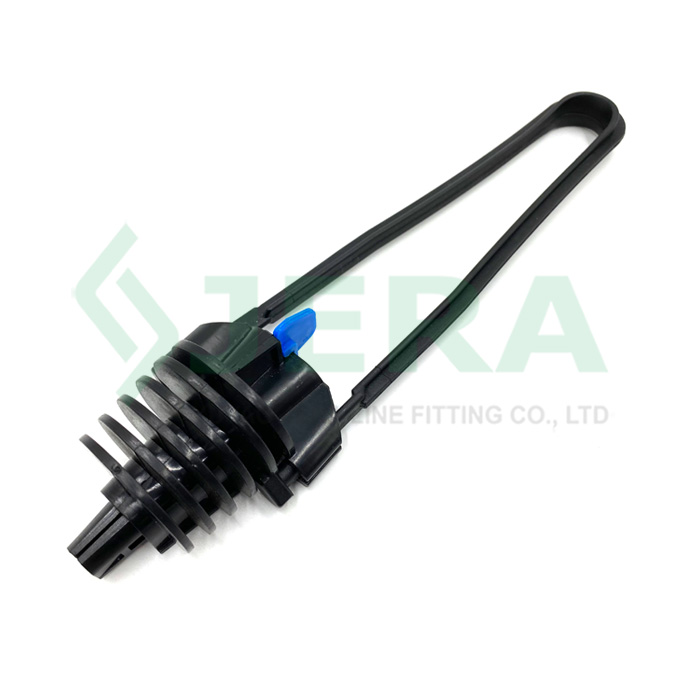
In the fast-evolving landscape of fiber-to-the-home (FTTH) networks, drop clamps are unsung heroes that ensure the stability, safety, and performance of last-mile fiber connections. A drop clamp is a specialized hardware component designed to secure, support, and route fiber optic drop cables between distribution points (e.g., utility poles, wall-mounted enclosures) and residential or commercial premises. Unlike general-purpose cable fasteners, drop clamps are engineered to apply uniform, non-damaging pressure—preventing micro-bend loss, sheath abrasion, and signal attenuation while withstanding outdoor environmental stressors such as UV radiation, wind vibration, and temperature fluctuations. The right drop clamp selection is not a one-size-fits-all task; it hinges entirely on the cable’s cross-sectional design, which falls into three primary categories: flat, round, and figure-8 drop cables.
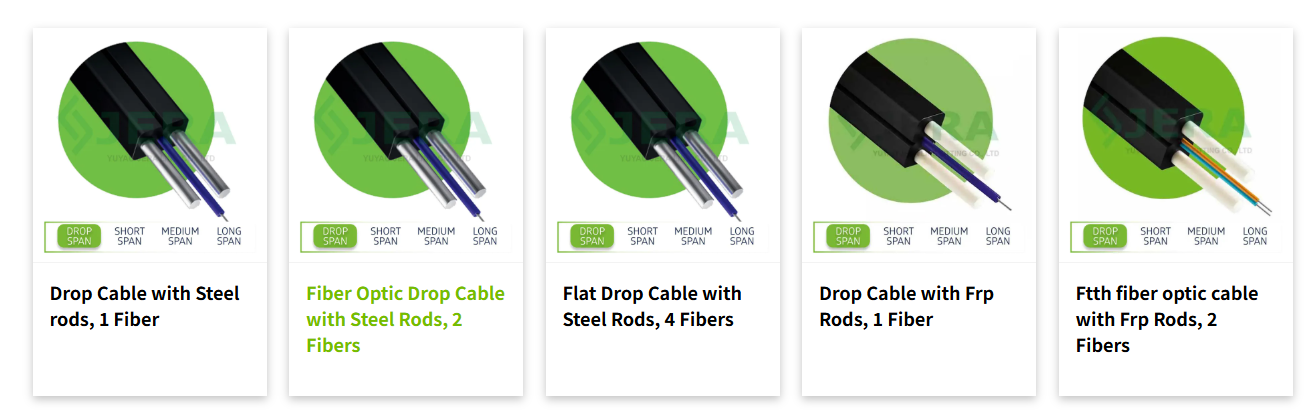
Flat drop cable
Flat drop cables are the go-to choice for dense urban FTTH deployments, prized for their slim profile and easy installation in tight spaces. Characterized by a low-profile, rectangular cross-section, these cables typically integrate 1–4 fiber cores alongside aramid yarn strength members and a flame-retardant outer sheath (often LSZH, low-smoke zero-halogen). The flat design minimizes wind resistance and reduces the risk of snagging during installation, making it ideal for wall-mounted runs, under-eave routing, and indoor-to-outdoor transitions.
Key attributes of flat drop cables include:
-
Space efficiency: Fits seamlessly in narrow gaps between walls, window frames, and utility boxes.
-
Flexibility: Bends easily along flat surfaces without kinking or damaging internal fibers.
-
Cost-effectiveness: Lower material and manufacturing costs compared to round or figure-8 alternatives, suitable for large-scale residential deployments.
The main limitation of flat drop cables is their lower tensile strength, which makes them less suitable for long aerial spans or high-tension applications.
Round drop cable
Round drop cables are the workhorse of FTTH networks, offering balanced performance for both aerial and underground deployments. With a cylindrical cross-section, these cables feature a central strength member (CSM)—usually fiberglass or steel—surrounded by fiber cores, water-blocking gel, and a robust outer sheath (e.g., polyethylene or UV-stabilized PVC). The symmetrical design distributes tension evenly across the cable body, enhancing durability and resistance to physical impacts.
Key attributes of round drop cables include:
-
Versatility: Compatible with aerial, duct, and direct-burial installation methods.
-
High tensile strength: The central strength member supports longer aerial spans (up to 50m) without sagging.
-
Environmental resilience: The thick outer sheath provides superior protection against moisture, rodents, and abrasion, ideal for rural or harsh outdoor environments.
Round drop cables are slightly bulkier than flat alternatives, which can complicate routing in confined indoor spaces. However, their durability makes them a preferred choice for industrial, commercial, and long-distance residential connections.
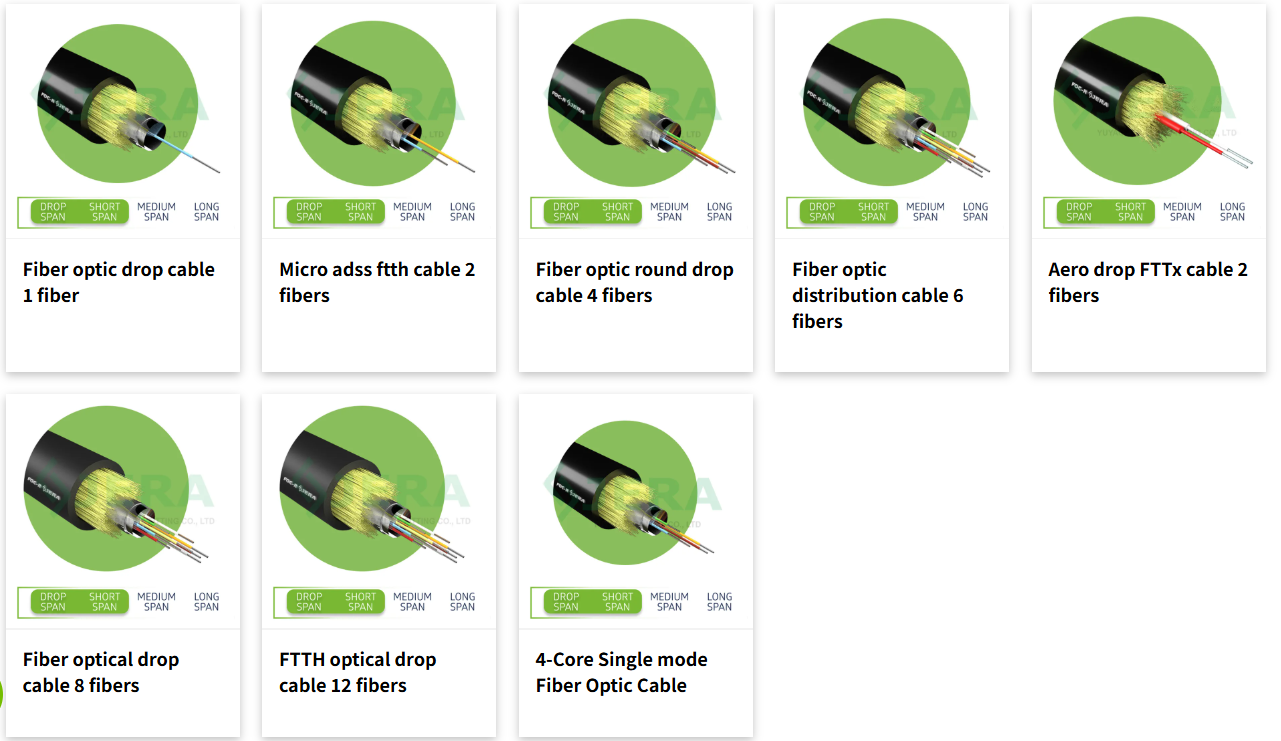
Figure-8 cable
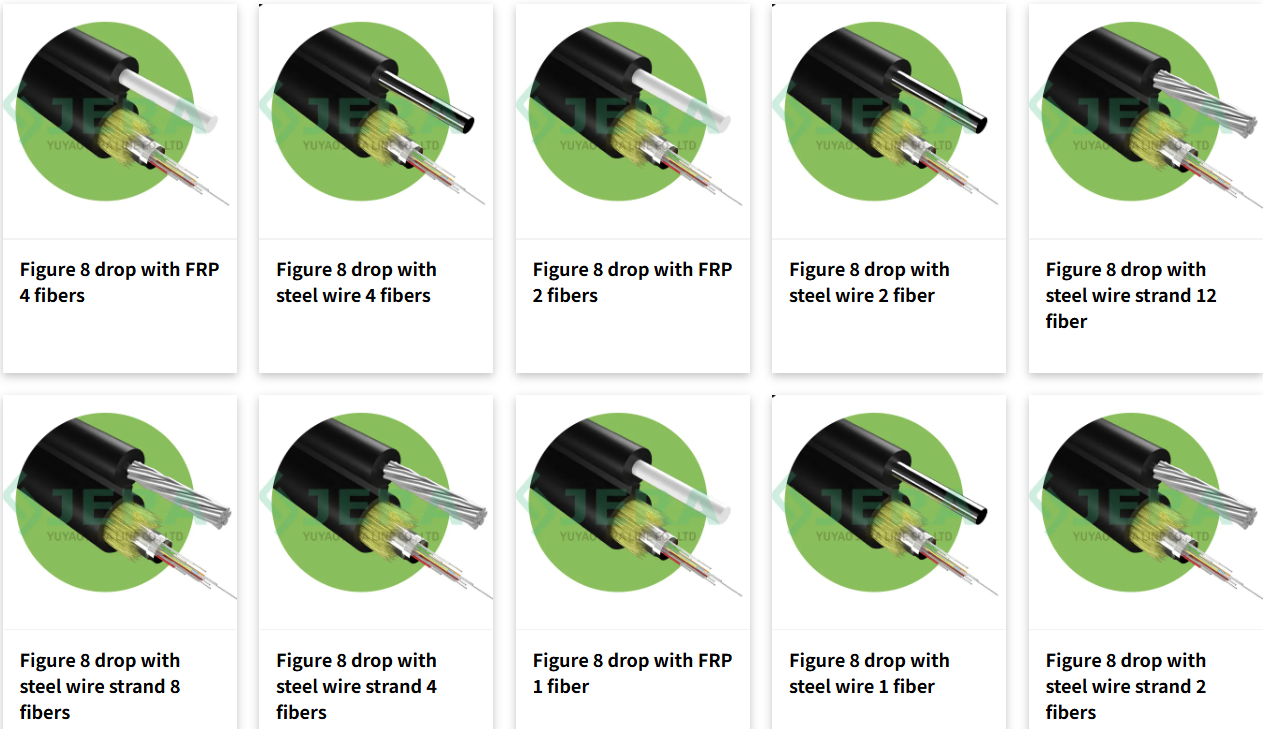
Figure-8 drop cables are a specialized solution optimized for aerial FTTH deployments, named for their distinctive cross-section that resembles the number “8”. One lobe of the figure-8 houses the fiber cores and strength members, while the other lobe contains a steel messenger wire—an integrated support structure that eliminates the need for separate suspension strands. This all-in-one design streamlines installation and reduces labor costs for aerial runs between utility poles and buildings.
Key attributes of figure-8 drop cables include:
-
Integrated support: The messenger wire bears the cable’s weight, allowing for spans up to 100m without additional hardware.
-
Installation efficiency: Eliminates the need to string separate messenger wires, cutting down on on-site labor time.
-
Stability: The figure-8 shape prevents the cable from twisting or rotating during installation, maintaining consistent signal quality.
The main drawback of figure-8 drop cables is their limited suitability for underground or indoor use, as the rigid messenger wire makes routing in tight spaces challenging. They are also more expensive than flat or round cables due to their complex construction.
How to choose the Right Drop Clamp for Your FTTH Drop Cable: Flat vs Round vs Figure-8
Selecting the optimal drop clamp requires aligning the clamp’s design with the cable’s shape, installation method, and environmental conditions. Below is a step-by-step guide to making the right choice:
1. Match Clamp Design to Cable Shape
For Flat Drop Cables: Choose flat-profile drop clamps with wide, parallel jaws that distribute pressure evenly across the cable’s rectangular surface. Avoid clamps with curved jaws, as they will apply uneven pressure, leading to sheath deformation or fiber damage. Look for clamps with non-slip neoprene inserts to prevent lateral shifting during wind gusts. These clamps are ideal for wall-mounted or short aerial runs (under 20m) in urban areas.
For Round Drop Cables: Opt for cylindrical compression clamps with curved jaws that conform to the cable’s circular cross-section. Compression-style clamps use a wedge mechanism to apply uniform tension, making them suitable for aerial, duct, and direct-burial installations. For high-tension aerial spans, select clamps with stainless steel hardware and a central groove to cradle the cable securely.
For Figure-8 Drop Cables: Select figure-8-specific suspension clamps that feature dual grooves—one for the fiber lobe and one for the messenger wire. These clamps are engineered to grip the messenger wire firmly without compressing the fiber-containing lobe, which prevents signal loss. Look for models with pre-set torque limits to avoid over-tightening the messenger wire, which could cause it to snap under tension.
2. Consider the Installation Environment
Urban/Indoor-Outdoor Transitions: Prioritize flat-profile clamps with LSZH components for low-smoke safety, as these spaces have high fire risk requirements.
Rural/Aerial Spans: Choose round cable clamps with corrosion-resistant hot-dip galvanized hardware or figure-8 suspension clamps with UV-stabilized polymer shells to withstand harsh weather.
Coastal/High-Corrosion Areas: Select clamps made from 316 stainless steel or fiberglass-reinforced polymers to resist salt spray and humidity.
3. Verify Load Capacity and Compliance
Ensure the clamp’s maximum tensile load rating matches the cable’s weight and span length. For example:
-
Flat cable clamps typically support loads up to 0.5 kN, suitable for short runs.
-
Round cable clamps can handle 1.0–1.5 kN, ideal for medium spans (20–50m).
-
Figure-8 suspension clamps offer load capacities of 2.0–3.0 kN, designed for long aerial spans (50–100m).
4. Prioritize Installation Efficiency
For large-scale deployments, choose tool-less or quick-connect clamps that reduce on-site labor time. Flat cable clamps often feature snap-on designs, while round and figure-8 clamps may use torque-controlled wrenches for consistent tensioning. Avoid clamps that require specialized tools, as they can delay installation and increase costs.
Conclusion
Choosing the right drop clamp for your FTTH drop cable is a critical decision that directly impacts network reliability, maintenance costs, and signal quality. Flat drop cables pair best with flat-profile clamps for space-constrained urban installations, round drop cables work with cylindrical compression clamps for versatile aerial and underground use, and figure-8 drop cables require specialized suspension clamps to leverage their integrated messenger wire design. By aligning clamp design with cable shape, installation environment, and load requirements, network operators can build robust, long-lasting FTTH connections that meet the demands of modern broadband users. As FTTH technology continues to advance, investing in the right hardware—starting with the humble drop clamp—will remain the foundation of a high-performance last-mile network.




.png)