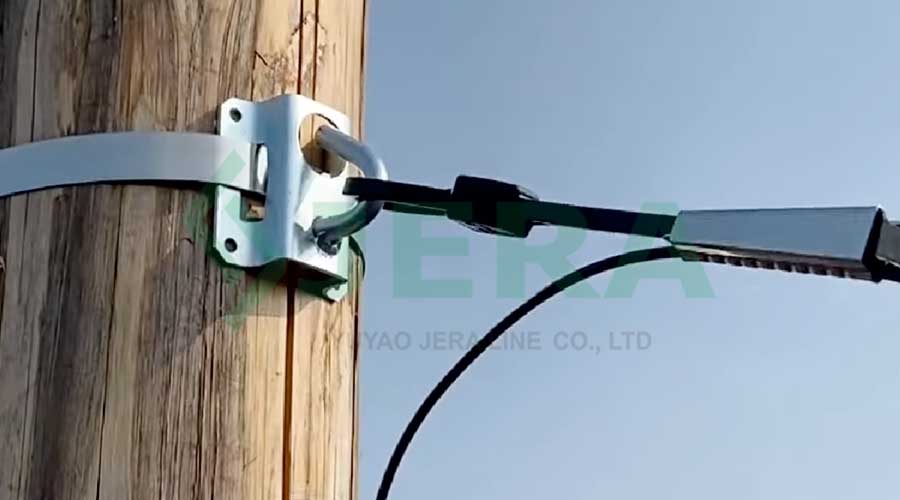
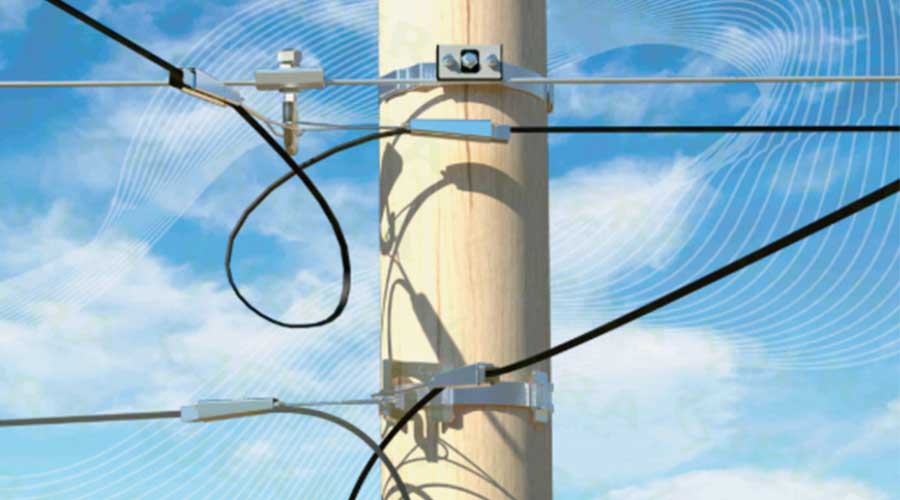
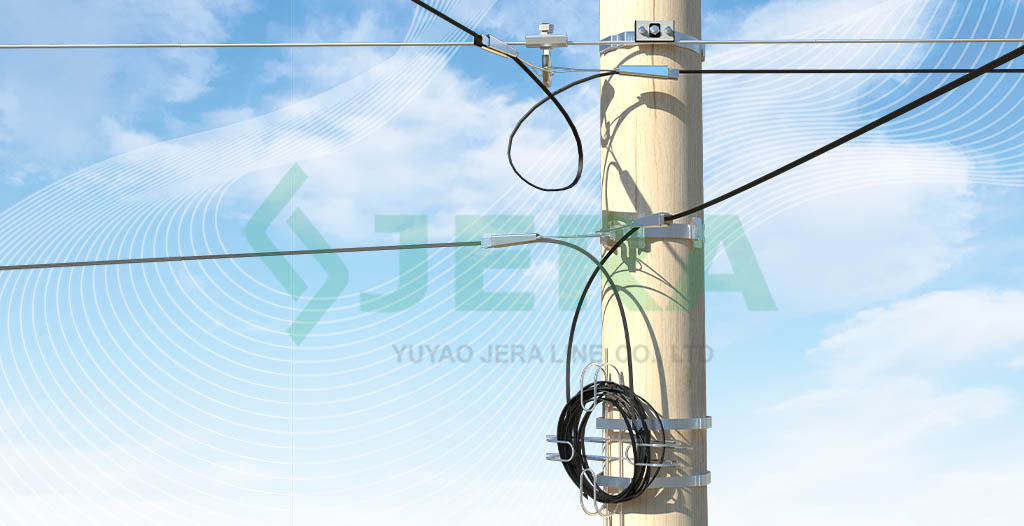
In the dynamic landscape of fiber-to-the-home (FTTH) networks, every component plays a critical role in ensuring stable, high-speed connectivity for end-users. Among these essential parts, the drop clamp stands out as a small yet indispensable device that often determines the longevity and performance of the last-mile fiber cable. As FTTH deployments continue to expand globally, selecting the right drop clamp has become a top priority for network engineers, installers, and telecom project managers. This guide breaks down everything you need to know about drop clamps—from their core definition to expert tips on choosing the ideal one for your FTTH cable.
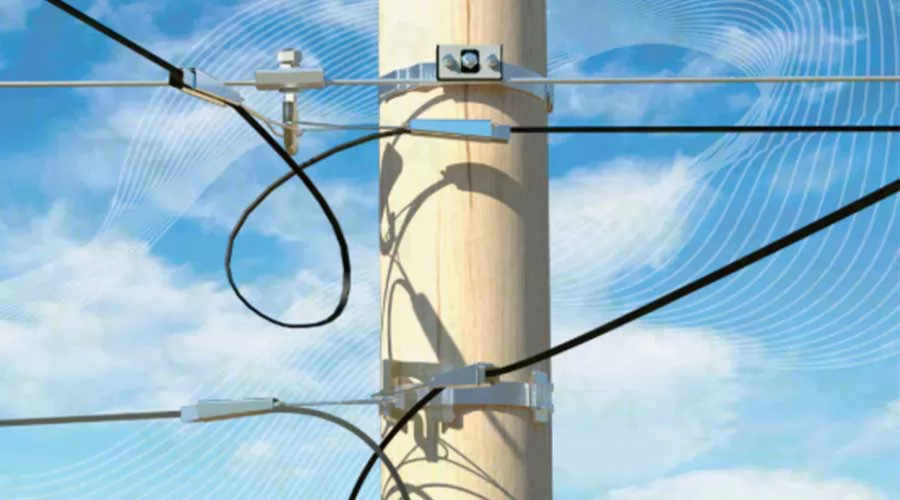
A drop clamp is a specialized mechanical fastener designed to secure FTTH drop cables to external structures such as utility poles, building facades, or wall-mounted brackets. Unlike generic cable ties or clips, drop clamps are engineered specifically for fiber optic cables, featuring a non-invasive design that prevents damage to the delicate fiber cores inside. Typically made from high-strength, corrosion-resistant materials like UV-stabilized nylon, galvanized steel, or reinforced plastic, drop clamps balance two key functions: holding the cable firmly in place to avoid sagging or displacement, and protecting the cable from excessive bending, tension, or environmental wear. Most drop clamps come with a two-piece or snap-on design, allowing for quick, tool-free installation— a major benefit for large-scale FTTH projects.
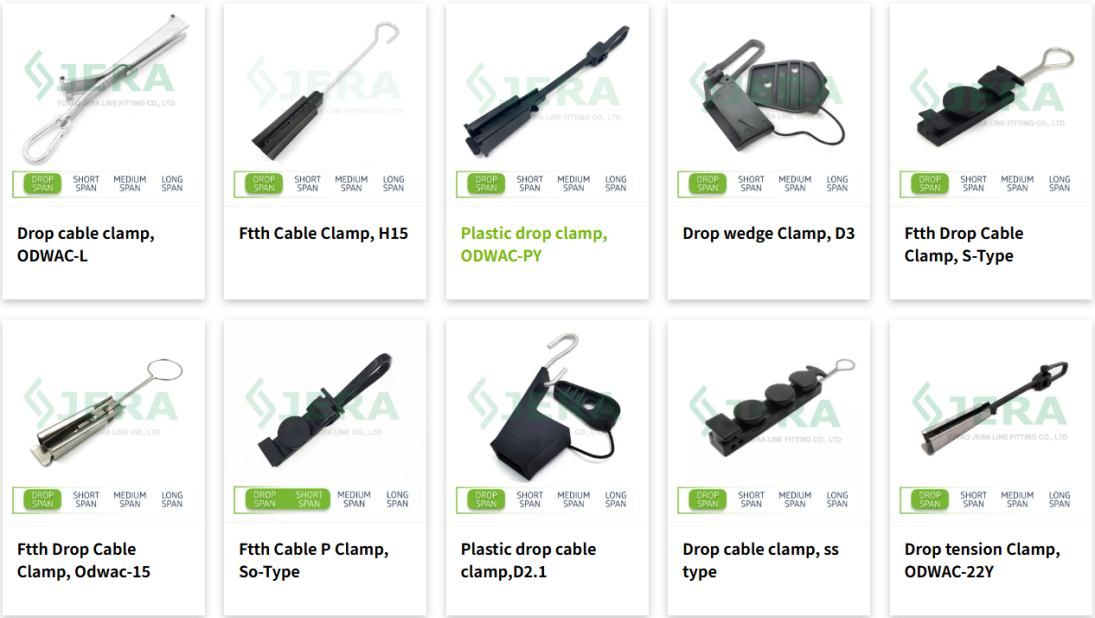
The advantage of drop clamp
The value of drop clamps extends far beyond basic cable fixation, delivering multifaceted benefits that enhance the reliability and cost-effectiveness of FTTH networks:
1. Superior Cable Protection
Fiber optic cables are highly sensitive to sharp bends and uneven pressure, which can cause signal attenuation or permanent fiber breakage. Drop clamps are designed with a curved inner surface that strictly maintains the cable’s minimum bend radius, eliminating these risks and preserving signal integrity over the cable’s service life.
2. Exceptional Environmental Durability
Constructed from UV-resistant materials, drop clamps resist degradation caused by prolonged exposure to sunlight, preventing brittleness or cracking even in tropical or arid climates. Corrosion-proof coatings further ensure functionality in humid coastal areas, industrial zones with high chemical exposure, and regions prone to heavy rainfall or snowfall.
3.Cost-Efficient Installation
The tool-free, snap-on design allows installers to secure a drop clamp in mere seconds, drastically reducing on-site labor time. For large-scale FTTH projects, this efficiency translates to significant cost savings, enabling teams to cover more ground in less time without compromising installation quality.
4.Streamlined Cable Routing & Maintenance
Drop clamps enable adjustable, organized cable routing, allowing installers to position cables neatly along structures and avoid tangling. This not only enhances the aesthetic of installations but also simplifies future maintenance, upgrades, or cable reconfigurations—minimizing downtime and operational disruptions for end-users.
Application of fiber drop clamp
Drop clamps are versatile components that support a wide range of FTTH deployment scenarios, making them a staple in both residential and commercial fiber projects:
-
Last-Mile Cable Routing
-
Pole-Mounted Installations
-
Wall-Mounted Deployments
-
Multi-Dwelling Unit (MDU) Installations
-
Temporary FTTH Setups
How to choose the best drop clamp for FTTH cable
1. Cable Compatibility
Ensure the clamp’s inner diameter matches the size of your FTTH drop cable. An ill-fitting clamp may either fail to hold the cable securely or exert excessive pressure, damaging the fiber core.
2. Material & Environmental Resistance
Match the clamp material to your deployment environment: UV-stabilized nylon is ideal for general outdoor use; galvanized steel offers superior strength for heavy-load applications; reinforced composites excel in corrosive industrial or coastal areas.
3. Installation Design
Prioritize tool-free, snap-on clamps for large-scale projects to boost efficiency.
4. Compliance with Industry Standards
Choose clamps that meet international telecom standards to ensure compatibility with global FTTH infrastructure and compliance with local regulatory requirements.
5. Load-Bearing Capacity
Evaluate the clamp’s tensile strength to ensure it can support the weight of the cable, even in scenarios where cables may sag under their own weight or be subjected to wind-induced tension.
Why Jera Line’s drop clamp is a smart choice for your FTTH cable
When it comes to reliable, high-performance drop clamps for FTTH networks, Jera Line stands out as a trusted partner for telecom professionals worldwide. Our drop clamps are engineered with a relentless focus on quality, durability, and user-centric design—addressing the core pain points of FTTH installers and project managers.
Crafted from premium UV-stabilized nylon and galvanized steel, Jera Line drop clamps deliver exceptional resistance to UV radiation, corrosion, and extreme temperatures, ensuring long-term performance in even the harshest environments. The precision-engineered curved inner surface strictly adheres to fiber optic cable bend radius standards, eliminating signal loss risks and protecting your network investment.
Our clamps feature a tool-free, snap-on design that cuts installation time by up to 50%, making them ideal for large-scale rollouts. For high-security applications, we also offer two-piece locking clamps that provide unrivaled stability in high-wind or high-vibration areas.
What sets Jera Line apart is our commitment to customization. We offer a range of clamp sizes to accommodate all standard FTTH drop cable diameters, and our team works closely with clients to develop tailored solutions for unique deployment scenarios. Backed by rigorous quality testing and compliance with global telecom standards, Jera Line drop clamps are more than just fasteners—they are a reliable foundation for building robust, future-proof FTTH networks.
Whether you are deploying fiber in residential neighborhoods, commercial districts, or remote rural areas, Jera Line’s drop clamps provide the performance, durability, and efficiency you need to get the job done right the first time.




.png)