In the deployment of Fiber-to-the-Home (FTTH) networks, every component plays a crucial role in ensuring stable, high-speed connectivity for end-users. Among these foundational elements, the Fiber Optic Drop Clamp—though small—is critical to the longevity and performance of the "last-mile" cable. An incorrect choice of drop clamp can lead to fiber attenuation, breakage, and potentially widespread network failure. Therefore, mastering the correct selection methodology is essential for network engineers, installers, and telecom project managers.
I. Understanding the Technical Role of the Drop Clamp
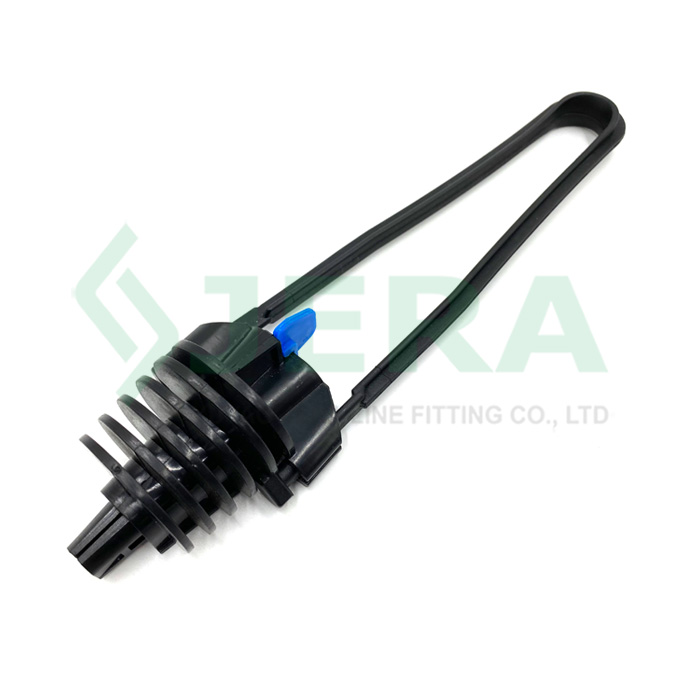
A drop clamp is far more than a simple "fastener." It is a specialized mechanical securing device designed to attach the FTTH drop cable safely to external structures such as utility poles, building facades, or wall brackets. Unlike generic cable ties or clips, drop clamps are engineered specifically for fiber optic cables, with core technical functions focused on:
Protecting the Fiber Core
Optical fibers are extremely sensitive to sharp bends and uneven pressure. High-quality drop clamps feature a curved inner surface that strictly maintains the cable's Minimum Bend Radius (MBR), thereby eliminating the risk of Signal Attenuation caused by micro-bending and preserving signal integrity over the cable's service life.
Balancing Tension and Fixation
The clamp must provide sufficient gripping force to prevent the cable from sagging or displacement due to self-weight, wind load, or temperature fluctuations, all without damaging the delicate fiber within.
II. Core Criteria for Selecting the Optimal FTTH Drop Clamp
Selecting the right drop clamp is a systematic process that requires considering cable characteristics, environmental conditions, and installation efficiency. Here are the five core selection criteria:
1. Cable Compatibility and Geometric Precision
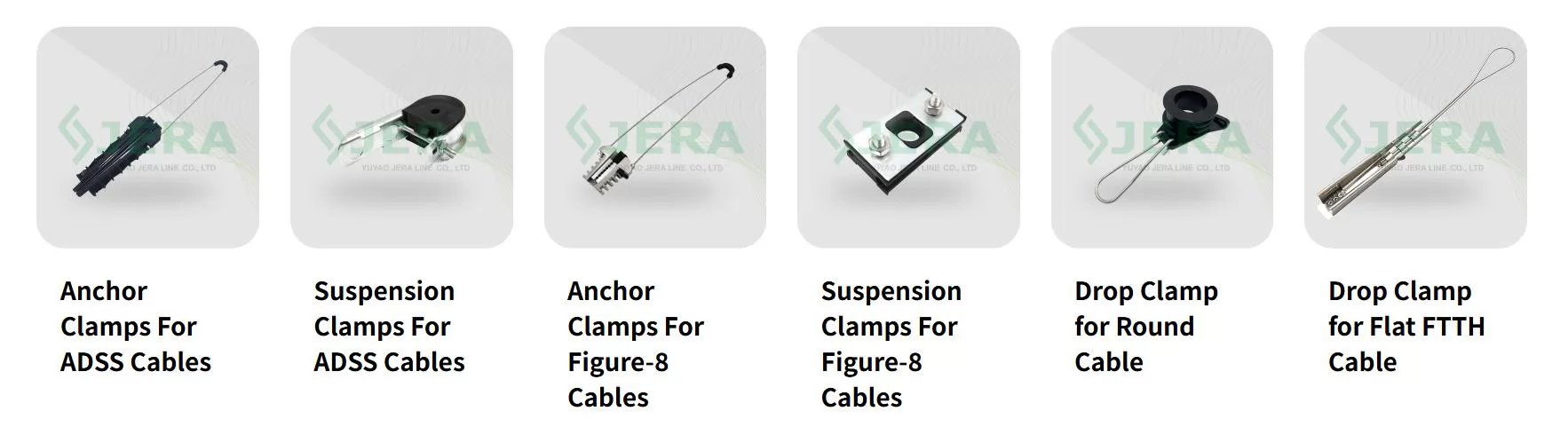
The primary function of a drop clamp is to perfectly match the cable it secures. FTTH drop cables are primarily categorized into Flat and Round types.
-
Flat Drop Cables: Require clamps specifically designed for their geometry, ensuring the clamping surface applies pressure uniformly across the cable, avoiding compression of the internal strength members or fiber.
-
Round Drop Cables: The clamp's inner diameter must precisely match the cable's outer diameter. An overly tight clamp risks fiber damage, while a loose one fails to provide adequate securing force.
2. Material Selection and Environmental Resistance
The material of the drop clamp must withstand the harsh conditions of its deployment environment.
|
Environment Type |
Key Challenges |
Recommended Material |
Advantages |
|
General Outdoor |
UV radiation, temperature cycling |
UV-Stabilized Nylon (PA66) |
Cost-effective, easy to install, suitable for residential areas. Must ensure high UV resistance rating. |
|
Coastal/Industrial |
Salt spray corrosion, chemical exposure |
Reinforced Composites, Stainless Steel |
Excellent corrosion resistance. Higher initial cost but superior longevity in aggressive environments. |
|
High-Load/Long-Span |
High wind, ice loading, high tension |
Hot-Dip Galvanized Steel or High-Strength Aluminum Alloy |
Provides superior mechanical strength and tensile capacity, ideal for main lines or long aerial spans. |

Key Principle: Always select materials with UV-Resistance and Corrosion-Resistant Coatings to ensure the clamp does not become brittle or rust over its expected service life, which can span decades.
3. Mechanical Load and Tensile Strength
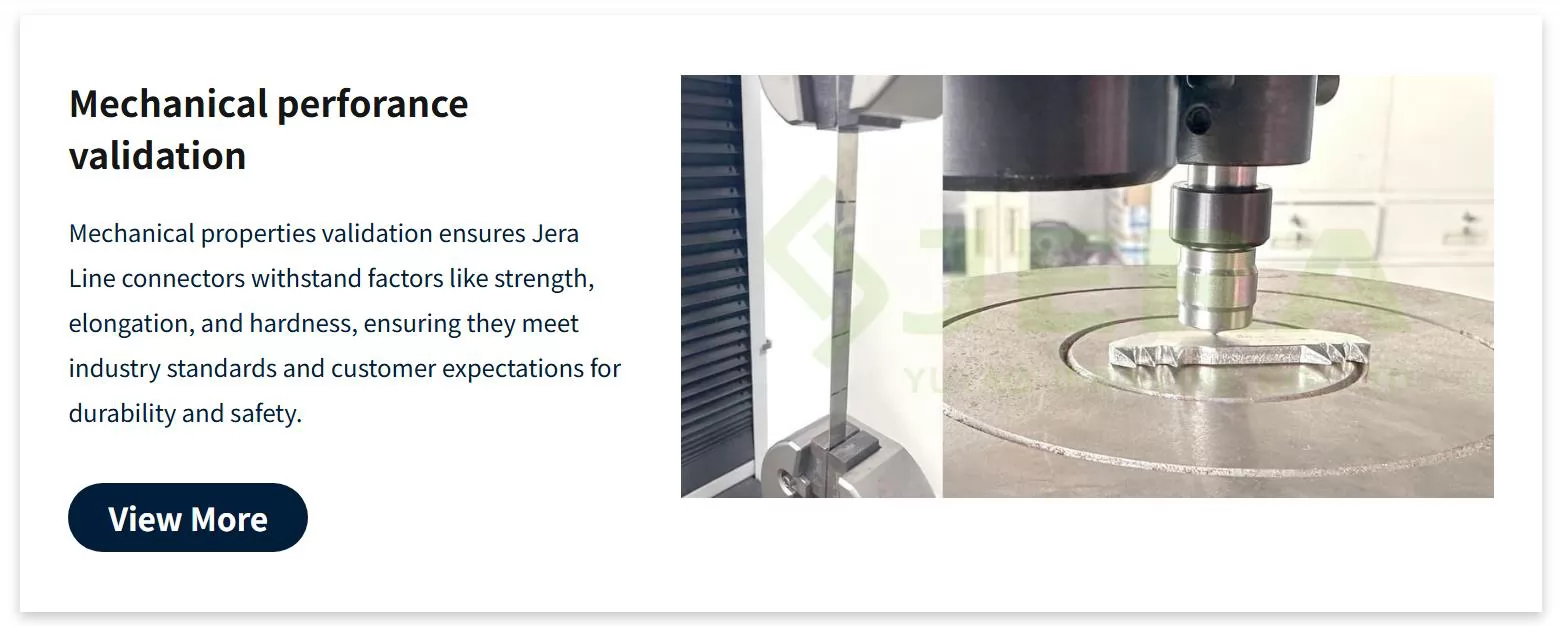
The Load-Bearing Capacity of the drop clamp must exceed the maximum tension the cable might experience under the worst-case scenario. This involves calculating the span length, cable self-weight, and anticipated wind and ice loads.
-
Tensile Testing: Products should be selected based on rigorous Tensile Strength Test results. For long spans or high-wind areas, clamps with wedge-type designs that offer higher grip strength are necessary.
-
Safety Factor: Professional deployments typically require the ultimate tensile strength of the drop clamp to be at least twice the maximum working tension of the cable, providing an adequate safety margin.
4. Installation Design and Efficiency
Installation efficiency directly impacts the cost and speed of large-scale FTTH rollouts.
-
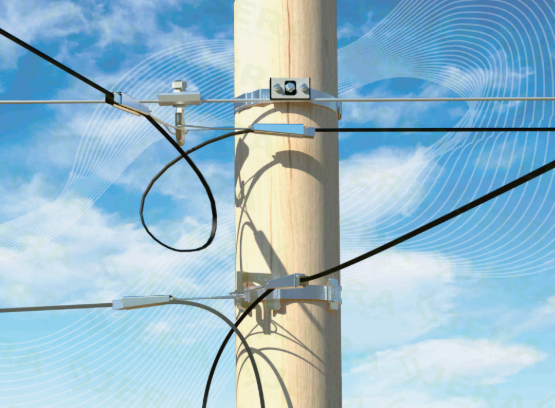
Rapid Deployment (Snap-on/Tool-free): For mass residential deployments, prioritize tool-free, snap-on designs to significantly reduce on-site labor time.
-
High Security (Bolt-on/Two-piece): For critical nodes or areas subject to high vibration and wind load, traditional Bolt-on or Two-piece Locking Clamps offer a more secure and durable fixation, despite being slightly slower to install.
5. Industry Standards and Compliance
Ensure the selected product complies with international and local telecommunication industry standards, such as relevant IEC, Telcordia, or local operator specifications. Compliance is not only a guarantee of quality but also a prerequisite for compatibility with existing network infrastructure.

III. Common Selection Pitfalls and Avoidance Strategies
During the selection and installation process, several common mistakes must be avoided to ensure network longevity:
Over-tightening
Consequence: Compresses the cable, causing micro-bending loss, signal attenuation, or even fiber breakage.
Avoidance Strategy: Use a Torque Wrench or select clamps with built-in limiting features to ensure clamping force remains within the manufacturer's recommended range.
Ignoring Bend Radius
Consequence: Especially at corners, bending the cable below the MBR causes permanent signal loss.
Avoidance Strategy: Ensure the clamp design or installation position maintains the cable's MBR (typically 10x the cable diameter or higher).
Material Mismatch
Consequence: Using standard plastic or galvanized materials in highly corrosive environments leads to premature clamp failure.
Avoidance Strategy: Strictly adhere to the environmental assessment results, e.g., insist on Stainless Steel or Reinforced Composites in coastal areas.
Mixing Cable Types
Consequence: Using a flat cable clamp for a round cable, or vice versa.
Avoidance Strategy: Rigorously verify cable specifications and clamp models to ensure perfect geometric compatibility.
Conclusion
When it comes to reliable, high-performance drop clamps for FTTH networks, Jera Line stands out as a trusted partner for telecom professionals worldwide. Our drop clamps are engineered with a relentless focus on quality, durability, and user-centric design—addressing the core pain points of FTTH installers and project managers.
Crafted from premium UV-stabilized nylon and galvanized steel, Jera Line drop clamps deliver exceptional resistance to UV radiation, corrosion, and extreme temperatures, ensuring long-term performance in even the harshest environments. The precision-engineered curved inner surface strictly adheres to fiber optic cable bend radius standards, eliminating signal loss risks and protecting your network investment.
Our clamps feature a tool-free, snap-on design that cuts installation time by up to 50%, making them ideal for large-scale rollouts. For high-security applications, we also offer two-piece locking clamps that provide unrivaled stability in high-wind or high-vibration areas.
What sets Jera Line apart is our commitment to customization. We offer a range of clamp sizes to accommodate all standard FTTH drop cable diameters, and our team works closely with clients to develop tailored solutions for unique deployment scenarios. Backed by rigorous quality testing and compliance with global telecom standards, Jera Line drop clamps are more than just fasteners—they are a reliable foundation for building robust, future-proof FTTH networks.
Whether you are deploying fiber in residential neighborhoods, commercial districts, or remote rural areas, Jera Line’s drop clamps provide the performance, durability, and efficiency you need to get the job done right the first time.





.png)